Pharmacy retail space has a different rhythm from supermarkets, convenience stores, or beauty chains. A good cardboard display for pharmacies and drugstores must support product visibility, clean shelf organization, fast restocking, and a buying environment where customers often compare small packs, health products, and personal care items before choosing.
For brands, wholesalers, and trade marketing teams, the display is not only a printed structure. It is a small selling system that must fit the store layout, protect the product, keep refills simple, and arrive flat-packed without creating extra work for the retail team.
Why Pharmacy Display Projects Need Practical Structure First
Pharmacies and drugstores usually carry many small SKUs in limited selling space. OTC medicine, supplements, skincare, oral care, first-aid products, eye care, travel-size products, and seasonal wellness items often compete for attention on shelves, counters, aisle ends, and checkout zones.
That means the display structure must do more than look attractive. It needs to hold product weight safely, keep packs facing forward, allow quick refill, and fit the store’s merchandising rules.
A pharmacy buyer may ask several practical questions before approving a display:
- Will it fit the counter, shelf, aisle, or promotional zone?
- Can staff refill products without rebuilding the display?
- Does the structure keep small boxes, bottles, blister packs, or sachets neat?
- Is the printed message clear without making medical claims?
- Can the display ship flat to reduce freight cost?
- Will export cartons protect corners, headers, trays, and dividers during transport?
As a cardboard display manufacturer, we often start with the product list, pack size, target quantity, and store placement before discussing artwork. Structure comes first because the wrong display type can cause leaning, crowding, poor product access, or slow setup in stores.
Best Display Types for Pharmacy and Drugstore Promotions
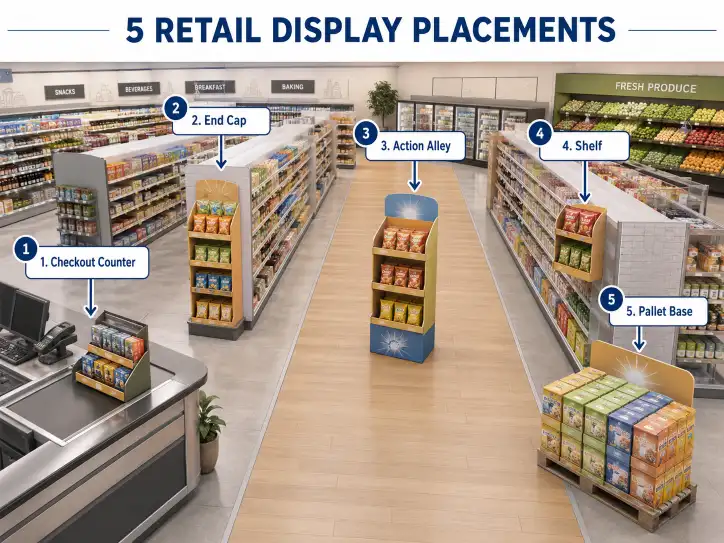
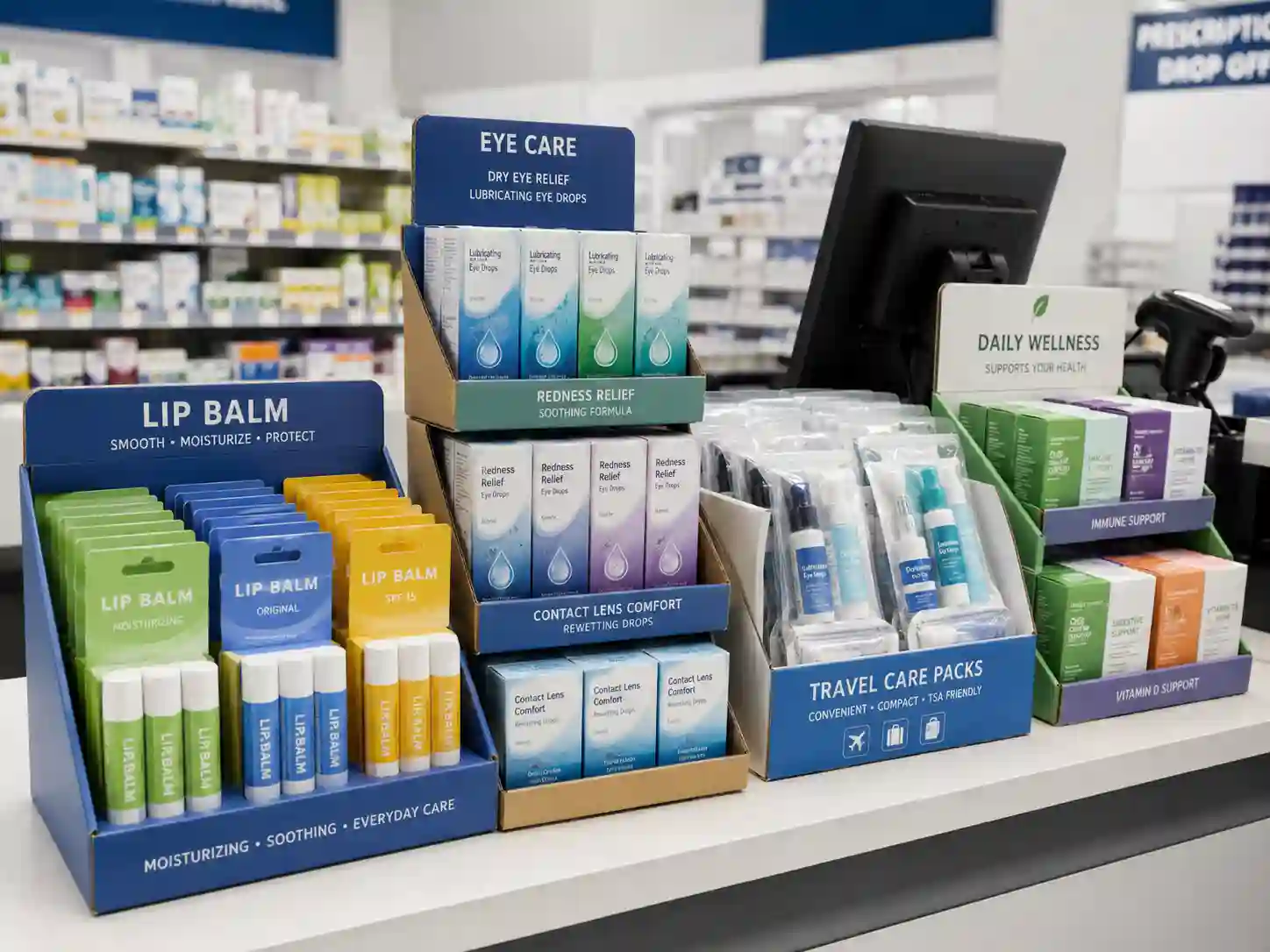
Different pharmacy zones need different cardboard display formats. A counter display may work well for lip balm, eye drops, or travel-size products, while a floor display may be better for supplements, family care, skincare, or seasonal wellness campaigns.
Counter Displays for Small High-Turnover Products
Counter displays are useful near the checkout, pharmacy desk, or beauty consultation area. They are common for lip care, hand cream, mini sanitizers, dental care, cough drops, small wellness packs, and trial-size items.
For this format, the structure should stay compact and tidy. Tiered trays, dividers, and front lips help small products remain visible after customers remove several units. If the product is light, 350gsm to 400gsm paperboard with reinforced side panels may be enough. For heavier bottles or multiple rows, corrugated board or laminated paperboard may be safer.
Counter displays should not block staff visibility or take too much transaction space. A low header or stepped structure can keep the brand message clear while keeping the footprint controlled.
PDQ Trays for Shelf-Ready Pharmacy Merchandising
PDQ displays are a smart option when pharmacies want fast shelf placement. Products can be packed into the tray at the factory, shipped in an outer carton, and placed directly onto shelves or counters after opening.
This format works well for boxed OTC items, sachet packs, small skincare cartons, dental floss, masks, vitamin samples, and blister-card products. A PDQ tray should include clear front branding, strong side walls, and enough product-facing angle to avoid a flat, crowded look.
For shelf-ready packaging, the tear-away front panel must be tested. If it tears poorly, retail staff may damage the tray or leave rough paper edges. During sampling, we check perforation strength, display height, product access, and carton fit before bulk production.
Peg Displays for Hanging Products
Drugstores often sell many hanging items: nail tools, travel accessories, toothbrush heads, bandages, small personal care packs, and blister-packed health products. A peg display can organize these products without using much shelf depth.
The key issue is load balance. Hanging products pull weight forward, so the back panel, base, and side supports must be reinforced. For taller peg displays, the base must resist tipping when the front hooks are loaded.
Hook spacing also matters. If products overlap, shoppers cannot read the pack. If spacing is too wide, the display wastes store space. A practical sample test should include full product loading, not an empty display photo.
Floor Displays for Campaign Volume
Floor displays are suitable for larger pharmacy promotions, including seasonal cold care, vitamins, personal care launches, skincare sets, oral care promotions, or wellness bundles. They can stand in aisle ends, promotional corridors, or front-of-store areas.
Floor displays need stronger corrugated board, internal shelves, reinforced side panels, and a base that can carry the planned weight. The header should be removable or foldable for shipping, while the shelf trays should support repeated refill.
For export projects, the display may be shipped flat, semi-assembled, or pre-packed depending on product type, retail instructions, and freight budget. Flat packing reduces volume, but the assembly guide must be clear enough for store teams.
Sidekick Displays for Narrow Store Zones
Sidekick displays are useful in pharmacy aisles because they attach to shelf sides or endcaps without taking floor space. They work well for impulse products, travel packs, trial-size skincare, small wellness items, or new product sampling.
The structure must be narrow, balanced, and easy to hang. Reinforced hanging holes, back supports, and side walls help prevent bending. For small packs, multi-pocket structures can keep products separated by SKU.
Display Type Comparison for Pharmacy Buyers
| Display Type | Best Placement | Suitable Products | Key Structure Point | Buyer Benefit |
|---|---|---|---|---|
| Counter display | Checkout, service desk, beauty counter | Lip balm, eye drops, small creams, travel packs | Compact base, tiered trays, front lip | Drives impulse sales in limited space |
| PDQ tray | Shelf, counter, promotional table | OTC boxes, sachets, samples, small cartons | Tear-away shipper, shelf-ready tray | Fast retail setup and easy refill |
| Peg display | Aisle, endcap, compact zones | Blister packs, tools, dental care, accessories | Reinforced back panel and hook spacing | Organizes hanging SKUs clearly |
| Floor display | Promotional aisle, front zone | Supplements, skincare, wellness kits, oral care | Strong shelves, stable base, load testing | Supports larger campaign volume |
| Sidekick display | Shelf side, aisle end, narrow spaces | Trial packs, small personal care items | Strong hanging system and narrow footprint | Adds visibility without floor space |
This table helps buyers shortlist the format before artwork begins. The final choice should still depend on product size, product weight, store rule, order quantity, and shipping method.
Match the Display to the Product Weight and Pack Style
A cardboard display for pharmacies and drugstores often carries small products, but small does not always mean light. Glass bottles, liquid products, supplement jars, and boxed multipacks can create concentrated weight on shelves or hooks.
Before production, the manufacturer should confirm:
- Single product weight
- Total quantity per display
- Product dimensions
- Number of facings
- Shelf depth and shelf angle
- Refill frequency
- Display placement and expected campaign duration
- Whether the display ships empty, loaded, or semi-loaded
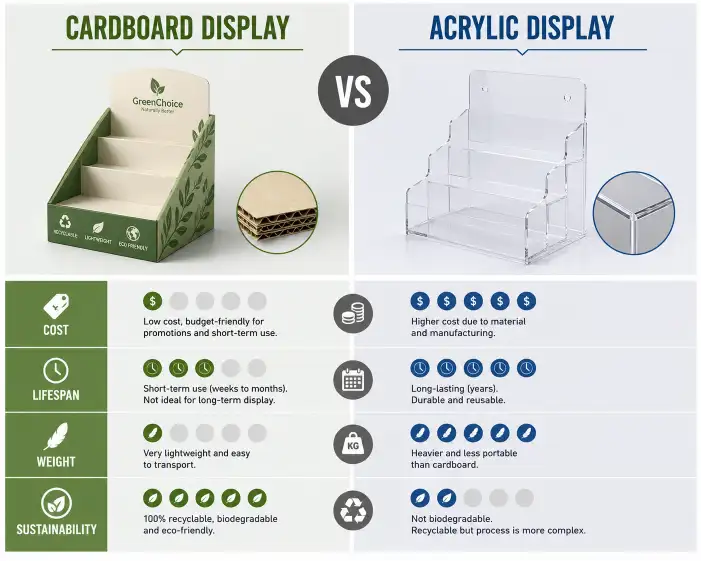
For light cartons, a paperboard tray may be enough. For heavier jars or bottles, corrugated board with laminated printing is often a better choice. For premium skincare or pharmacy beauty products, a stronger display with clean print, matte lamination, and reinforced shelves can present the brand better while protecting the structure.
The sample should be tested with real products or accurate dummy packs. Photos of an empty display are not enough for a pharmacy project because the structure behaves differently after loading.
Clean Branding Matters in Health and Wellness Retail
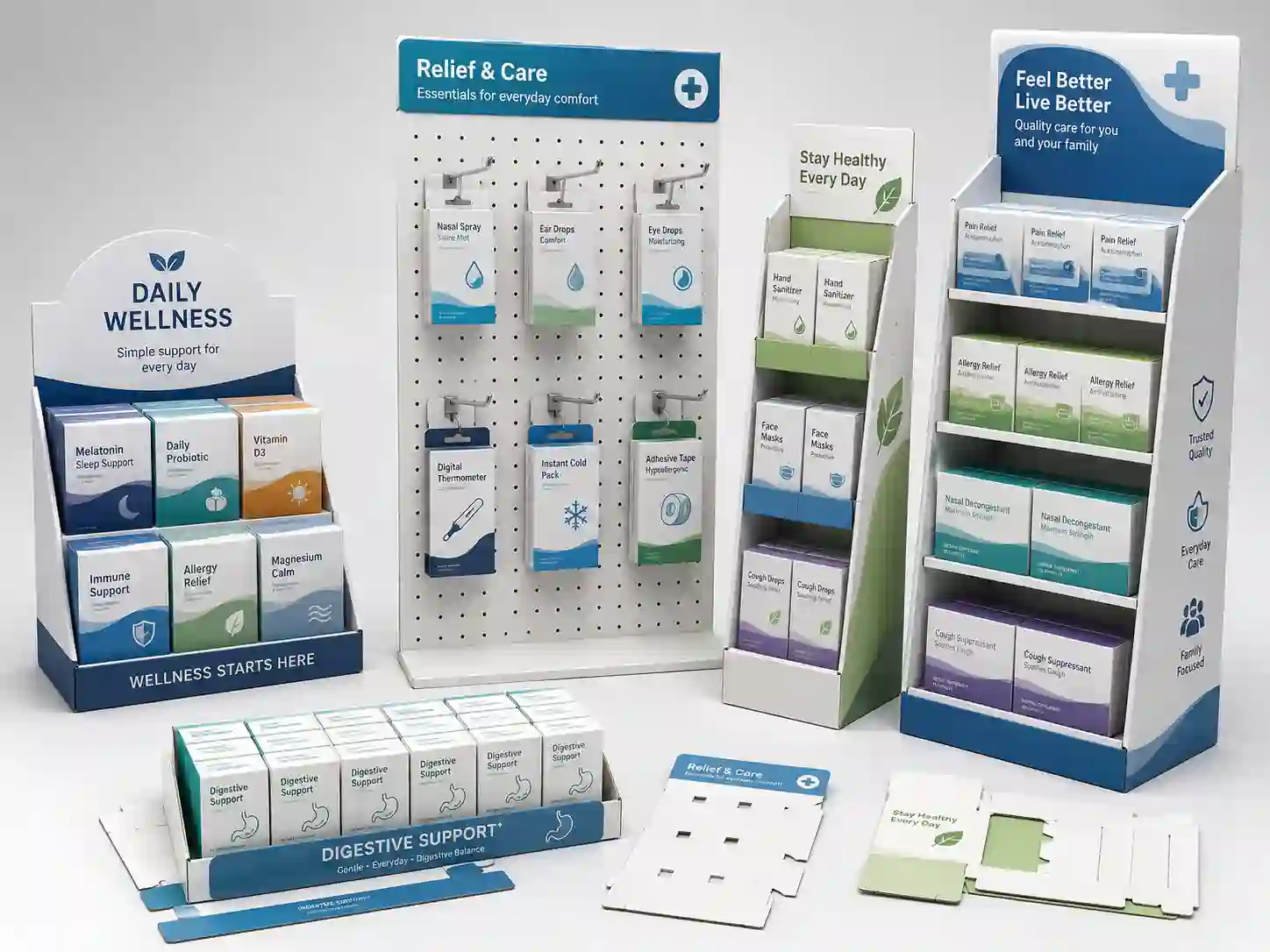
Pharmacy shoppers often look for trust, clarity, and product function. The display design should help them find the product, compare options, and understand the promotion without feeling crowded.
For health-related categories, printed copy should be clean and controlled. Avoid claims that may require regulatory review. Use clear product categories, simple benefit points approved by the brand, SKU names, and easy-to-read price or campaign areas.
A practical pharmacy display design may include:
- A clear header with product category or campaign message
- Front panels for product benefits or promotional wording
- Shelf strips for SKU separation
- QR code area for brand information or usage guide
- Soft, clean color blocking for health, beauty, or wellness positioning
- Generic refill labels for warehouse and store handling
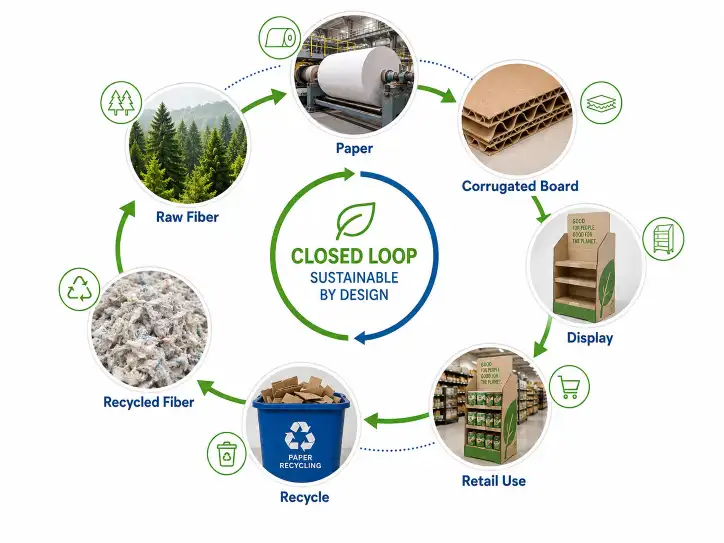
For environmentally focused campaigns, FSC-certified paper can be requested when available. For factory management and quality systems, buyers may ask suppliers about ISO-related processes. FEFCO references can also help standardize corrugated structure discussion when packaging engineers compare carton or board formats.
Sampling Should Solve Retail Problems Before Bulk Production
Sampling is where many display problems can be found early. A good sample is not only a pretty mockup. It is a working structure for approval, product fitting, load checking, assembly testing, and packing review.
For pharmacy and drugstore projects, we recommend checking:
Product Fit
Each SKU should sit in the tray, pocket, shelf, or hook position without falling forward or hiding the label. If multiple SKUs share one display, dividers may be needed to stop products from mixing.
Load Capacity
The display should be filled with real product weight during testing. For floor displays and peg displays, the test should include the top shelf or top hooks because poor load balance often appears there first.
Assembly Steps
Retail staff may have limited time. A structure with too many folds, tabs, or locking points can slow setup. A clean assembly design with numbered steps, pre-glued parts, and simple locks can reduce store complaints.
Print and Finish
Pharmacy displays usually benefit from clean colors and readable copy. Matte lamination, gloss lamination, spot UV, or foil effects can be used when the category fits, but the finish should not distract from product information.
Export Packing
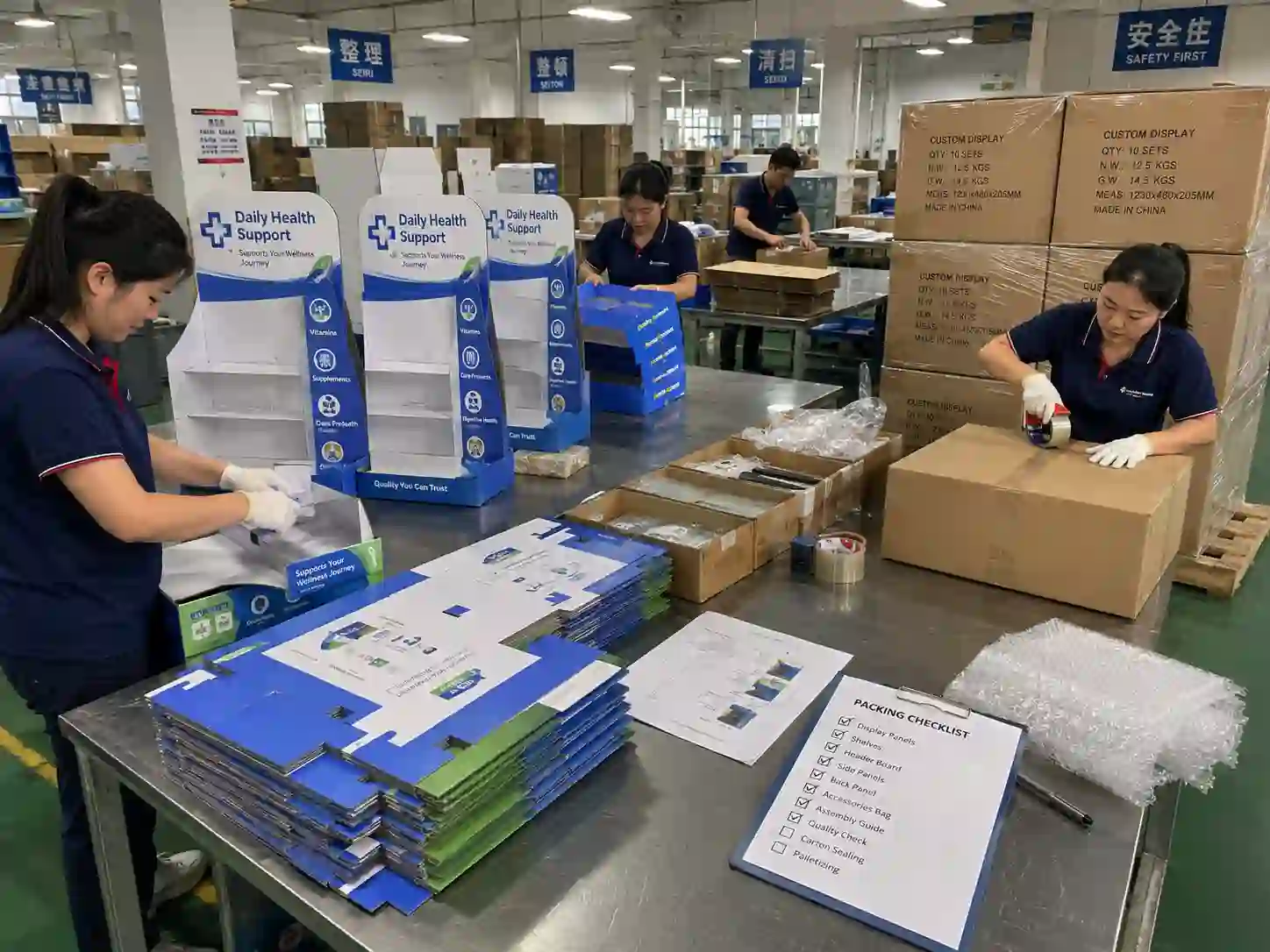
Flat-packed parts should be protected with inner cartons, corner support, and clear packing sequence. Headers, shelves, and side panels need protection from bending. If the display is pre-loaded, the outer carton strength and inner fixing method become more important.
Flat Packing and Refill Design Reduce Store Friction
For international projects, flat packing is often the most efficient choice. It reduces shipping volume and keeps freight cost under control. The challenge is that the display must still be easy to assemble after arriving at the retail side.
A good flat-pack design should include pre-creased fold lines, simple locking tabs, clear assembly direction, and protective packing for printed panels. For larger displays, it may include separate shelves, base supports, and header pieces.
Refill design is also important. A pharmacy display may run for several weeks, especially for wellness, beauty, or seasonal health campaigns. If staff cannot refill it quickly, the display may look empty or messy after the first sales period.
Practical refill features include:
- Open shelf fronts for easy product access
- Dividers that keep SKUs separated
- Product stops that prevent packs from sliding out
- Shelf depth matched to pack count
- Refill cartons labeled by SKU or shelf level
- Stronger shelf edges for repeated handling
For buyers, these details can decide whether the display performs across the full campaign or only looks good on launch day.
How Leader Display Supports Custom Pharmacy Display Projects
Leader Display works with B2B buyers who need custom cardboard displays for retail promotions, product launches, and export packaging programs. Since 2004, our team has supported projects involving paper display stands, PDQ displays, counter displays, floor displays, sidekick displays, peg displays, dump bins, pallet displays, and retail display packaging.
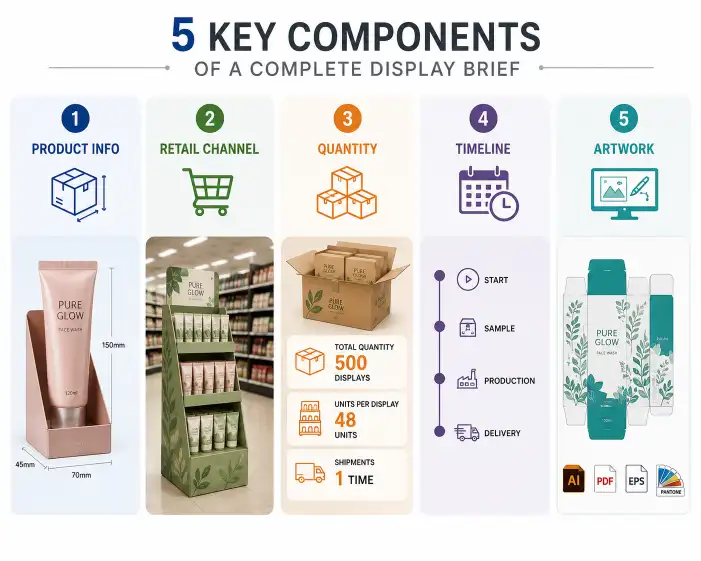
For pharmacy and drugstore campaigns, our process usually begins with product information and placement goals. Buyers can share pack size, product weight, display quantity, target market, artwork direction, and shipping requirement. From there, we can suggest a structure that matches the product and store environment.
You can explore our broader display capability through custom cardboard displays, review common formats on our cardboard display page, or visit Leader Display to understand our manufacturing background. For buyers comparing multiple retail formats, our cardboard display solutions can be adapted for pharmacy, beauty, grocery, beverage, personal care, and seasonal campaigns.
Choosing the Right Format for Your Next Pharmacy Campaign
The best display choice depends on where the display will sit, how much product it must carry, and how the retail team will set it up. For small impulse products, counter displays and PDQ trays are often efficient. For hanging products, peg displays can create neat category organization. For larger campaigns, floor displays provide more visibility and stock capacity. For narrow aisle opportunities, sidekick displays can add selling space without taking over the floor.
A strong cardboard display for pharmacies and drugstores should balance five practical points: structure, visibility, refill, assembly, and packing. When these points are handled during sampling, the final display is easier for the retailer to accept and easier for the shopper to use.
If you are planning a pharmacy, drugstore, wellness, or personal care promotion, prepare your product dimensions, target quantity, store placement, and shipping method first. With that information, a manufacturer can move faster from structure proposal to sample approval, then into bulk production with fewer changes and a clearer path to retail launch.