A cardboard display for convenience stores must work in tight retail space, hold products safely, and help shoppers make fast buying decisions. Convenience stores move snacks, drinks, personal care items, seasonal products, and small impulse goods through limited aisles, checkout counters, and entrance zones. The best display choice depends on product weight, store placement, refill frequency, and how the display will ship to the store.
Why Convenience Stores Need a Different Display Strategy
Convenience stores are not supermarkets. The store footprint is smaller, shopper visits are faster, and display space is more expensive.
A buyer may only give your brand a narrow endcap area, a checkout counter corner, or a small floor zone beside a beverage cooler. That means the display must sell clearly from a short distance. It also needs to stay stable when customers pass closely, bump into it, or pick products from one side more often than the other.
For B2B buyers, this makes structure more important than decoration alone. A nice print design can attract attention, but weak shelves, poor balance, or difficult assembly can create problems during store rollout.
As a manufacturer of custom cardboard displays, we usually start by asking where the display will stand, what product it will hold, how often it needs refilling, and whether stores need quick setup without tools.
Main Display Types for Convenience Store Projects
Different display formats solve different retail problems. A cardboard display for convenience stores should match both the product and the store flow.
Counter Displays for Checkout Impulse Products
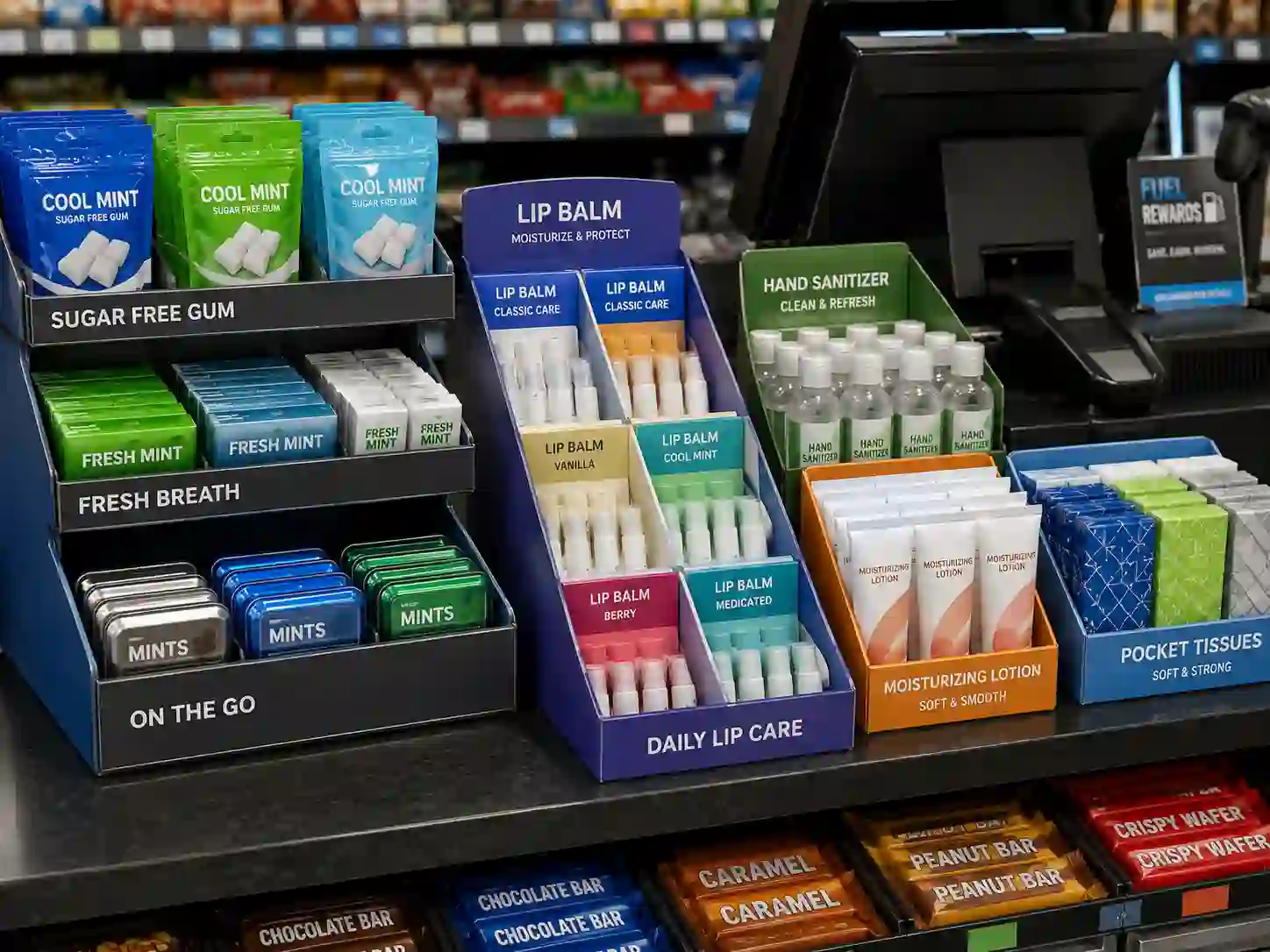
Counter displays work well for small, light, high-margin items. Common examples include candy, gum, lip balm, travel-size personal care, small electronics accessories, gift cards, and promotional sample packs.
The key advantage is visibility at the payment area. Shoppers are already waiting, so the product has a chance to trigger a last-minute purchase.
For structure, counter displays often use compact trays, tiered steps, or small peg hooks. The back panel should not block the cashier’s view. The footprint also needs to respect counter space because store staff may reject displays that interfere with payment equipment or receipt printers.
A good counter unit should include:
- A strong base tray
- Clear product-facing angle
- Easy refill access
- Stable back panel
- Compact flat-pack design
For light items, 350gsm to 450gsm printed paperboard laminated to corrugated board may be enough. For heavier small packs, E-flute or B-flute corrugated board gives stronger support.
PDQ Displays for Fast Store Setup
PDQ displays are useful when speed matters. PDQ means “pretty darn quick,” and in retail display work it usually refers to pre-packed or fast-set display trays that can go from carton to shelf or counter with minimal handling.
This format works well for convenience store chains because staff time is limited. A PDQ tray can arrive filled with products, be opened quickly, and placed on a shelf, counter, or small promotional area.
The structure must protect products during transportation. Side walls, front lips, dividers, and tear-away panels need proper testing. If the tray is too weak, it may bend during shipping. If it is too hard to open, store staff may damage the print surface.
PDQ displays are practical for:
- Snack bars
- Small beverage cans
- Trial-size cosmetics
- Batteries
- Small boxed products
- Seasonal impulse goods
When designing PDQ trays, we pay close attention to product orientation. The front panel must show the product clearly after opening. Refill cartons should also match the display quantity so store teams can restock without mixing SKUs.
Floor Displays for Promotions and Product Launches
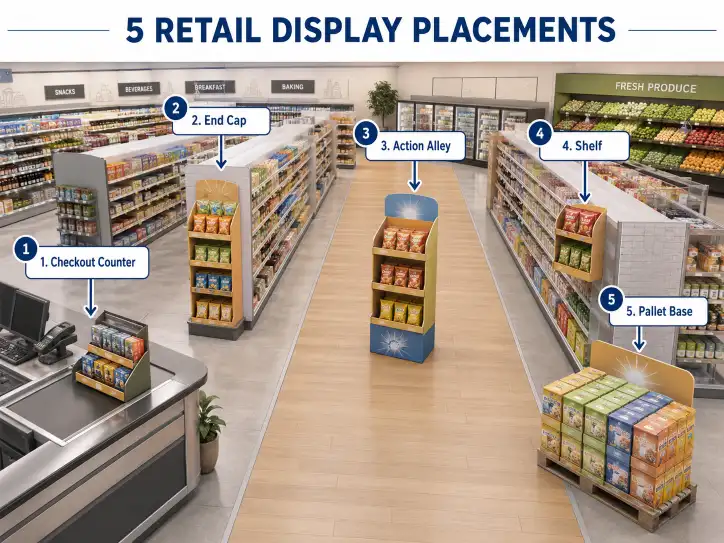
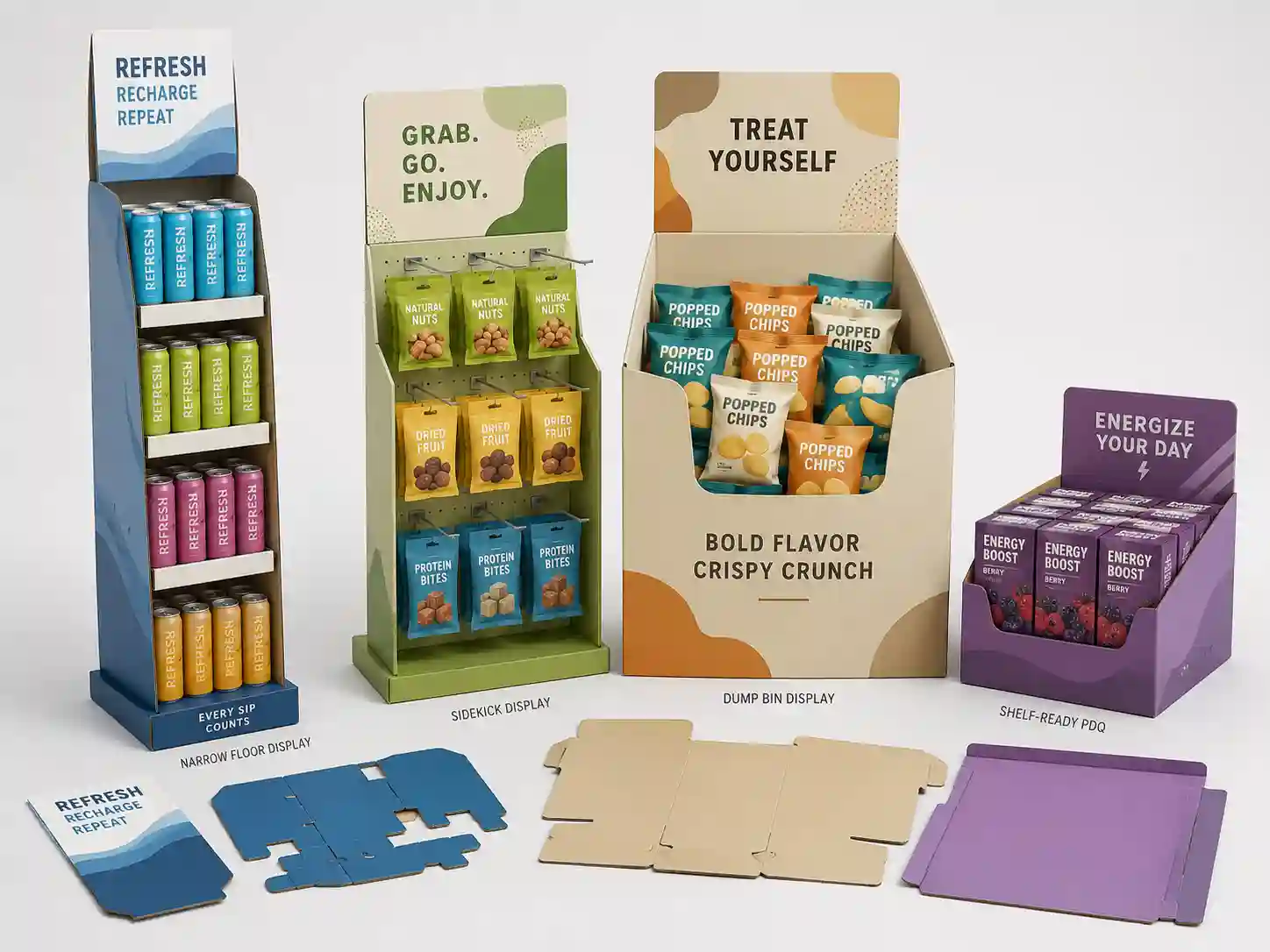
Floor displays give brands stronger visibility than counter displays, but they need more store space. In convenience stores, floor displays usually perform best near entrances, aisle ends, beverage areas, or seasonal promotion zones.
A floor-standing cardboard display for convenience stores must be narrow enough for traffic flow. Wide displays may look impressive in a showroom, but they can fail in store approval if they block movement.
For floor displays, structure depends heavily on product weight. A display holding chips, paper products, or lightweight gift items has different needs from one holding drink bottles, canned products, or dense personal care products.
Important structure details include:
- Shelf board thickness
- Side panel strength
- Back support
- Bottom base design
- Load distribution
- Header stability
- Anti-tilt performance
For heavier products, we may suggest reinforced shelves, double-wall corrugated board, internal support panels, or a stronger base. Load testing during sampling helps confirm whether the display can hold the target quantity through store use.
Sidekick Displays for Aisle and Cooler Areas
Sidekick displays attach to or stand beside shelves, aisle fixtures, or cooler areas. They are useful when floor space is limited but brands still want secondary placement.
In convenience stores, sidekick displays can work for small packaged snacks, energy shots, phone accessories, cosmetics, and promotional add-ons near related product categories.
The challenge is balance. A slim sidekick display can become unstable if products are removed unevenly. Hook placement, pocket depth, and base support must be checked carefully.
Sidekick displays also need clear assembly instructions. Some stores may not have trained merchandising teams, so the structure should fold, lock, or hang in a simple sequence.
Quick Comparison Table
| Display Type | Best Placement | Suitable Products | Main Structure Concern | Best For |
|---|---|---|---|---|
| Counter display | Checkout counter | Candy, lip balm, accessories, sample packs | Small footprint and stable back panel | Impulse purchases |
| PDQ display | Counter, shelf, small promo area | Snack bars, batteries, small boxed goods | Transit protection and fast opening | Chain rollout |
| Floor display | Entrance, aisle end, promo zone | Snacks, beverages, personal care, seasonal goods | Shelf load and anti-tilt support | Product launches |
| Sidekick display | Shelf side, cooler area, aisle fixture | Light snacks, energy shots, small add-ons | Balance and secure placement | Space-saving promotion |
| Dump bin display | Entrance or seasonal area | Bulk light products, toys, packaged snacks | Base strength and easy picking | High-volume loose display |
How Product Weight Changes the Display Choice
Product weight is one of the first details a manufacturer needs. A display for 20g snack packs can use a different shelf structure from a display for 250ml cans or glass jars.
If the product is light, the priority may be print impact, shelf angle, and easy picking. If the product is heavy, the priority shifts to board grade, internal support, shelf depth, and compression strength.
For heavier convenience store items, we often recommend testing:
- Single shelf load
- Total display load
- Side pressure
- Front picking pressure
- Carton drop risk
- Long-distance export packing strength
This is where sampling matters. A white sample can test the structure before printed artwork begins. A printed sample can then confirm color, finish, assembly, and product fit.
For B2B buyers, this process saves money. It is better to adjust shelf support during sampling than to find bending shelves after mass production.
Store Placement Should Guide the Structure
A cardboard display for convenience stores should be designed around the store zone.
Checkout Zone
The checkout area needs compact displays. Height should be controlled, and the product should be easy to pick with one hand. Small tiered displays and PDQ trays often perform well here.
Entrance Zone
The entrance area works for seasonal launches, beverage promotions, snack bundles, and new product campaigns. Floor displays and dump bins can attract attention, but the base must be stable.
Cooler or Beverage Zone
Sidekick displays and narrow floor displays can support cross-selling near drinks. For example, a snack brand may place a slim display beside a beverage cooler.
Aisle End
Aisle-end areas can support floor displays, pallet-style mini displays, or stacked promotional units. Here, the display should communicate the offer quickly because shoppers pass at speed.
Material Choices for Convenience Store Displays
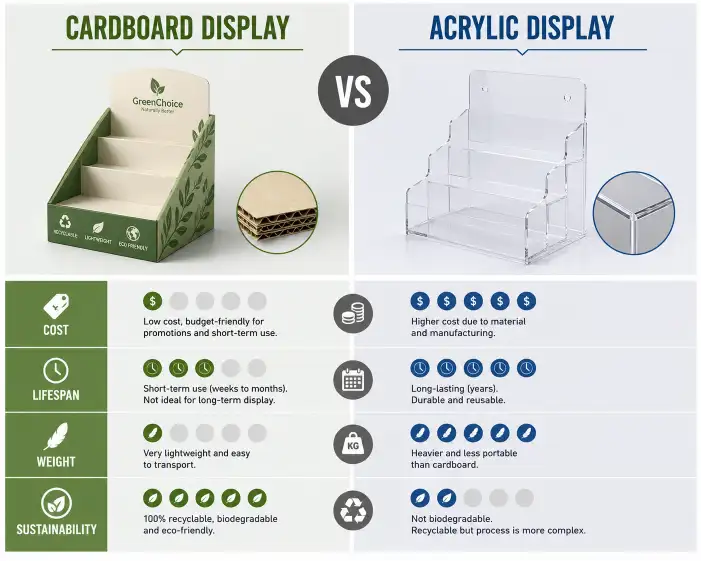
Material choice affects strength, print quality, shipping cost, and assembly performance. Most cardboard displays use corrugated board, paperboard, or a combination of both.
Common options include:
- E-flute corrugated board for clean print and light to medium strength
- B-flute corrugated board for stronger shelf and side support
- EB-flute for heavier floor displays
- Greyboard for premium rigid display elements
- CCNB or SBS paper for printed surface mounting
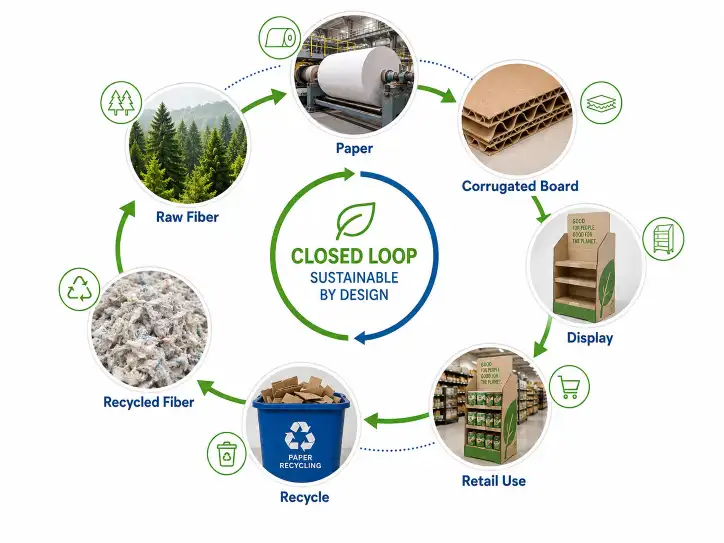
- Kraft paper for natural or eco-style campaigns
For brand owners with sustainability requirements, FSC-certified paper can support responsible sourcing claims. For production systems, ISO-related quality management can help buyers understand factory process control. FEFCO standards are also useful when discussing corrugated packaging formats and carton structure.
Not every project needs the strongest material. Overbuilding a display can increase cost and shipping weight. Underbuilding creates risk. The right answer depends on product weight, display size, shipping route, store use, and campaign duration.
Printing and Finishing Should Support Fast Buying Decisions
Convenience store shoppers do not study a display for long. The message needs to be clear.
A display should show:
- Product type
- Key benefit
- Promotional offer
- Brand color
- Price or campaign message if needed
- Clear SKU separation
Popular print and finishing choices include matte lamination, gloss lamination, spot UV, embossing, foil stamping, and water-based coating. For convenience stores, practical durability often matters more than luxury finishing. The print surface should resist normal handling during packing, assembly, and store placement.
A clean header card can help shoppers notice the display from a few steps away. Shelf strips, front lips, and side panels can support the sales message from different angles.
Assembly Design Matters for Store Teams
A strong display can still fail if store staff cannot assemble it quickly. Convenience stores may have fewer staff on shift, so the setup process should be simple.
Good assembly design includes:
- Foldable structure
- Clear locking tabs
- Numbered instruction sheet
- No-tool setup where possible
- Pre-glued parts when suitable
- Simple shelf insertion
- Clear carton labels
For larger chain projects, we can also design displays for semi-assembled packing. This reduces store setup time, but it may increase shipping volume. The buyer needs to balance labor savings against freight cost.
A practical cardboard display solution should consider both factory production and store execution. The display must look good, arrive safely, and stand correctly after setup.
Flat Packing and Export Packing
Export packing is a major part of B2B display projects. A display may look perfect in the sample room, but it still needs to survive international shipping, warehouse handling, and store distribution.
Flat packing helps reduce freight cost. It also lowers storage pressure for distributors and retail teams. However, flat-packed displays need clear assembly design and strong outer cartons.
For export orders, we usually consider:
- Master carton size
- Carton weight
- Edge protection
- Moisture risk
- Pallet loading
- Assembly instruction placement
- Spare parts if needed
- Carton marks for SKU control
If the display ships with products inside, the structure and carton need extra testing. Product-filled PDQ trays, for example, must protect both the printed tray and the goods during transport.
For international buyers, clear packing details also make communication easier with freight forwarders, warehouses, and retail distribution centers.
Sampling Before Mass Production
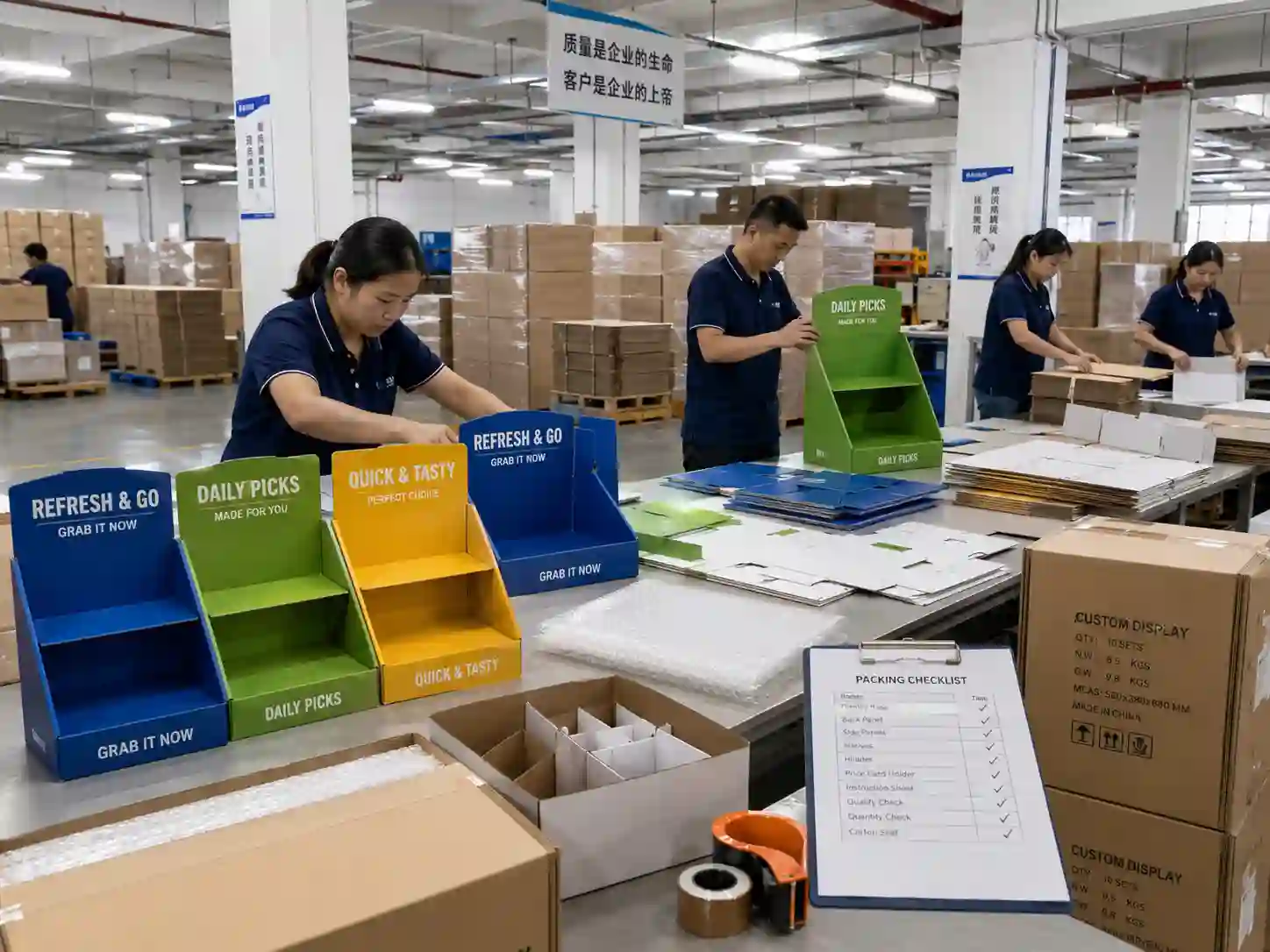
Sampling is not only about appearance. It is a technical checkpoint.
A useful sample should confirm:
- Product fit
- Shelf load
- Display size
- Assembly process
- Print layout
- Material strength
- Packing method
- Store placement logic
For a cardboard display for convenience stores, sampling can reveal small problems early. A shelf may need a deeper lip. A header may need stronger support. A hook display may need better spacing. A PDQ tray may need a smoother tear-open panel.
At Leader Display, we look at these details before bulk production because convenience store programs often involve many locations. A small structure issue can become a large rollout problem if it reaches stores.
Which Display Works Best?
There is no single best format for every convenience store campaign. The best choice depends on the product and the retail goal.
Choose a counter display when the product is small, light, and impulse-driven. Choose a PDQ display when chain rollout speed and shelf-ready packing matter. Choose a floor display when the campaign needs stronger visibility. Choose a sidekick display when space is limited and secondary placement is important. Choose a dump bin when the product is light, bulk-packed, and easy to pick.
For many brands, the best program may combine two formats. A floor display can support the main launch, while a counter PDQ tray can capture checkout purchases. A sidekick display can create extra exposure near related categories.
This combination approach works well for snacks, beverages, personal care, seasonal campaigns, and new product tests.
Practical Questions to Answer Before Requesting a Quote
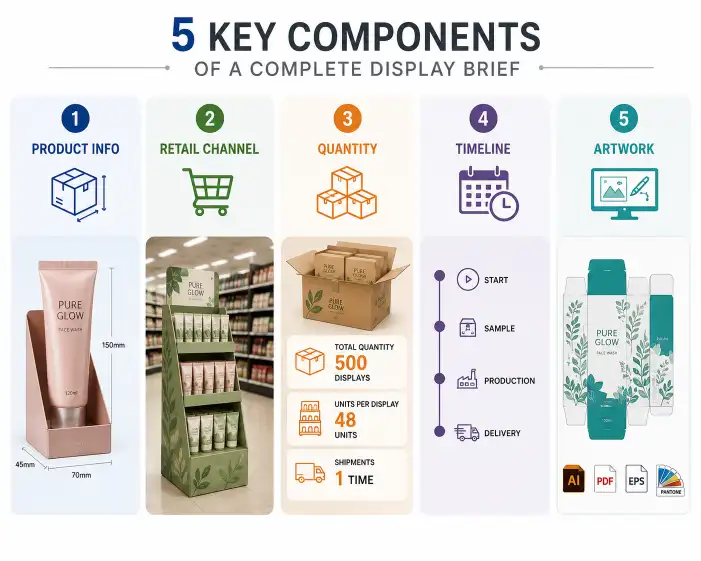
Before asking for pricing, prepare the details that affect structure and cost. This helps the manufacturer recommend the right display instead of guessing.
Useful details include:
- Product size and unit weight
- Number of SKUs
- Quantity per display
- Target store placement
- Display size limit
- Campaign duration
- Required print finish
- Flat-pack or pre-packed requirement
- Destination country
- Order quantity
- Retailer instructions if available
Photos, product drawings, or sample products help even more. With accurate product data, the factory can calculate shelf spacing, board strength, packing size, and estimated production method.
Build the Display Around the Store, Not Only the Artwork
Convenience store displays need a balance of sales appeal and engineering. The artwork attracts attention, but the structure carries the product, protects the campaign, and helps store staff execute the rollout.
For B2B buyers, the best next step is to define the store placement, product load, and packing method first. Then the display structure, material, printing, and export carton can be developed around real retail conditions. With the right sample and a practical production plan, your convenience store promotion can move from concept to shelf with fewer delays and better in-store performance.