A well-planned cardboard display for sporting goods does more than hold products. It helps buyers compare, pick up, and purchase items faster in a busy retail aisle. For brand owners and retail teams, the best display format depends on product weight, store location, refill method, and campaign goals.
Sporting goods cover a wide range of products: resistance bands, grip trainers, golf accessories, sports bottles, balls, socks, gloves, training tools, yoga accessories, fishing accessories, outdoor items, and small fitness gear. Some products are light and hang well. Others need strong trays, reinforced shelves, or floor placement.
As a practical cardboard display manufacturer, we do not choose a format by appearance alone. We look at how the product will sit, how many units the retailer wants to show, how often staff need to refill, and how the display will survive packing and transport.
Why Sporting Goods Need a Different Display Strategy
Sporting goods are often handled more than beauty, snacks, or stationery products. Shoppers pick them up, compare size or grip, test the texture, and sometimes place them back in the wrong position.
That means the display must be clear, strong, and easy to organize.
A sports bottle needs stable shelf depth. A pair of gloves may need peg hooks. Resistance bands can work in PDQ trays, hanging displays, or compact floor displays. Balls may need dump bins or open compartments. Small boxed accessories can use counter displays near checkout or department counters.
Good display planning starts with three questions:
What is the product weight?
Light products can use peg displays, counter displays, sidekick displays, or PDQ trays. Medium-weight products may need thicker corrugated board, stronger shelf lips, and reinforced side panels. Heavier items may require double-wall corrugated board, internal support, or a pallet display.
Weight matters.
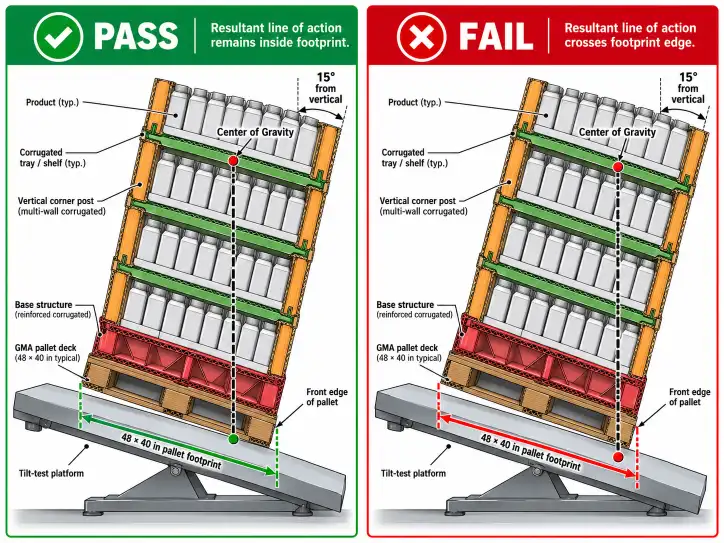
A display may look attractive in a sample photo, but bulk loading changes everything. If each shelf carries sports bottles, boxed grips, or outdoor accessories, the structure must be tested before mass production.
Where will the display be placed?
Sporting goods displays may appear in supermarkets, sports stores, warehouse clubs, department stores, convenience stores, gyms, trade shows, or seasonal retail areas.
A counter display fits small accessories and impulse products. A floor display builds stronger visibility. A sidekick display saves floor space and works near aisle ends. A pallet display supports club-store campaigns, larger inventory, and seasonal promotion.
Placement decides the structure.
How will the store refill it?
A display that looks good on day one may fail if it is difficult to refill. Retail staff need simple access. Product rows should stay organized after shoppers remove items. If refill cartons are used, the display should match the pack quantity and shelf capacity.
For export orders, refill planning should be discussed during the sample stage, not after production.
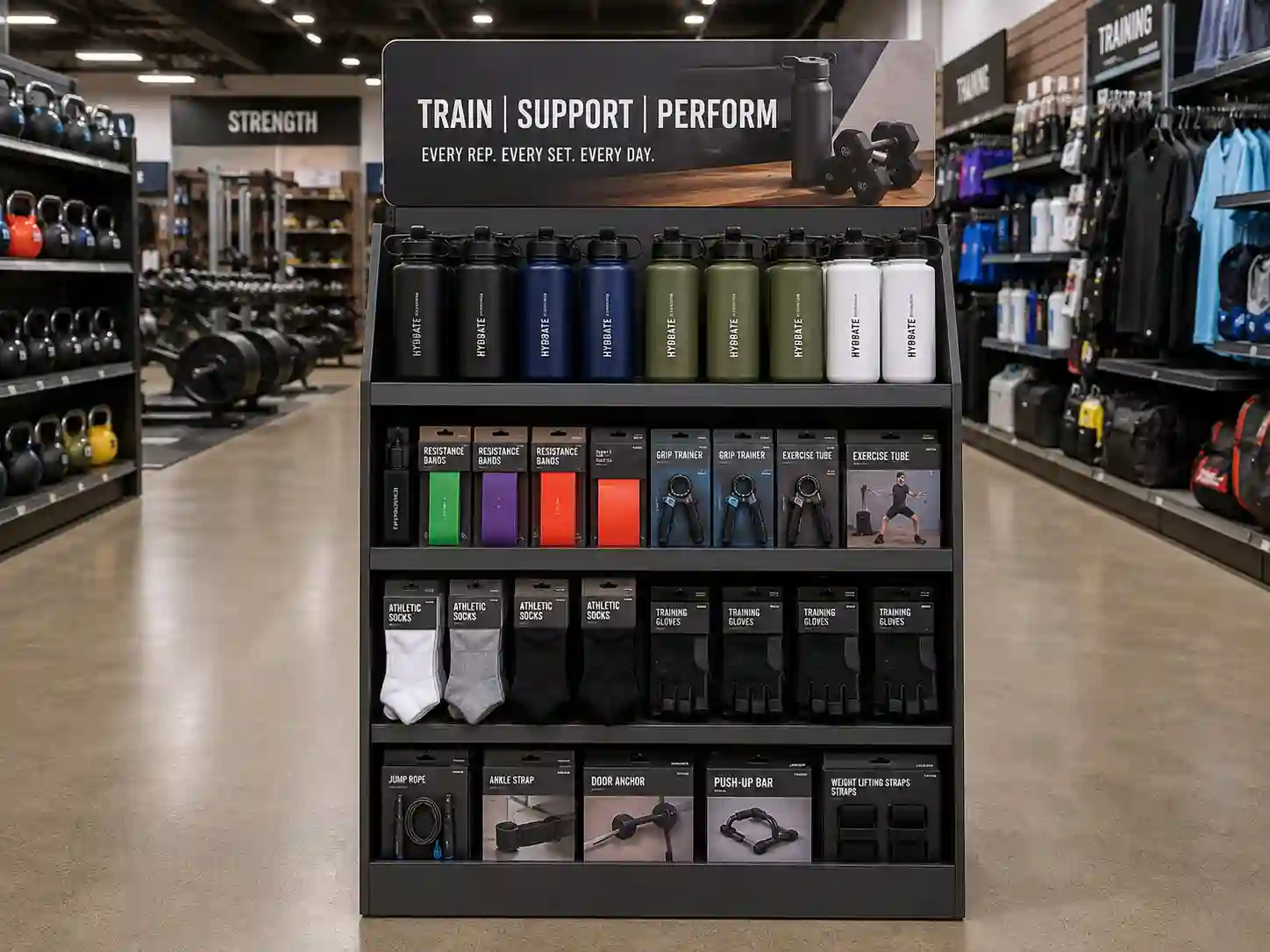
Main Cardboard Display Formats for Sporting Goods
Different sporting goods categories need different formats. The table below gives a practical comparison for B2B buyers.
| Display Format | Best For | Main Advantage | Key Production Check |
|---|---|---|---|
| PDQ Display | Grip trainers, tapes, small boxed accessories | Fast shelf placement and low setup effort | Tray depth, product count, inner carton fit |
| Counter Display | Small fitness tools, golf balls, socks, wristbands | Good for checkout and service counters | Front lip height, product visibility, stability |
| Peg Display | Gloves, bands, packaged accessories | Saves shelf space and shows hanging products clearly | Hook load, back panel strength, hole position |
| Floor Display | Bottles, boxed gear, training tools | Strong brand visibility in aisles | Shelf load, side support, anti-tilt structure |
| Sidekick Display | Lightweight sports accessories | Uses vertical space near aisle fixtures | Hanging method, retailer size limits, balance |
| Dump Bin Display | Balls, soft goods, seasonal items | Easy bulk selling and fast refill | Bin strength, opening height, product access |
| Pallet Display | Club-store campaigns and bulk packs | High stock capacity and strong promotion area | Pallet size, compression strength, export packing |
PDQ Displays: Best for Small Sporting Goods Accessories
PDQ displays work well when the product already has retail packaging. Examples include grip strength trainers, athletic tape, mouthguards, golf tees, tennis overgrips, small repair kits, and packaged resistance bands.
The strength of a PDQ display is simplicity. The display can be packed with products at the factory, shipped inside a master carton, and placed directly on the retail shelf.
That saves setup time.
For sporting goods, PDQ design should focus on clean product rows, strong front visibility, and enough tray depth to stop products from falling forward. If the product is narrow, dividers may be needed. If the product is boxed, the tray should match the box width to prevent messy placement.
A good PDQ sample should be tested with the real product, not only empty cartons. Product weight, box surface finish, and center of gravity can affect how the tray performs.
For small retail campaigns, a PDQ display can be a cost-efficient option. It uses less material than a floor display and can support multiple SKUs in a compact space.
B2B buyers comparing custom display options can review broader format ideas through custom cardboard displays when planning a new campaign.
Counter Displays: Good for Impulse Sports Products
Counter displays are useful when sporting goods are small, affordable, and easy to pick up. They can be used for socks, wristbands, whistle packs, mini pumps, golf balls, sports tape, and small fitness accessories.
Counter space is limited, so the structure must sell quickly.
A counter display should not be too tall or too deep. Retailers often prefer compact units that do not block staff movement or payment areas. Clear header cards, tiered trays, and front-facing product rows can help the product stand out without taking too much space.
For production, the key points are shelf angle, front lip strength, and bottom stability. Some counter displays ship flat-packed. Others ship pre-assembled with products loaded. The correct packing method depends on order quantity, labor cost, product fragility, and retailer requirements.
For export, we often recommend protective inner cartons and clear assembly instructions. A simple folding structure can reduce setup mistakes at the retail side.
Peg Displays: Strong Choice for Hanging Sporting Goods
Many sporting goods products come in blister packs, hang cards, header bags, or small boxes with hanging holes. Peg displays work well for gloves, skipping ropes, resistance bands, bike accessories, fishing accessories, small outdoor tools, and packaged training items.
A peg display helps shoppers see more products in a vertical area. It also keeps SKUs separated.
Hook position matters.
If hooks are too close, products overlap. If the back panel is too thin, hooks may loosen after repeated handling. If the product is heavy, the hook area may need reinforcement with extra board, plastic clips, or structural support behind the printed panel.
A peg display can be a counter unit, floor display, sidekick, or stand-alone rack. The best choice depends on total product weight and store placement.
For mixed sporting goods collections, peg displays can combine hanging hooks with small bottom shelves. This creates space for both flat packs and boxed items.
Floor Displays: Best for Brand Visibility and Mixed SKUs
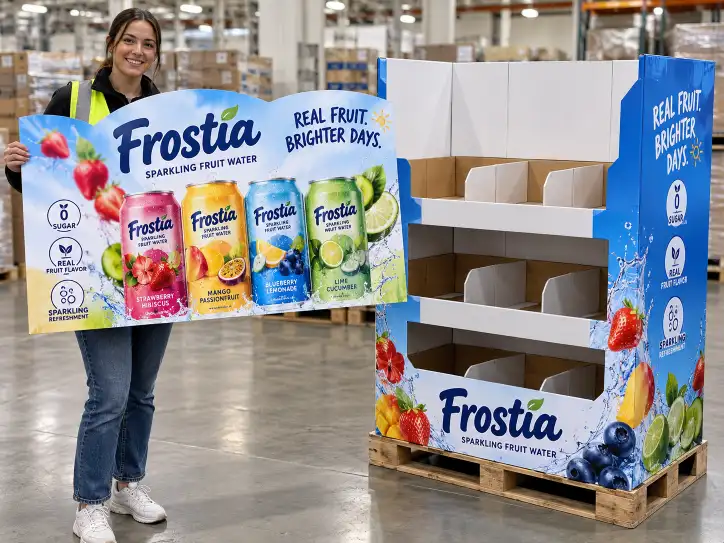
A floor display is often the best choice when a sporting goods brand wants strong visibility in the aisle. It can carry multiple products, include a large header, and create a branded zone in retail.
This format suits sports bottles, boxed fitness gear, yoga accessories, balls in small packs, grip products, gloves, and seasonal sports promotions.
A floor display must be engineered with product loading in mind. Shelf span, side panel thickness, flute direction, and internal support all affect performance. For medium-weight sporting goods, we may recommend reinforced shelves, double side walls, or cross-support parts.
The display should also be easy to assemble.
Retail staff may not spend much time reading instructions. Clear slot positions, numbered parts, and simple structure help reduce setup errors. When the display ships flat-packed, the carton should protect printed surfaces and prevent bending during export.
For a broader view of display structures, buyers can explore cardboard display solutions and compare different retail formats before requesting a quote.
Sidekick Displays: Useful When Floor Space Is Limited
Sidekick displays are common in supermarkets, department stores, convenience stores, and large retail chains. They hang on aisle fixtures, endcaps, or side panels, allowing brands to gain visibility without taking full floor space.
For sporting goods, sidekick displays are better for lightweight products. Examples include sports tape, grip bands, socks, hand warmers, gloves, compact outdoor accessories, and packaged training items.
The challenge is balance.
If the product is too heavy or loaded unevenly, the display may tilt or pull away from the fixture. Retailer requirements should be checked early, including hanging method, maximum size, and loaded weight limit.
Sidekick displays also need strong header visibility. Since the display is usually narrow, the artwork should focus on one core message, one hero product, and clear product grouping.
Dump Bin Displays: Practical for Balls, Soft Goods, and Seasonal Sales
Dump bin displays are useful when products do not need perfect front-facing rows. They work for soft balls, training cones, rolled towels, socks, sports toys, small outdoor items, and seasonal promotion goods.
The advantage is fast refill and high capacity.
A dump bin lets the store add many units quickly. Shoppers can browse by hand, which suits products sold through volume and price appeal.
However, the display should not look messy too soon. Internal dividers, stepped inserts, or separated compartments can help manage different SKUs. The opening height should allow easy access while still keeping products inside the bin.
For cardboard production, dump bins need strong side panels and a stable base. If the bin holds round products, pressure can push outward. Reinforced corners or double-layer panels can help maintain shape.
Pallet Displays: Best for Club Stores and Bulk Campaigns
Pallet displays are suitable for warehouse clubs, large retail events, seasonal campaigns, and high-volume sporting goods promotions. They can carry larger inventory and combine display structure with transport planning.
This format is often used for multi-packs, fitness kits, bottled products, outdoor bundles, or sports gift sets.
A pallet display must consider compression strength, pallet size, export carton layout, and store handling. It may include a pallet skirt, tray system, header card, corner protection, and printed side panels.
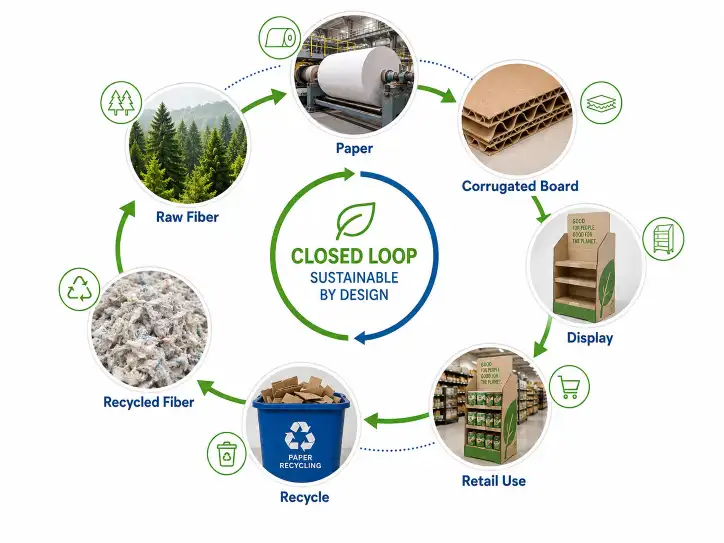
FEFCO-style corrugated packaging references can help align carton and structure discussions with suppliers. FSC-certified paper materials may be requested by brands with sustainability requirements. ISO-related quality management expectations can also be part of factory audits or buyer documentation.
For export orders, pallet display planning should include loading method, shipping marks, protective wrapping, and final carton structure. The display is not only a marketing tool. It is also part of the logistics plan.
Material and Structure Choices for Sporting Goods Displays
The material should match the product, not only the artwork.
Light sporting goods may use E-flute or B-flute corrugated board depending on structure and print needs. Medium-weight products may need stronger board combinations, laminated corrugated sheets, or reinforced shelves. Heavy or high-volume displays may require double-wall corrugated board or honeycomb board in some parts.
Key structural details to check
Shelf depth should fit the product size. If the shelf is too shallow, products fall. If it is too deep, products disappear from view.
Front lips should hold products without covering key packaging information.
Side panels should support loaded shelves and protect the display shape.
Headers should be tall enough for branding but not too tall for store restrictions.
Base panels should prevent tilting, especially for narrow floor displays.
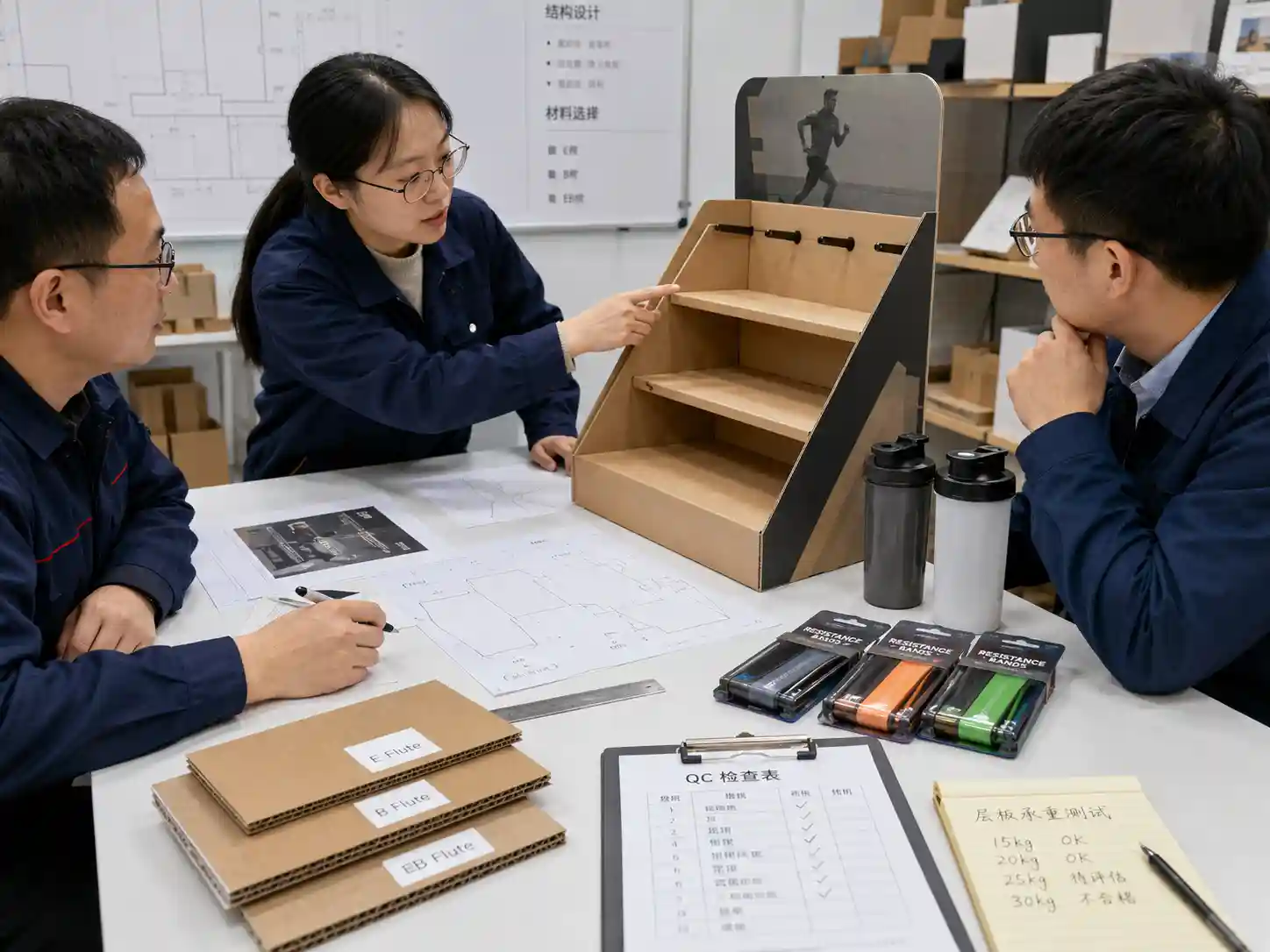
For sporting goods, testing should include full product loading. Empty display photos are not enough. A sample should be checked with real product weight, real product quantity, and intended refill condition.
Sampling: Where Good Display Decisions Are Made
Sampling is the stage where a display idea becomes a working retail tool. For a custom cardboard display for sporting goods, the sample should answer practical questions:
Can the display hold the loaded product weight?
Does the product fit cleanly in each tray, shelf, hook, or bin?
Can the display be assembled without confusion?
Does the artwork align with cutting, folding, and visible panels?
Can the structure be flat-packed safely?
Will the export carton protect the printed display?
This is where factory experience matters. A small structure change can reduce damage, improve assembly, or make the display easier to refill. For example, changing a shelf angle may improve product visibility. Adding a back support may reduce bending. Adjusting carton size may lower shipping risk.
Buyers planning a new retail launch can contact Leader Display with product dimensions, unit weight, target quantity per display, retail placement, and packing requirements.
Flat Packing, Assembly, and Export Packing
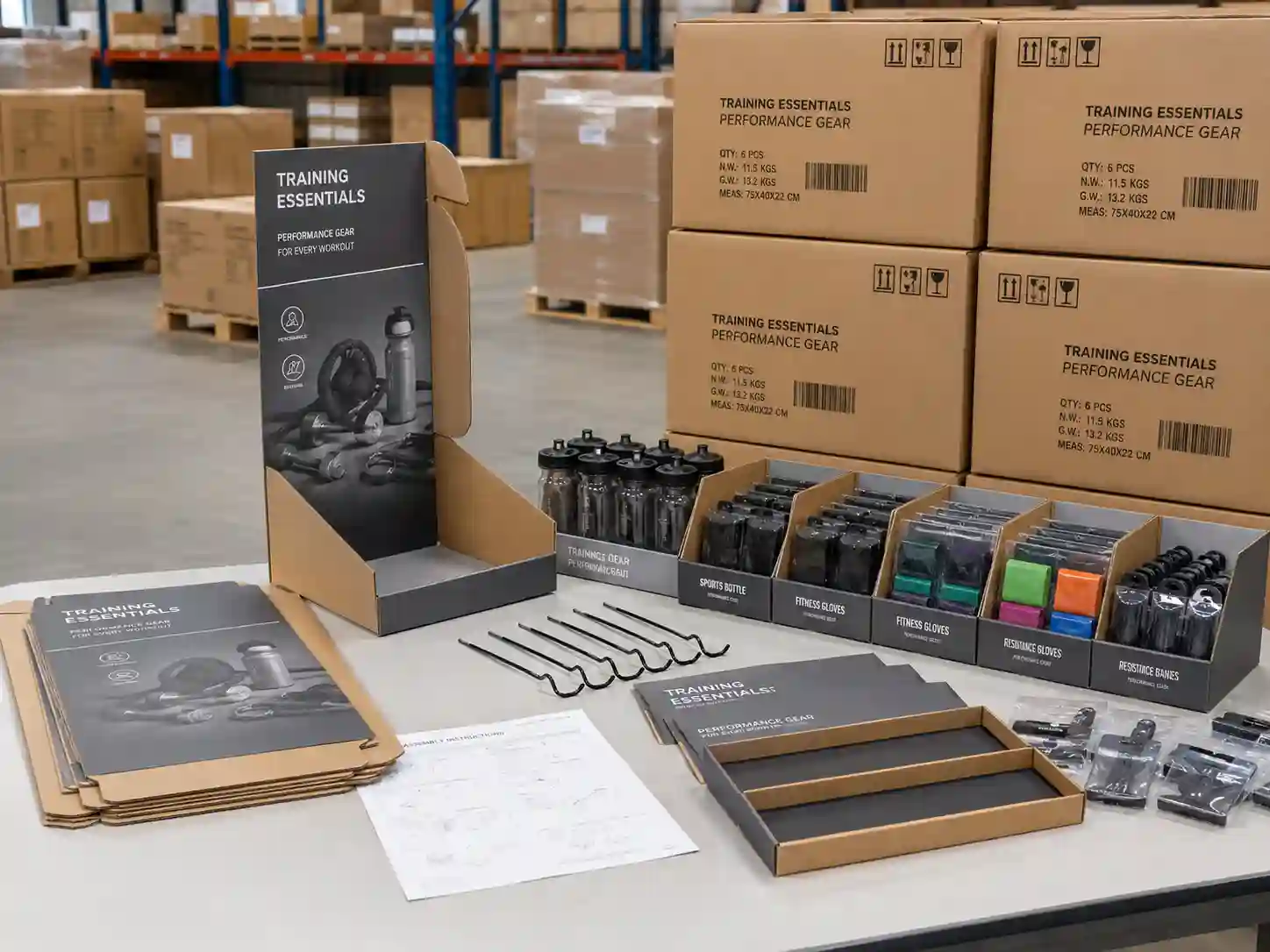
Many B2B buyers choose cardboard displays because they can be flat-packed. Flat packing saves shipping space, but the design must still be practical for store assembly.
A complex structure may look good in a rendering, but it can create problems if store staff need too many steps. A practical design uses clear locking tabs, strong slots, and easy-to-follow instruction sheets.
Export packing should protect corners, printed panels, headers, shelves, and small accessories such as hooks or clips. For loaded displays, product movement must be controlled. For empty flat-packed displays, the carton should prevent bending and surface scratches.
Refill cartons should also be planned. If a retailer refills the display during a campaign, the refill pack quantity should match shelf capacity. This prevents overstock on the display and keeps the presentation clean.
Which Format Sells Better?
There is no single best format for every sporting goods product. The better format is the one that fits the product, store, and campaign.
For small packaged accessories, PDQ and counter displays often work well. For hanging products, peg displays create order and visibility. For mixed SKUs and stronger branding, floor displays are usually more effective. For limited space, sidekick displays can be efficient. For bulk seasonal promotions, dump bins and pallet displays can move more volume.
The decision should be made with retail conditions in mind.
A strong sporting goods display should make the product easy to see, easy to pick up, easy to refill, and safe to ship. When structure, material, artwork, and packing are planned together, the display becomes more than a printed stand. It becomes a practical selling system for the store.
For buyers preparing a sports retail campaign, the next step is to match product size, unit weight, SKU count, and retail placement with the right structure, then move into sampling before bulk production.