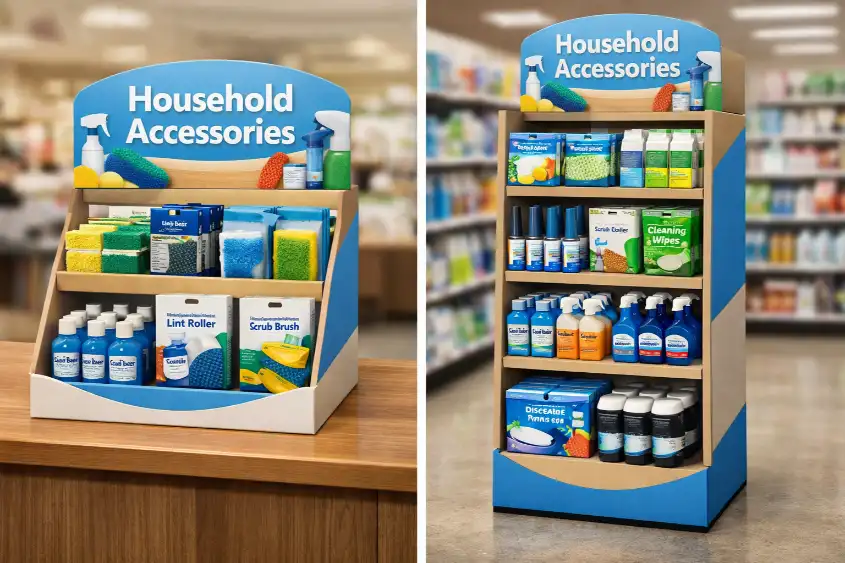
For many retail display projects, the biggest hidden cost is not the display itself. It is shipping. A display that looks affordable on paper can become much more expensive once freight, storage, and destination handling are added to the total project cost. That is why flat-pack cardboard displays are so important for brands, importers, and retailers who want better cost control.
Flat-pack design is not only a packaging decision. It is a cost strategy. By reducing shipping volume, improving carton efficiency, and making storage easier, flat-pack cardboard displays can lower the total landed cost of a retail campaign without reducing the visual impact of the display itself.

Executive Summary
If your project involves export shipping, multi-store rollout, or warehouse storage, flat-pack cardboard displays are usually one of the most effective ways to reduce total cost. The savings do not come from material alone. They come from using less shipping space, fitting more units per carton or container, improving warehouse efficiency, and reducing transport risk during handling.
Why Shipping Cost Becomes a Bigger Problem Than Buyers Expect
Many buyers compare suppliers based only on unit price. But in real projects, the true cost often changes after freight and storage are included. A display with a slightly lower production cost may become more expensive if it ships inefficiently or takes up too much space in cartons and containers.
This is especially important for larger projects, where a small difference in packing efficiency can multiply across hundreds or thousands of units. The more displays you ship, the more important flat-pack design becomes.
How Flat-Pack Design Reduces Total Cost
1. More Units Per Carton or Container
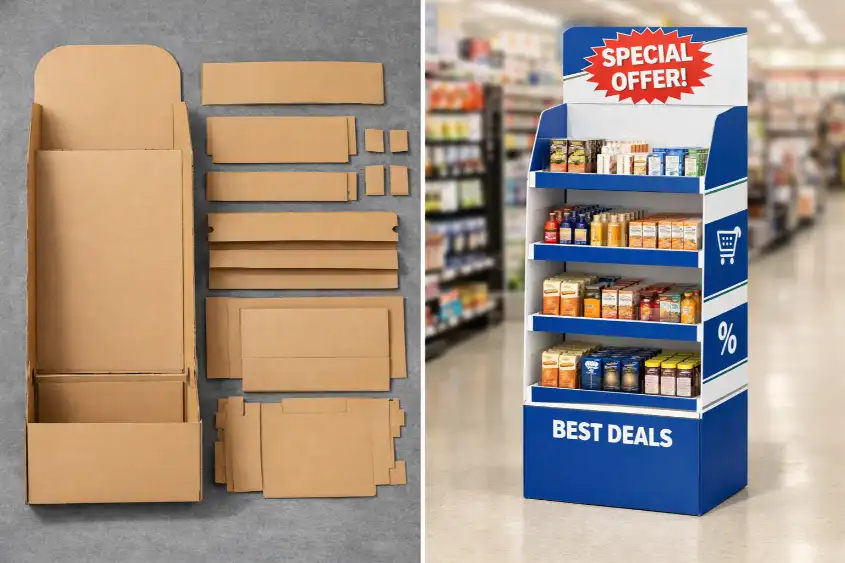
The most obvious benefit is space efficiency. Flat-pack displays can be folded and packed in a much more compact form than assembled displays. That usually means more units can be loaded into the same shipping volume.
2. Lower Freight Cost Per Unit
When more displays fit into the same shipment, the freight cost per display becomes lower. This matters a lot in export projects where container utilization is part of the commercial decision.
3. Easier Warehouse Storage
Flat-pack displays are usually easier to stack and store at destination. This reduces warehouse pressure and makes distribution to stores more practical.
4. Less Risk During Shipping
Bulky assembled displays often face more transport risk because protruding parts, headers, or open structures can be crushed or damaged more easily. A compact flat-pack format is usually more stable in transit.
Shipping Cost Levers Buyers Should Understand
| Cost Lever | How Flat-Pack Helps | Why It Matters |
|---|---|---|
| Carton efficiency | Fits more sets into each carton | Reduces freight cost per unit |
| Container loading | Improves space utilization | Lowers total shipment cost |
| Warehouse storage | Uses less storage volume | Makes rollout easier and cheaper |
| Handling risk | Protects structure in compact form | Reduces damage risk in transit |
| Store distribution | More practical to move in batches | Helps multi-location retail programs |
Flat-Pack Does Not Mean Weak Structure
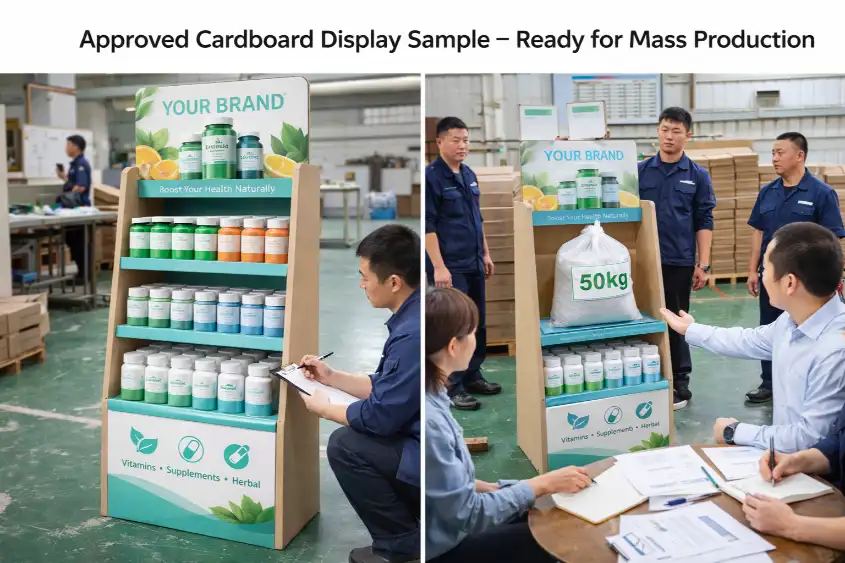
Some buyers assume that a flat-pack display must be less stable than an assembled one. In reality, structure performance depends on how the display is engineered, not on whether it is shipped flat. A well-designed display can still be packed flat, assembled easily, and perform strongly in-store once it is loaded correctly.
This is why structural design should always be discussed together with packing logic. If the product is heavy or the shelf span is wide, the display may need stronger board grade or reinforcement, but it can still be designed for flat-pack shipment. If you are reviewing board strength at the same time, our corrugated grades guide is a useful next step.
When Flat-Pack Is the Best Choice
Flat-pack cardboard displays are usually the best choice when:
- the project will be shipped internationally
- the order quantity is medium or large
- the displays will be distributed to multiple stores
- warehouse storage efficiency matters
- the display structure can be assembled easily at destination
For many supermarket, beverage, snack, cosmetics, and pet product projects, flat-pack is simply the most commercially practical format.
When Assembled Shipment May Still Be Worth It
Flat-pack is not always the answer. In smaller quantities, showroom samples, or urgent retail situations where setup time is extremely limited, an assembled display may still make sense. But buyers should understand that the convenience of ready-to-use shipment usually comes with higher transport cost and lower loading efficiency.
If you want a full side-by-side decision view, our article on flat pack vs assembled cardboard displays explains this choice in more detail.
How to Reduce Shipping Costs Even Further
Flat-pack structure is the starting point, but it works best when buyers also optimize other project details. These include outer carton layout, realistic master carton weight, pallet decision, display size, and the number of display sets packed per unit carton.
Useful ways to lower shipping cost further include:
- keeping the display footprint no larger than needed
- avoiding unnecessary decorative extensions that increase packing size
- using a practical header size instead of oversized top signage
- confirming how many display sets fit into one export carton
- checking if the same structure can support multiple SKUs
In many cases, a slightly smarter structure saves more money in freight than it adds in development cost.
Why Buyers Should Review Shipping Cost Together With MOQ
MOQ and shipping should not be evaluated separately. A project with a better unit price may still be less attractive if it ships inefficiently. At the same time, a slightly higher MOQ may create stronger container efficiency and a lower total cost per display once freight is included.
That is why serious buyers usually compare quantity, carton plan, and landed cost together. If you are still evaluating quantity logic, our MOQ guide and cost guide can help support that decision.
Questions Buyers Should Ask Before Approving Flat-Pack Shipment
- How many display sets fit into one export carton?
- What are the carton dimensions and carton weight?
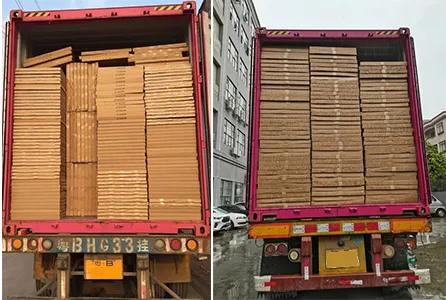
- How many cartons fit on one pallet or in one container?
- Does the display need inner protection between printed parts?
- How easy is the display to assemble at destination?
- Will the destination team need assembly instructions?
These questions usually reveal whether the supplier is thinking about real logistics efficiency or only about production completion.
Buyer Checklist Before You Finalize a Flat-Pack Project
- Confirm the final folded size of the display
- Check carton count and carton dimensions
- Review freight method and loading plan
- Ask for assembly instructions if needed
- Make sure shipping efficiency is compared with unit price
- Check whether the display still meets retail performance after flat-pack assembly
Useful External References
The corrugated industry consistently highlights the same advantages that make flat-pack display projects commercially attractive: corrugated is lightweight, cost-effective, graphically capable, and strong relative to its weight. The Fibre Box Association overview of corrugated is a useful introduction. FEFCO also explains how corrugated’s made-to-measure sizing helps logistics efficiency and better space usage in transport, which is directly relevant when planning flat-pack projects. See the FEFCO logistics overview and the FEFCO efficiency overview for more context.
Conclusion
Flat-pack cardboard displays reduce shipping costs not because they are simply “folded,” but because they improve total logistics efficiency. They help buyers ship more units per load, reduce freight cost per display, improve storage, and lower transport risk in large retail programs. For many export projects, flat-pack is not just a packaging format. It is one of the smartest cost-control decisions in the whole display program.
If you are planning a project and want help reviewing the best flat-pack structure for shipping efficiency, feel free to contact us.
FAQ
Do flat-pack cardboard displays really reduce shipping cost?
Yes. In many projects, they reduce freight cost because more display sets can fit into the same shipping space.
Are flat-pack displays weaker than assembled displays?
Not necessarily. Structural strength depends on engineering and board choice, not only on the shipping format.
When should buyers choose flat-pack shipment?
Flat-pack is usually the best choice for export projects, medium-to-large quantities, and multi-store retail rollouts.
Can flat-pack displays still look premium in-store?
Yes. A well-designed flat-pack display can still offer strong branding, good shelf performance, and premium presentation once assembled.
What should I ask the supplier about flat-pack shipping?
You should ask about folded size, carton dimensions, carton count, loading efficiency, and whether assembly instructions are needed.
How can I compare shipping cost more accurately?
Compare unit price together with carton plan, MOQ, loading quantity, and total landed cost, not production price alone.