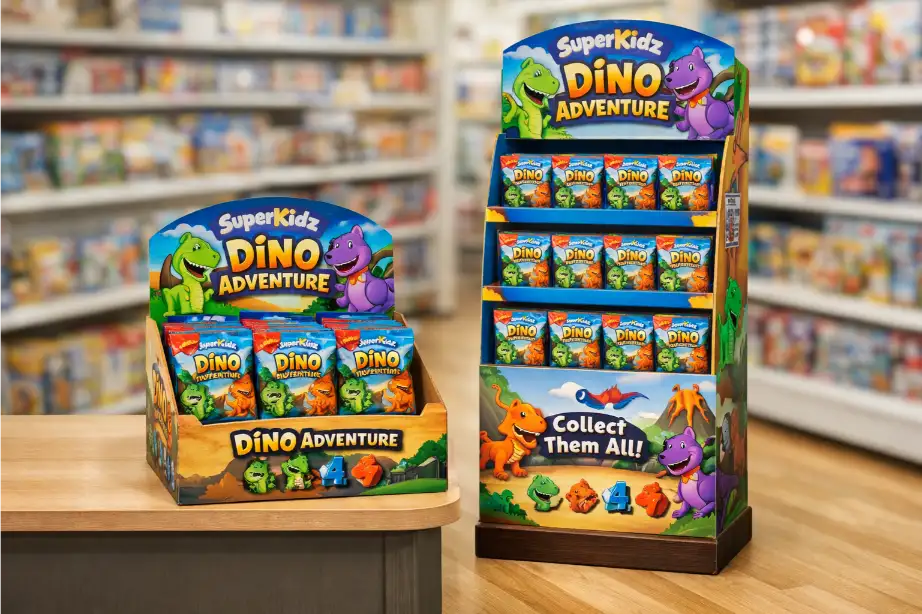
Your beautiful stationery gets lost on crowded, flat shelves. This hurts your brand’s visibility and leads to missed sales. A 4-sided display grabs attention and boosts sales from every angle.
A 4-sided cardboard display maximizes product visibility, creating an island of your brand in a busy retail space. This interactive, 360-degree experience encourages customer engagement and can significantly increase impulse buys for items like notebooks, pens, and planners.
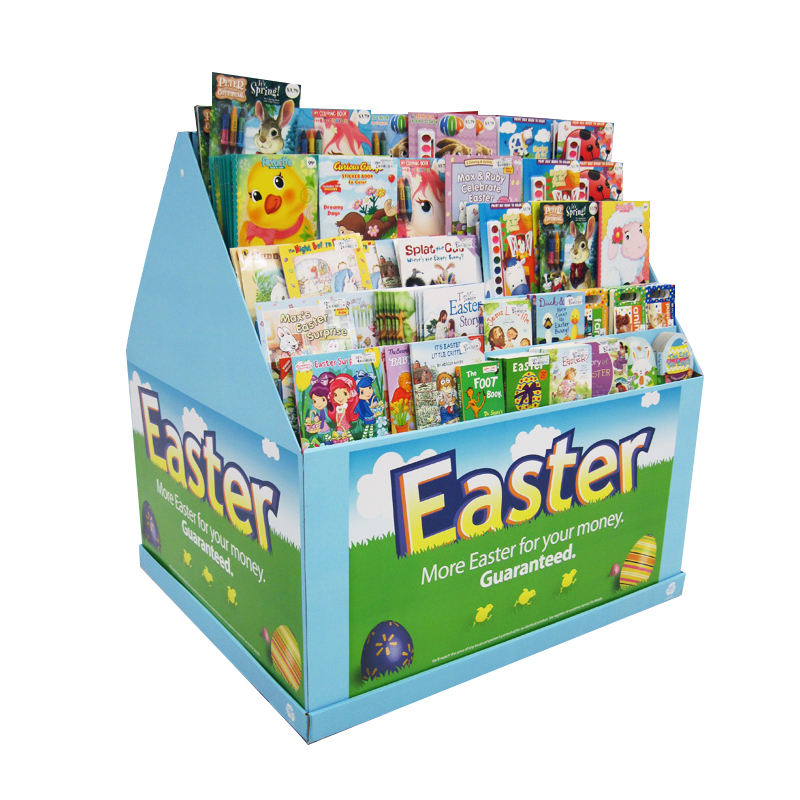
That’s the short answer. But if you’re a brand manager or a designer like my friend Peter, you need to know more than just the basics. You need to understand how these displays actually work and why they are such a powerful tool in the retail world. Over my 16 years in this business, I've seen these displays transform campaigns. Let's break down the details that make them a true game-changer for people like us who need real results.
Can You Fully Customize a 4-Sided Display for Your Brand's Unique Style?
Worried a standard display won't match your brand's unique personality? A generic look makes your products forgettable. But total customization lets you craft a display that truly tells your story.
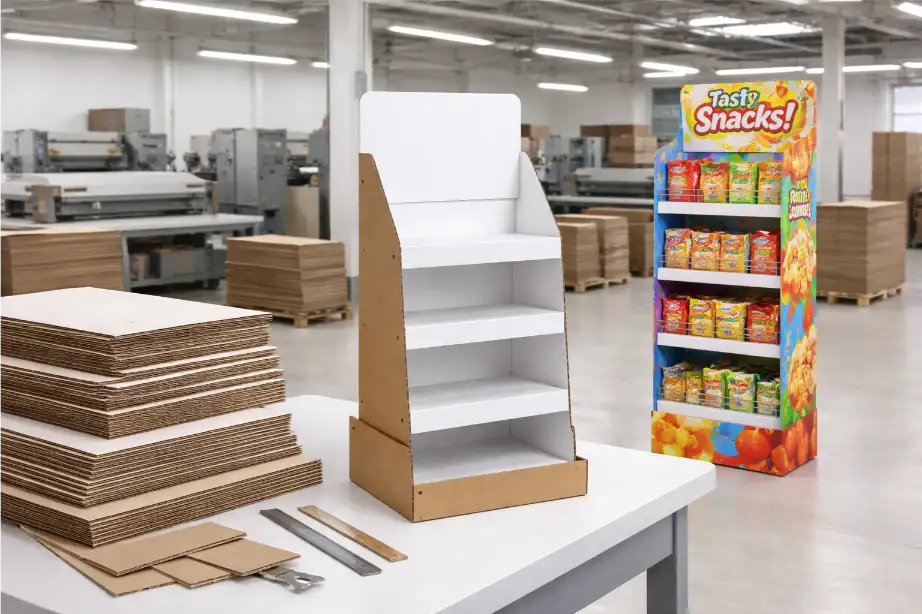
Absolutely. From its overall shape and size to the specific graphics and structural inserts, a 4-sided corrugated display is a blank canvas. You can tailor every inch to match your brand's colors, message, and the specific stationery products you're showcasing.
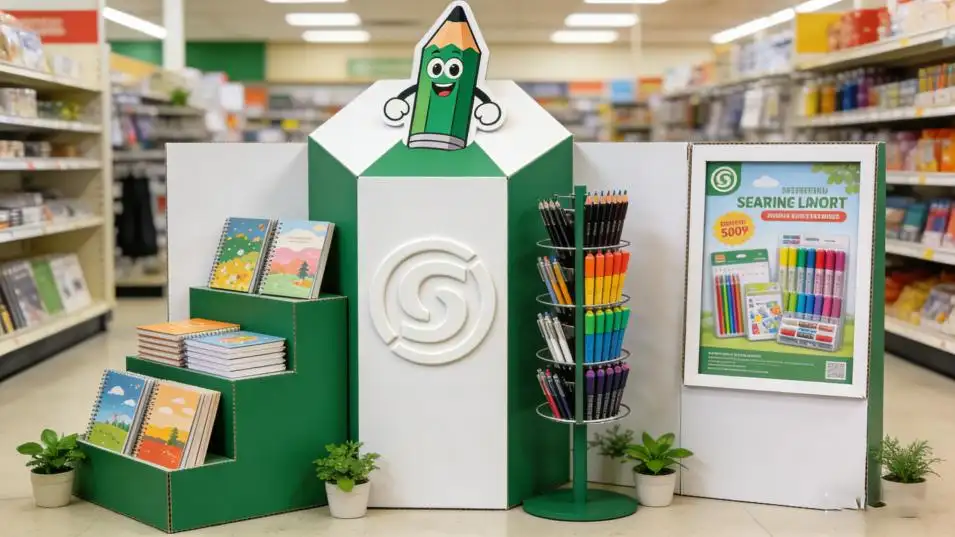
As a designer, you know that "customization" is more than just slapping a logo on a box. It’s about creating an experience. I remember a project for a new line of artistic journals. The client wanted something that felt premium and creative, not just a rack for notebooks. We designed a four-sided display that looked like a stack of giant books, with each "book" level holding a different size of journal. This wasn't just a stand; it was a piece of art that told the brand's story. That's the power of true customization. For designers like Peter, this is where you can really shine. You can transform a simple structure into a powerful marketing tool with our custom display solutions.
Structural and Graphic Customization
The flexibility of cardboard allows for deep customization that goes beyond surface-level changes.
-
Structural Design: You are not limited to simple squares. We can create circular, hexagonal, or completely unique footprints. The shelves can be flat, angled, or converted into pockets or bins for smaller items like pens and erasers. We can also adjust the height and spacing between shelves to perfectly fit your products, whether they are tall planners or small sticky notes.
-
Graphic and Finish Design: This is where your brand comes to life. We use high-quality printing to ensure your colors are vibrant and your message is clear. You can also choose different finishes to achieve a specific look and feel.
| Feature | Standard Display | Custom 4-Sided Display |
|---|---|---|
| Shape | Basic rectangle | Custom shape (hexagon, circle, unique) |
| Shelving | Fixed, flat shelves | Angled, pockets, bins, adjustable height |
| Graphics | Simple logo print | Full-coverage, high-res CMYK printing |
| Finish | Matte/uncoated | Glossy/matte lamination, UV coating |
What Design Tricks Balance Strength and Cost in a Cardboard Display?
You need a sturdy display to hold your products, but the budget is always tight. One wrong move and the display is either too weak or too expensive. Smart engineering is the key.
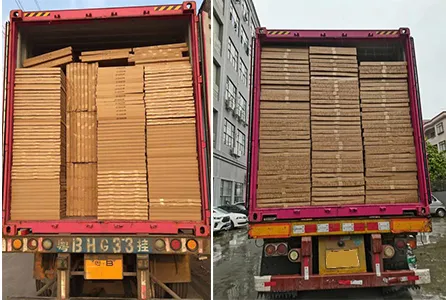
The secret is using the right corrugated flute type for the load, adding hidden internal support structures, and optimizing the design to minimize material waste. Smart engineering ensures the display holds weight without over-engineering it, which keeps material and shipping costs low.
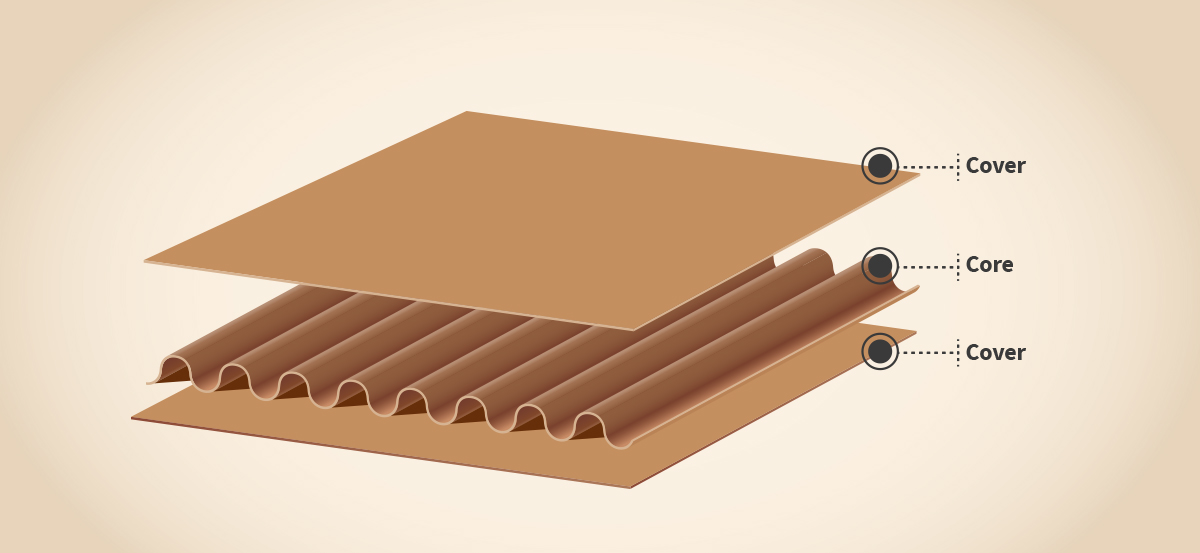
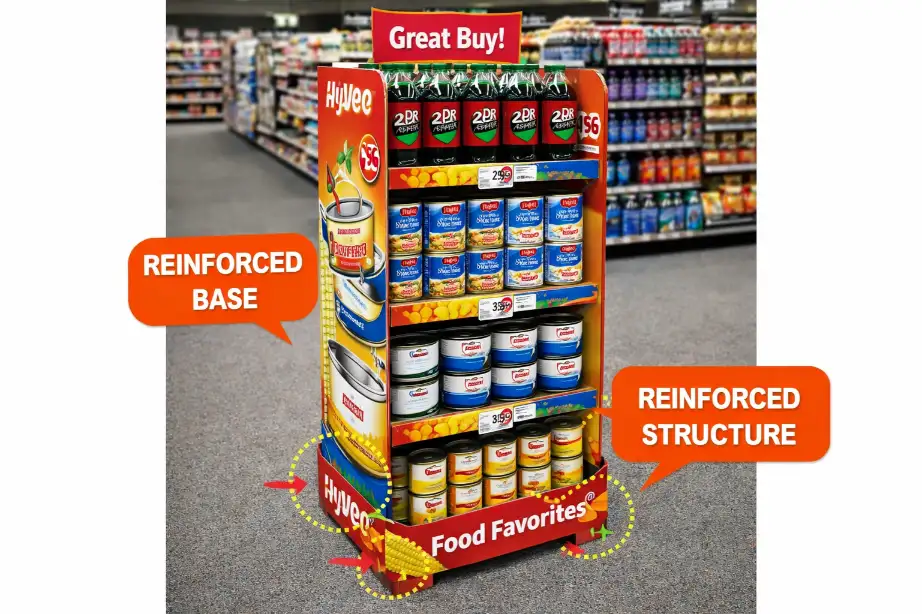
After 16 years, I've learned that a display's failure is almost always a design failure, not a material one. Peter often faces this challenge: a client wants a display to hold heavy stacks of notebooks but at the lowest possible price. The solution isn't just thicker cardboard; it's smarter design. We focus on directing the load down to the floor efficiently. This involves using vertical supports inside the main column and designing shelves that lock into the walls, creating a rigid, unified structure. This approach provides incredible strength without adding unnecessary material or cost, which is crucial for temporary corrugated floor displays.
Key Engineering Elements
To get that perfect balance, we focus on a few critical areas during the design phase.
-
Choosing the Right Flute: The "flute" is the wavy layer inside the cardboard. Different flutes offer different strengths. For a standard stationery display, a B-Flute is often sufficient. But for heavier items like hardcover planners, we might use a stronger EB-Flute, which combines two layers for superior rigidity.
-
Internal Support Systems: A hollow 4-sided tower is weak. We design internal cross-braces or vertical supports that act like the frame of a building. These are hidden from the customer but provide all the necessary strength to prevent buckling or sagging shelves.
| Flute Type | Common Use | Strength & Characteristics |
|---|---|---|
| E-Flute | Small boxes, printed packaging | Thin, great printing surface, low strength |
| B-Flute | Standard displays, shipping boxes | Good all-around strength, good crush resistance |
| C-Flute | Heavy-duty boxes | Thicker, stronger than B-Flute, good stacking |
| EB-Flute | Heavy-load displays, POP stands | Double-wall, very strong and rigid |
Is Corrugated Cardboard Really the Best Eco-Friendly Choice for Temporary Displays?
Your brand wants to be green, but plastic displays are everywhere. Using them can damage your hard-earned eco-friendly reputation. Cardboard is a sustainable alternative that resonates with today's shoppers.
Yes, it is one of the best choices available. Corrugated cardboard is typically made from a high percentage of recycled materials and is 100% recyclable itself. Its lightweight nature also reduces shipping emissions, making it far superior to plastic for temporary campaigns.
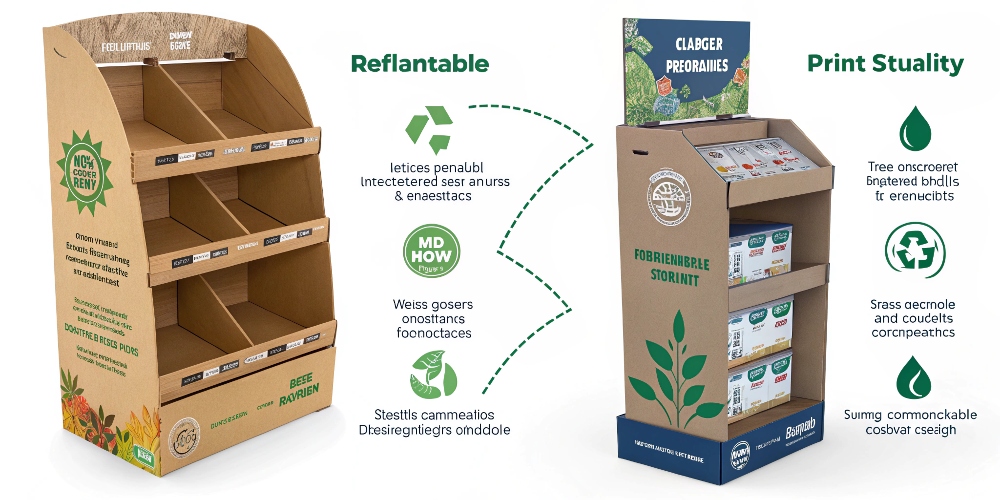
Sustainability isn't just a buzzword for us; it’s a commitment. I've spoken with many brand managers who are worried about the environmental impact of their marketing. A temporary display, by definition, has a short lifespan. So, what happens to it afterward matters a lot. A plastic or metal display often ends up in a landfill. But a cardboard display can go right into the recycling bin, ready to be turned into a new box or display. This circular lifecycle is something customers understand and appreciate. When a shopper sees your products in a well-designed cardboard display, you are sending a silent but powerful message: we care about our products, and we care about the planet. This aligns perfectly with the values of many consumers today, making it a smart choice for both marketing and your brand's reputation as a leader in eco-friendly packaging.
Comparing Material Sustainability
When you break it down, cardboard's advantages for temporary displays become very clear. It wins on almost every front when sustainability is a priority.
-
Lifecycle: The journey of a cardboard display is circular. It often starts as recycled paper, becomes a display, and then is easily recycled again. Plastic's lifecycle is much more complicated and often ends in a landfill.
-
Carbon Footprint: Because cardboard is so light, it requires less fuel to transport from our factory to warehouses and then to retail stores. This reduction in shipping weight adds up to a significantly lower carbon footprint compared to heavier materials.
| Material | Recyclability | Weight | End-of-Life |
|---|---|---|---|
| Corrugated Cardboard | High (often 100%) | Very Light | Recyclable, Biodegradable |
| Plastic (e.g., PVC) | Low/Difficult | Moderate | Landfill (most cases) |
| Metal | High (but energy-intensive) | Very Heavy | Recyclable, but rarely for temporary displays |
Conclusion
A custom 4-sided cardboard display isn't just a stand. It's a sales tool that boosts visibility, tells your brand story, and meets your budget. It's a smart, sustainable choice.