When ordering a cardboard display, one important decision buyers often overlook is how the display will be shipped: flat pack or fully assembled. This choice affects cost, shipping efficiency, storage, and even retail setup.
For most international projects, flat pack is the standard solution. However, assembled displays can still be useful in certain situations. In this guide, we compare both options from a real buyer perspective to help you choose the best solution for your project. If you are still exploring structure options, you can also review our custom cardboard display solutions.
Quick Answer: Which One Should You Choose?
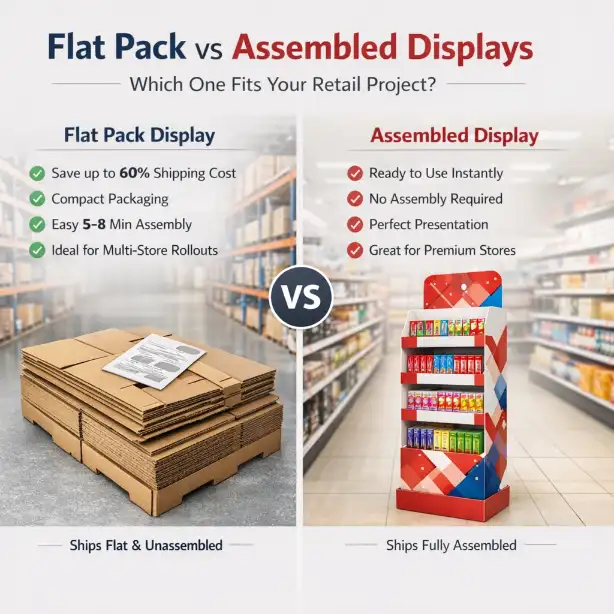
- Flat pack: best for cost, shipping efficiency, and large orders
- Assembled: best for small quantity or urgent retail setup
In most cases, flat pack is the preferred choice for export projects.
What Is a Flat Pack Display?
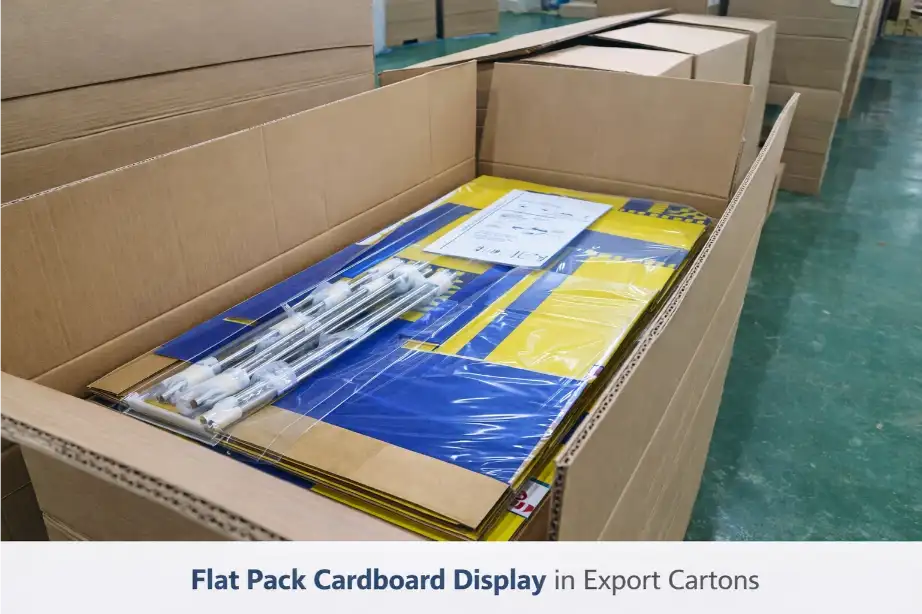
A flat pack display is shipped in folded form. All parts are packed into cartons and assembled at the destination. This method saves space and reduces shipping cost.
Advantages
- lower shipping cost
- more units per container
- reduced damage risk during transport
- easier warehouse storage
Disadvantages
- requires assembly
- needs simple instructions
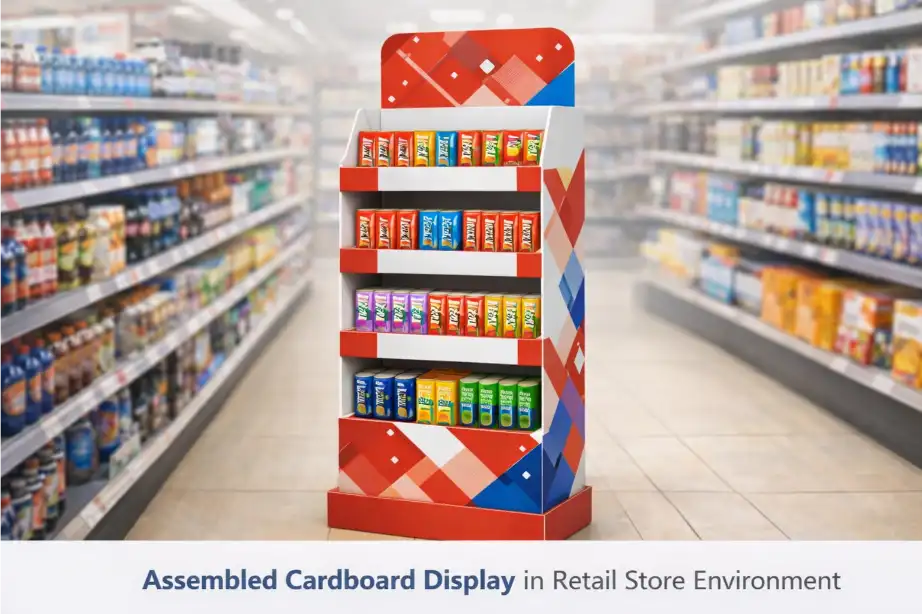
What Is an Assembled Display?
An assembled display is shipped fully built. It arrives ready to use without additional setup.
Advantages
- no assembly needed
- faster in-store setup
Disadvantages
- higher shipping cost
- takes more space
- higher risk of damage
Flat Pack vs Assembled: Comparison Table
| Factor | Flat Pack | Assembled |
|---|---|---|
| Shipping Cost | Low | High |
| Storage | Efficient | Bulky |
| Setup | Required | Ready to use |
| Damage Risk | Lower | Higher |
| Best For | Bulk orders | Small quantity |
Which Option Saves More Money?
Flat pack displays usually reduce total cost significantly because they improve container efficiency. Buyers can ship more units in the same space, lowering freight cost per unit.
If you are comparing budgets, you can also check our cost guide.
Which Option Is Better for Retail Setup?
If your team has limited time or no assembly staff, assembled displays may be easier. However, most flat pack displays are designed for quick assembly and can be set up in minutes.
Suppliers usually provide simple instructions to make assembly easy.
How Export Shipping Affects the Decision
For international shipping, flat pack is almost always the better choice. It reduces freight cost, improves loading efficiency, and protects the display during transport.
Learn more in our export packaging guide.
Common Buyer Mistakes
- choosing assembled without considering shipping cost
- underestimating assembly simplicity
- ignoring storage space limitations
Buyer Checklist
- confirm shipping method
- evaluate storage space
- consider assembly time
- calculate total cost
- check retail requirements
External References
Fibre Box Association
FEFCO Standards
Conclusion
Flat pack and assembled displays both have their advantages, but for most projects, flat pack is the more efficient and cost-effective choice. Buyers should consider shipping, storage, and setup before making a decision.
If you are unsure which option is best for your project, you can contact us for advice.
FAQ
Which option is cheaper?
Flat pack is usually cheaper due to lower shipping cost.
Is assembly difficult?
No, most displays are designed for easy assembly.
Which is better for export?
Flat pack is the standard choice.
Can assembled displays be shipped?
Yes, but it increases cost and risk.
Do flat pack displays require tools?
Most do not require tools.
Which option is faster for retail setup?
Assembled displays are faster since no setup is needed.