If you are sourcing a custom cardboard display, one of the first questions you will ask is simple: how much does it cost? The short answer is that there is no fixed price. The cost of a cardboard display depends on structure, size, quantity, printing, and shipping. But the good news is that once you understand how pricing works, you can control your budget and avoid overpaying.
This guide is written for real buyers. Whether you are a brand, importer, or retailer, this article explains how pricing actually works in the industry and how you can get the best value from your supplier. If you are still exploring display types, you can also check our custom cardboard display solutions.
Quick Price Range (What Most Buyers Pay)
Here is a simplified reference based on common projects:
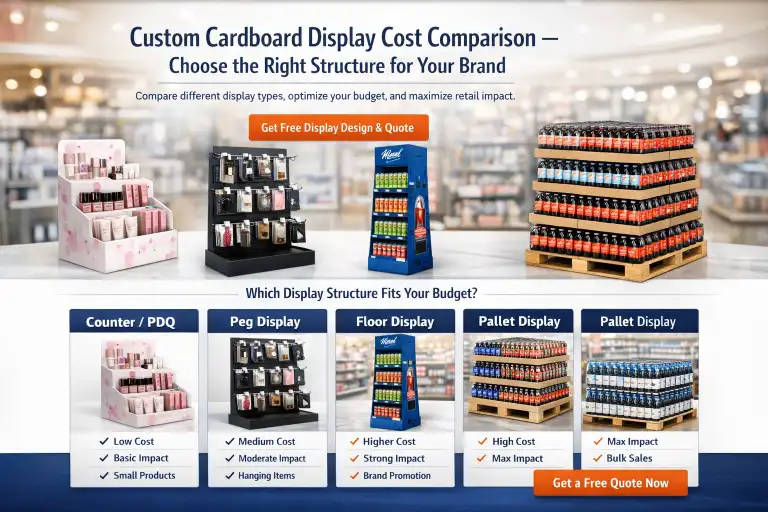
| Display Type | Typical Price Range | Best For |
|---|---|---|
| Counter Display | $1 – $10 / unit | Small products |
| Floor Display | $10 – $50 / unit | Retail promotions |
| Pallet Display | $50 – $150+ / unit | Bulk retail |
These are general ranges. Actual pricing depends on multiple factors explained below.
What Really Affects the Cost?
1. Structure Design
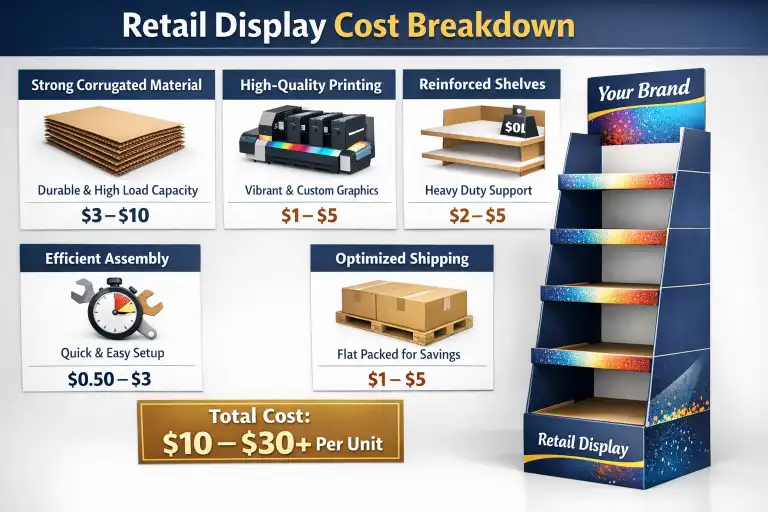
The biggest cost factor is structure. A simple display costs much less than a complex one with reinforced shelves or custom shapes.
2. Size of the Display
Larger displays use more material and require stronger support, increasing cost.
3. Printing and Finishing
Basic printing is affordable, while premium finishes like matte lamination or spot UV increase cost. You can learn more in our printing guide.
4. Order Quantity (MOQ)
Higher quantities reduce unit cost. Small orders have higher pricing due to setup cost. See MOQ details.
5. Load-Bearing Requirement
Heavy products require stronger materials and reinforcement, which increases cost.
6. Export Packaging
Flat-pack packing, carton quality, and shipping method also influence total cost. Check export packing.
How to Reduce Cost Without Reducing Quality
- simplify structure where possible
- avoid unnecessary finishing
- increase order quantity
- optimize display size
- use standard materials
Smart design decisions can reduce cost by 20–40% without affecting performance.
Common Buyer Mistakes
- choosing complex structure without need
- over-designing graphics
- ordering too small quantity
- ignoring shipping cost
- not testing sample before production
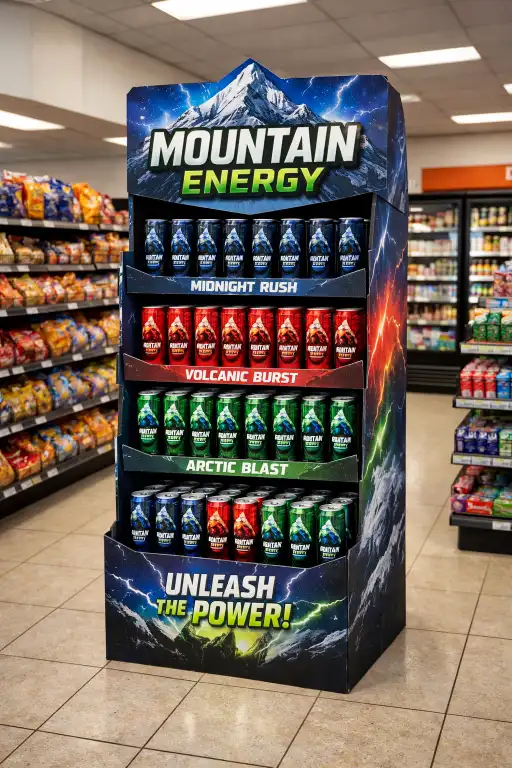
Real Example (Typical Project)
A beverage brand ordering 1,000 floor displays:
- structure: standard floor display
- printing: offset + gloss
- price: around $15–$25 per unit
If the same project is ordered at 5,000 units, the price may drop significantly.
Buyer Checklist Before Asking for Price
- product size and weight
- number of products per display
- display size
- target quantity
- retail environment
- shipping destination
External References
Fibre Box Association
FEFCO Standards
Conclusion
Custom cardboard display cost is not just about price per unit. It is about choosing the right structure, materials, and quantity for your project. Buyers who understand pricing factors can reduce cost while maintaining performance.
If you want an accurate quote based on your project, you can contact us directly.
FAQ
What is the cheapest display type?
Counter displays are usually the lowest cost.
How can I reduce cost?
Increase quantity and simplify design.
Does printing affect cost?
Yes, finishing options can increase cost.
Is MOQ important?
Yes, it directly impacts unit price.
Do heavy products cost more?
Yes, they require stronger structure.
Can I get a sample first?
Yes, sampling is recommended before production.