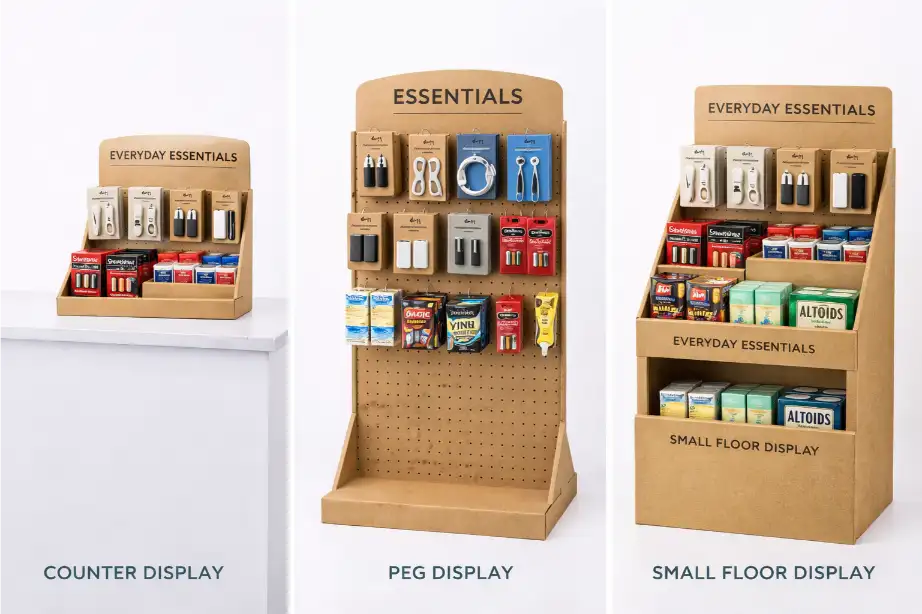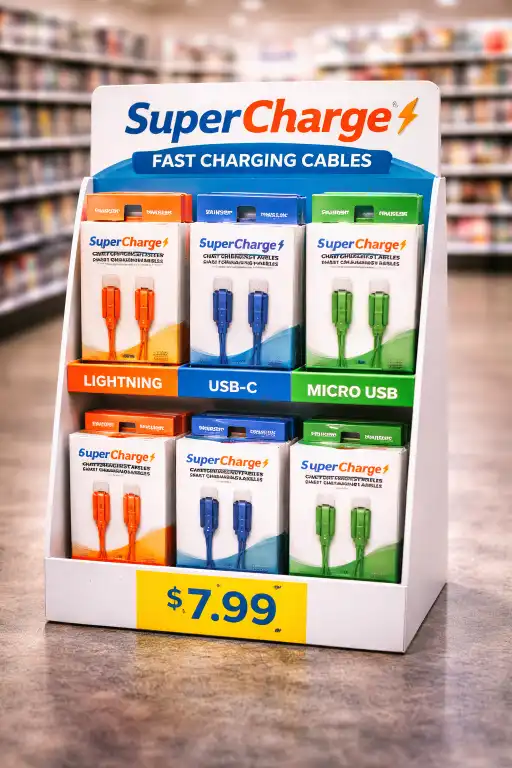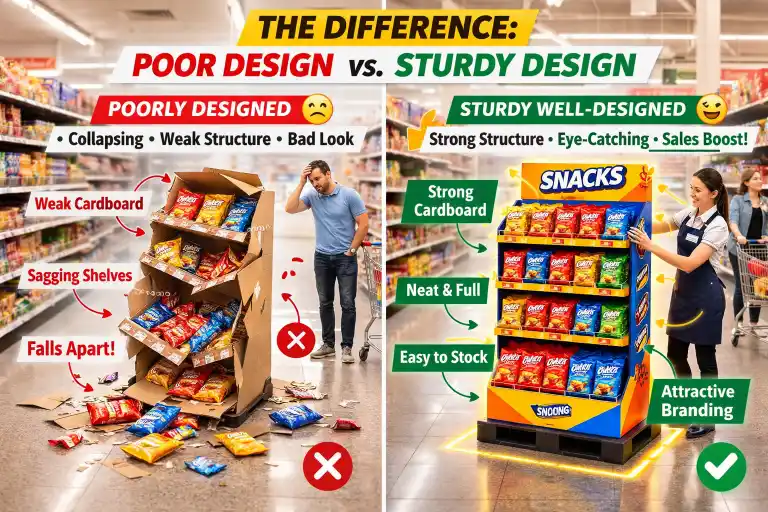
Choosing the right display for small retail products can make a big difference in both visibility and sales. Two of the most practical options are counter displays and peg displays. While both are widely used in stores, they are designed for different product types, shopping behaviors, and placement strategies.
If you are comparing display options for cosmetics, accessories, electronics, stationery, or other lightweight items, this guide will help you understand which format fits your product better. You can also explore our full range of cardboard display solutions to see how different structures work in retail.
Quick answer: which one should you choose?
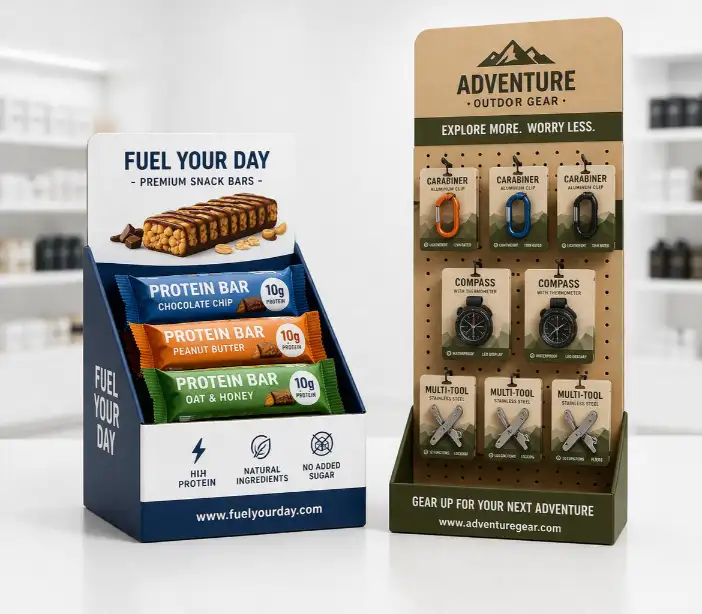
A counter display is usually the better choice for small products that benefit from checkout placement and impulse buying. A peg display is often the better choice for products that need to hang neatly, stay organized, and remain easy for shoppers to browse.
In simple terms:
- Choose a counter display for checkout areas, trial-size products, small boxed items, and fast impulse purchases.
- Choose a peg display for hanging products, accessories, tools, cables, and items with hang tabs.
What is a counter display?
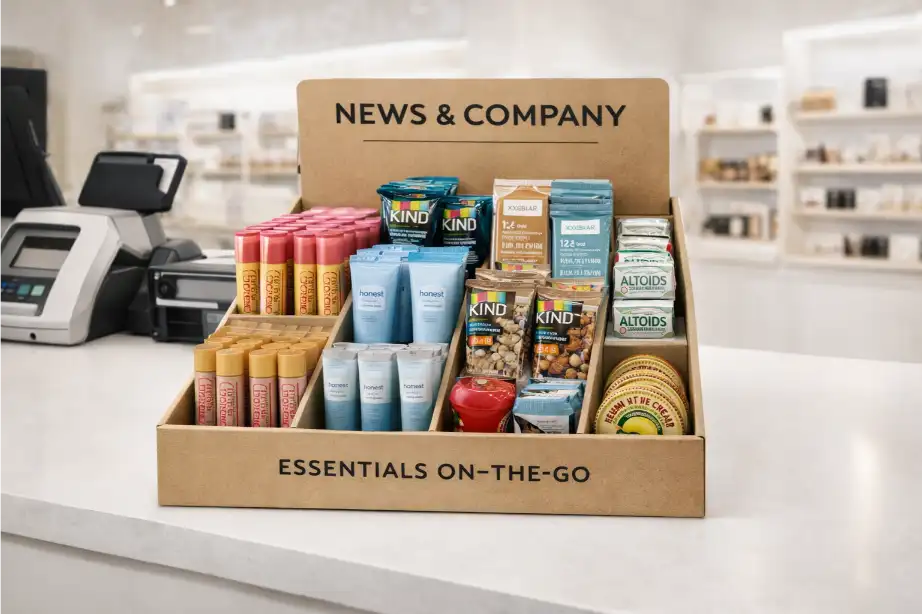
A counter display is a compact retail unit placed on checkout counters, service desks, or other small high-traffic surfaces. It is designed to put products close to the shopper at the moment of purchase. This makes it especially effective for low- to mid-priced items that customers can quickly add to their basket.
Because countertop space is limited, the structure needs to be compact, visually clear, and easy to restock. Many brands use this format for seasonal launches, limited-time offers, travel-size products, and promotional bundles. If you want to see available styles, visit our counter display page.
What is a peg display?
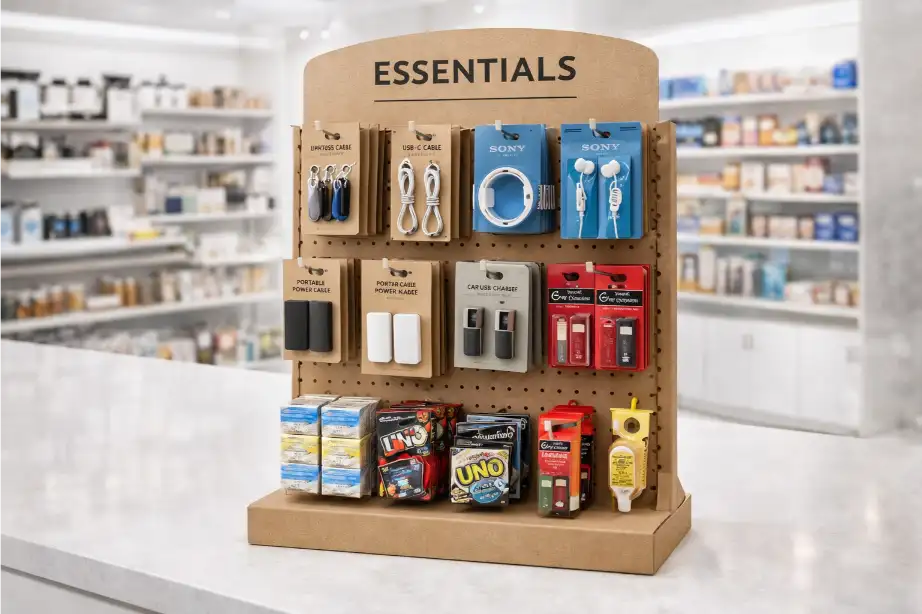
A peg display uses hooks or pegboard panels to hold products vertically. Instead of stacking products on shelves, this format allows each item to hang separately, which improves product visibility and keeps the display looking organized.
Peg displays are commonly used for lightweight packaged products such as mobile accessories, jewelry, stationery, keychains, and small hardware items. They are a smart option when you want shoppers to see multiple SKUs clearly without creating clutter. You can view examples on our peg display page.
Main differences at a glance
| Feature | Counter Display | Peg Display |
|---|---|---|
| Best location | Checkout counter or service desk | Retail aisle, side panel, or compact floor area |
| Best for | Impulse items, small boxed products, trial-size goods | Hanging products, accessories, small packaged items |
| Shopper behavior | Fast add-on purchase | Browse and compare multiple items |
| Display method | Shelves, steps, cells, trays | Hooks or peg panels |
| Visual impact | Strong near checkout | Strong for SKU visibility and neat presentation |
| Restocking | Simple for boxed and stacked items | Simple for hanging units with consistent packaging |
| Ideal product format | Boxes, pouches, mini sets, promo packs | Hang-tab packs, accessories, lightweight tools |
When a counter display works best
A counter display works best when the product decision is quick and the price point supports impulse buying. The closer your product is to the checkout moment, the more important convenience becomes. Shoppers do not want to study a complicated display at the register. They want to notice the product, understand it immediately, and pick it up in seconds.
Common examples include:
- lip balm, lipstick, or mini skincare items
- small candy, gum, or snack packs
- gift cards or promotional accessories
- travel-size personal care products
- small boxed electronics accessories
Counter displays also work well when you want to group a few hero SKUs instead of showing a large product range. A compact structure keeps the message focused and makes branding easier to control.
Why brands choose counter displays
One reason brands like counter displays is that they combine visibility and convenience in a very small footprint. They are also easy to customize with trays, steps, brochure holders, inserts, and branded side panels. For many promotional campaigns, that makes them one of the most efficient choices for limited retail space.
When a peg display works best
A peg display works best when products need to stay separated, visible, and easy to browse. Hanging products on hooks gives each SKU its own space, which is especially useful when you offer several variations, colors, sizes, or models.
Common examples include:
- phone cables and charging accessories
- small beauty tools and cosmetic accessories
- keychains and promotional items
- stationery products
- small hardware or DIY accessories
This format also helps reduce visual mess. Instead of products piling up in one tray, they hang neatly in rows, which makes comparison easier for the shopper. That is why peg displays are often used when product organization is just as important as branding.
Why brands choose peg displays
Peg displays are practical for stores that need to maximize vertical space. They can hold multiple SKUs in a compact footprint while keeping product fronts visible. For categories with many small items, that can improve both store presentation and shopper convenience.
How product packaging affects the choice
In many cases, the right display depends less on the product category and more on the packaging format. If the product comes in a small carton, pouch, or tray-friendly pack, a counter display is often the better option. If the product has a hang tab or can be packed on a hook, a peg display is usually more efficient.
That is why custom engineering matters. A display should fit not only the product dimensions, but also the way the product is packed, stocked, and handled in-store. If you need a structure tailored to your SKU, load, and branding, you can learn more about our custom cardboard display process.
Which option is better for branding?
Both formats can be highly branded, but they support branding in different ways.
A counter display is better for bold front-facing graphics and a quick campaign message. It usually gives you a strong front panel, side panels, and header area that can highlight your logo, product benefits, and promotional callout.
A peg display is better for organized product presentation and repeated branding across a wider product assortment. Even though the hooks hold the products individually, the side panels, top card, and backboard still offer strong printed branding opportunities.
If your campaign depends on one hero message, a counter display often feels more direct. If your campaign depends on showing multiple SKUs clearly, a peg display may perform better.
What should buyers ask before ordering?
Before choosing between a counter display and a peg display, ask these questions:
- Where will the display be placed in the store?
- Is the product boxed, pouched, or hang-tab packed?
- How many SKUs need to be shown at once?
- Is the goal impulse buying or product comparison?
- How often will store staff refill the display?
- Do you need flat packing for easier shipping?
These details affect both the structure and the print design. For new projects, it is often smart to review a sample before production. You can see more about that on our sampling page.
Final thoughts
There is no one-size-fits-all answer when comparing a counter display and a peg display. The better option depends on your packaging format, product behavior, store location, and campaign goal.
If your product needs a fast impulse decision at checkout, a counter display is usually the stronger choice. If your product needs clear organization and easy SKU browsing, a peg display is often the better fit.
For brands that want stronger presentation, better product fit, and more efficient retail execution, custom engineering makes the difference. Explore more cardboard display options to find the right structure for your next retail program.