One of the most common questions buyers ask before placing an order is simple: how long does it take to produce a cardboard display? The answer depends on several factors, including design complexity, quantity, printing, and shipping method. However, most projects follow a clear timeline that buyers can plan around.
If you are preparing a retail campaign or product launch, understanding the real cardboard display production process can help you avoid delays and ensure your display arrives on time.
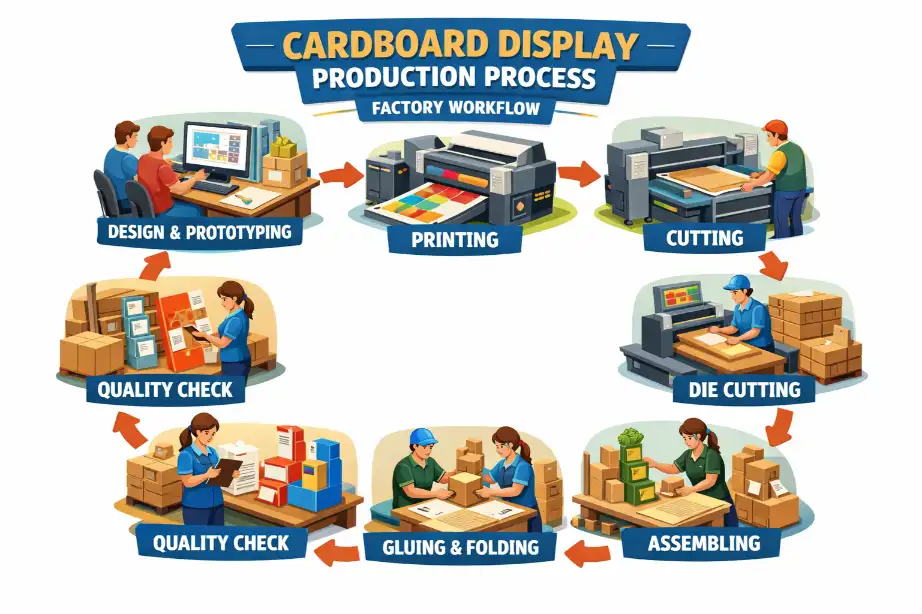
Quick Answer: Typical Lead Time
- Sample production: 3–7 days
- Mass production: 10–20 days
- Shipping: 7–35 days (depending on method)
In total, most projects take around 3–6 weeks from confirmation to delivery.
Step-by-Step Timeline
Step 1: Design and Quotation (1–3 Days)
Once buyers provide product details, suppliers prepare structure suggestions and pricing. If you are not sure what to provide, check our quote guide.
Step 2: Sample Production (3–7 Days)
A sample is created to test structure, size, and product fit. This step is critical to avoid issues during mass production.
Step 3: Sample Approval (1–3 Days)
Buyers review and confirm the sample. Any changes at this stage may extend the timeline.
Step 4: Mass Production (10–20 Days)
Production time depends on quantity and complexity. Larger orders or complex designs take longer.
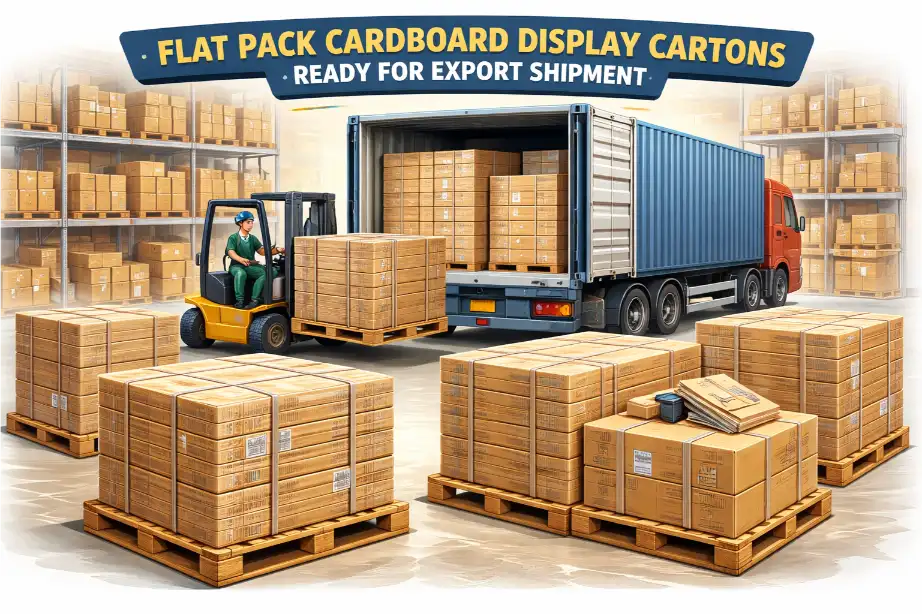
Step 5: Packing and Shipping (7–35 Days)
Shipping time depends on whether you choose air freight or sea freight. Learn more in our export packaging guide.
Lead Time Comparison Table
| Stage | Time | Key Factor |
|---|---|---|
| Design & Quote | 1–3 days | information clarity |
| Sample | 3–7 days | structure complexity |
| Production | 10–20 days | quantity |
| Shipping | 7–35 days | transport method |
What Affects Lead Time?
1. Order Quantity
Larger orders take longer to produce but are more cost-efficient. See MOQ details.
2. Structure Complexity
Complex displays with custom shapes or reinforcement require more production time.
3. Printing and Finishing
Special finishes such as lamination or UV coating may extend production time. Learn more in our printing guide.
4. Revisions and Changes
Frequent design changes during sampling can delay the project.
5. Shipping Method
Air freight is faster but more expensive, while sea freight is slower but more cost-effective.
How to Speed Up Your Project
- prepare complete product information early
- confirm design quickly
- avoid multiple revisions
- choose faster shipping if needed
- communicate deadlines clearly
Common Buyer Mistakes
- starting too late
- underestimating sample time
- frequent design changes
- ignoring shipping time
Buyer Checklist
- confirm deadline
- calculate backward from launch date
- allow buffer time
- approve sample quickly
- choose correct shipping method
External References
Fibre Box Association
FEFCO Standards
Conclusion
Cardboard display lead time depends on design, quantity, and shipping. Most projects take 3–6 weeks, but this can be shortened with proper planning. Buyers who prepare early and communicate clearly can avoid delays and ensure successful retail launches.
If you need help planning your timeline, you can contact us for support.
FAQ
What is the fastest production time?
Some simple projects can be completed in 2–3 weeks.
Can I skip sampling?
Not recommended, as it may lead to production errors.
Does quantity affect lead time?
Yes, larger orders usually take longer.
What is the fastest shipping method?
Air freight is the fastest option.
Can production be expedited?
Yes, but it may increase cost.
When should I start my project?
At least 4–6 weeks before your launch date.