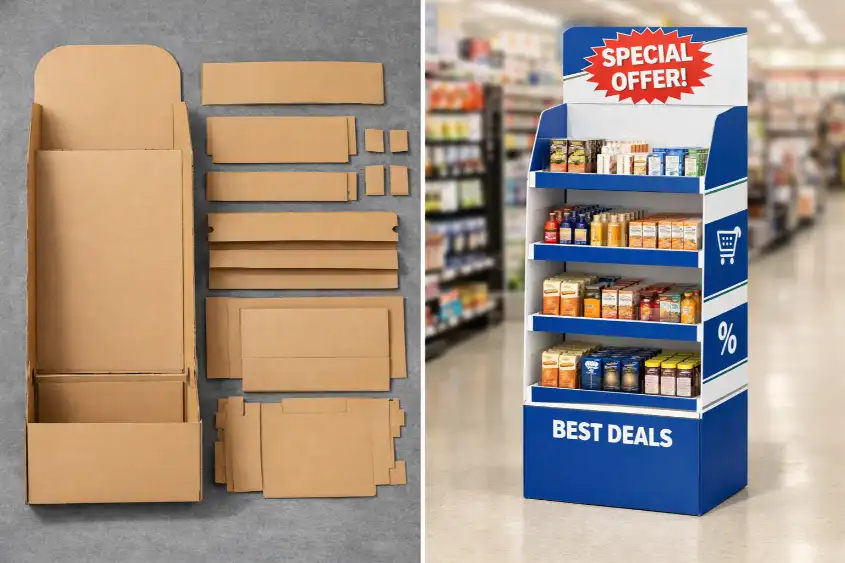
Pet products are one of the most diverse categories in retail. A display for dog treats does not need the same structure as a display for cat litter accessories, grooming tools, or pet toys. That is why choosing the right cardboard display for pet products should never start with appearance alone. It should start with product type, pack weight, store environment, and shopper behavior.
For brands, retailers, and importers, the best display is the one that fits the real retail job. Some pet products need strong shelf capacity, while others need hanging visibility or compact checkout placement. In this guide, we explain how to choose the right cardboard display for pet products, what structures work best, and what buyers should check before ordering.
Start With the Product Category, Not the Display Shape
The easiest mistake is choosing a display type first and trying to make the products fit later. A better process is to begin with what you are actually selling. Pet food treats, chew toys, grooming products, cat accessories, collars, bowls, and pet wellness items all create different structural and visual needs.
Buyers should ask four simple questions first:
- Is the product heavy or lightweight?
- Is it boxed, bagged, bottled, or hanging?
- Will shoppers browse it at eye level or near checkout?
- Does the display need high stock capacity or fast impulse visibility?
Use This Rule of Thumb Before Choosing a Structure
If the pet product is lightweight and hangs well, start by considering a peg or hook display. If it is compact and designed for impulse purchase, a counter display often works well. If the product line is broader or the campaign needs more stock, move toward a floor display. If the project involves heavy volumes or warehouse-style retail, a pallet display becomes more practical.
This “product-first” logic saves time because it matches real retail needs to structure early instead of relying on guesswork.
Pet Product Buyer Matrix
| Pet Product Type | Recommended Display | Main Reason | Watch-Out Point |
|---|---|---|---|
| Pet treats and snacks | Counter or floor display | Strong impulse and repeat purchase potential | Do not overcrowd the shelves |
| Pet toys | Peg or floor display | Good visual browsing and color variety | Hook layout must stay organized |
| Leashes, collars, accessories | Peg display | Easy hanging presentation | Weight distribution matters |
| Pet grooming products | Counter or small floor display | Good for grouped merchandising | Bottle stability should be checked |
| Bulk pet food promotions | Floor or pallet display | Higher stock capacity | Needs stronger structure |
If You Sell Pet Treats or Snacks
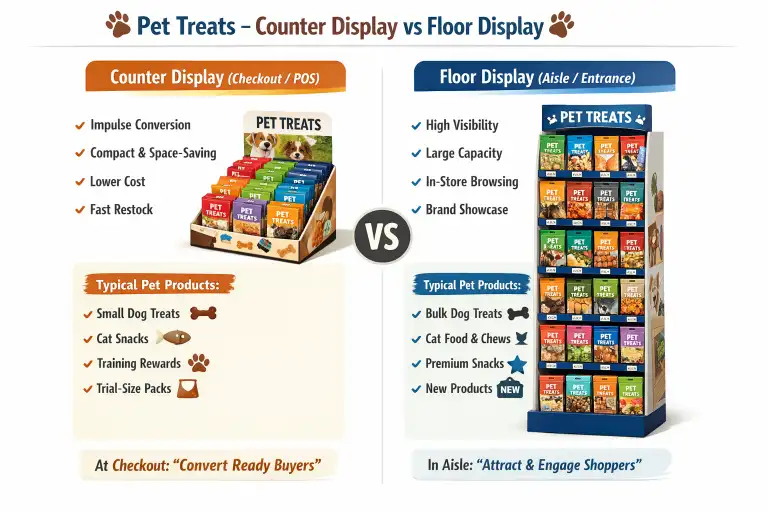
Pet treats are often one of the easiest pet categories to merchandise because they suit both impulse placement and standard shelf replenishment. If the packs are small and lightweight, counter displays can work well near checkout or special promotion areas. If the brand is running a broader campaign with several treat varieties, a floor display usually gives better visibility and more room for flavor or function segmentation.
For these products, the most important design priority is product organization. Treats often come in many flavors and pack sizes, so a messy layout quickly reduces clarity. Buyers should limit SKU overload and keep the front-facing message simple.
If You Sell Pet Toys or Hanging Accessories
Pet toys, collars, leashes, and small accessories often work better in peg displays because hanging presentation lets shoppers scan shapes and colors more naturally. These categories also benefit from vertical organization. However, buyers should confirm real hanging weight and hook spacing before approving a structure. A display that looks good with empty hooks may perform poorly once fully loaded.
If the assortment is mixed, some projects work best with a combination of shelves and hooks rather than a hook-only display. This is especially useful when the range includes both hanging accessories and boxed add-ons.
If You Sell Heavier Pet Products
For heavier products such as larger treat tubs, bottled pet supplements, or high-volume pet food promotions, structural logic becomes much more important. In these cases, the display should be evaluated more like a load-bearing retail unit than a light promotional stand. Shelf width, shelf depth, board grade, and base stability all need to be checked carefully.
Buyers working with heavier pet products should review corrugated strength earlier in the process. Our corrugated grades guide explains how material choice affects retail performance, while our cost guide helps explain how stronger structure changes project pricing.
Branding Matters More in Pet Retail Than Many Buyers Expect
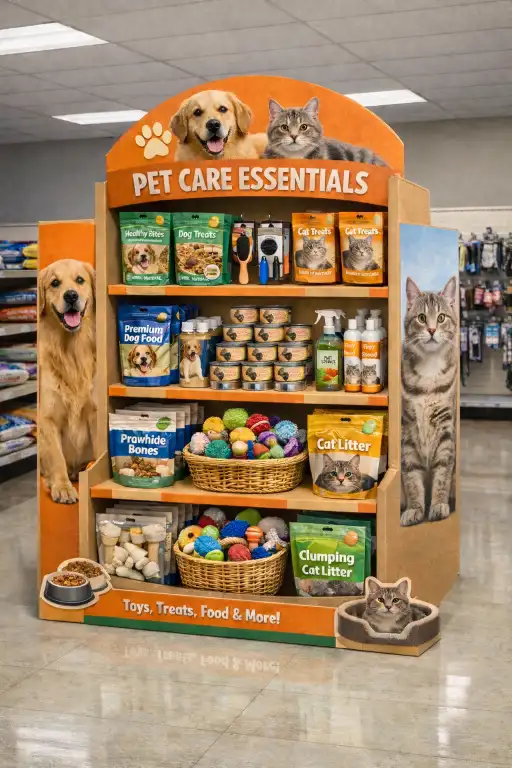
Pet products are often emotional purchases. Buyers are not only shopping for function; they are also responding to trust, care, safety, and lifestyle positioning. This means the display should support the product story clearly. Bright toy displays, premium grooming displays, and natural pet wellness displays should not all look the same.
For pet retail, strong graphics usually come from clear category coding, strong logo placement, and limited clutter. Too many visual messages can make the display feel cheap or confusing. If the project needs more refined surface choices, our printing and finishing guide can help you decide what works best.
Think About Store Environment Before Final Approval
A display placed in a pet specialty store may behave very differently from one placed in a supermarket pet aisle or warehouse club. Specialty environments may support more detailed browsing and stronger category storytelling. Broader retail environments often need faster visibility and simpler hierarchy.
This is why buyers should confirm where the display will actually be used before finalizing the structure. Store traffic, aisle width, refill frequency, and nearby competing products all affect the best design choice.
Shipping, MOQ, and Rollout Planning
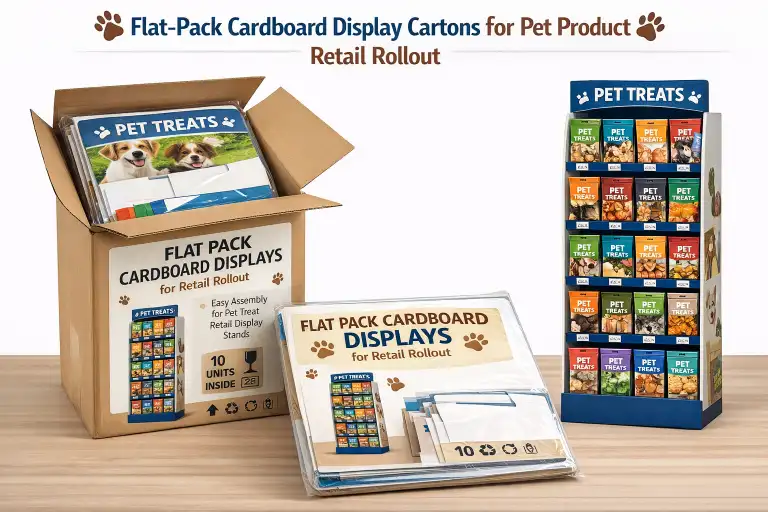
Pet product displays are often shipped in batches across multiple store locations, so shipping logic matters. Flat-pack structures are usually the practical choice for export efficiency. Buyers should also think about MOQ early, especially if the campaign includes several SKUs or more than one display size.
If your project needs export planning or quantity comparison, our guides on cardboard display export packaging and custom cardboard display MOQ are useful next steps.
Buyer Checklist Before Ordering a Pet Product Display
- Confirm product weight and pack size
- List all SKUs that will appear on the display
- Choose shelf, peg, or mixed presentation based on product type
- Decide whether the display is for checkout, aisle, or pallet placement
- Check stock capacity against real campaign needs
- Review artwork for category clarity and brand tone
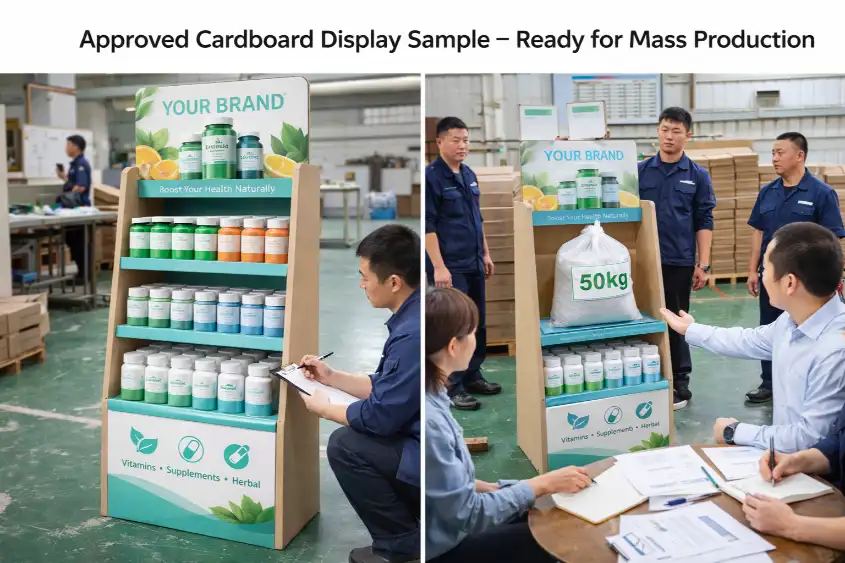
- Ask for a sample before mass production
Useful External References
The pet industry remains a large and active retail category, with APPA reporting U.S. pet industry expenditures of $158 billion in 2025 and 95 million U.S. households owning at least one pet in 2025. That scale helps explain why pet merchandising remains such an important category opportunity. For broader industry context, see the American Pet Products Association 2026 industry release. For corrugated basics and structure language, the Fibre Box Association overview of corrugated and the FEFCO code reference are also useful.
Conclusion
The right cardboard display for pet products depends on the product category first and the structure second. Treats, toys, accessories, grooming items, and bulk pet promotions all need different merchandising logic. Buyers who match the display to the real product, store environment, and stock requirement usually get better retail results and fewer project problems.
If you are planning a pet product display project and want help choosing the right format, feel free to contact us with your product details and retail goals.
FAQ
What is the best cardboard display for pet treats?
Counter displays work well for smaller impulse packs, while floor displays are often better for larger assortments and stronger aisle visibility.
Are peg displays good for pet accessories?
Yes. Peg displays are often a strong choice for collars, leashes, toys, and other hanging pet accessories.
Do pet product displays need stronger materials?
It depends on the product weight. Heavier pet products usually need stronger corrugated grades and more structural reinforcement.
Can one display hold both toys and treats?
Yes, but mixed-category displays should be organized carefully so the shopper can still understand the assortment quickly.
What matters most for pet product display design?
Product category fit, stock capacity, visual clarity, and the retail environment are usually the most important factors.
Should buyers request a sample first?
Yes. Sampling helps confirm fit, layout, and structural performance before mass production begins.