In the beverage category, packaging and display work together to win attention fast. Shoppers usually make decisions in seconds, which means a beverage display must do more than hold products. It needs to stand out from a distance, communicate flavor or product type quickly, and support enough stock for busy retail traffic. That is why choosing the right beverage display structure is just as important as choosing the right graphics.
For brands, retailers, and importers, the best beverage cardboard display ideas are the ones that balance visibility, load capacity, branding, and shipping efficiency. A display for bottled water is very different from a display for canned energy drinks or gift-packed seasonal beverages. In this guide, we look at the most practical beverage display ideas for retail, what works best in different store environments, and how buyers can choose the right structure for their products. If you are planning a project now, you can also review our custom cardboard display solutions for more structure options.
Why Beverage Displays Need a Different Approach
Beverage displays often deal with heavier products, tighter shelf spacing, and stronger competition for shopper attention. A display for cosmetics or snacks may focus more on detail and close-up presentation, but beverage displays usually need stronger long-distance visibility and more reliable load-bearing support. The graphic design also needs to be simple and bold, because shoppers often notice drinks from aisle distance rather than at close range.
This is why beverage display planning usually starts with four practical questions:
- How heavy is each bottle, can, or pack?
- How many units should the display hold?
- Will the display sit in an aisle, on a pallet, or near checkout?
- Is the promotion short-term, seasonal, or ongoing?
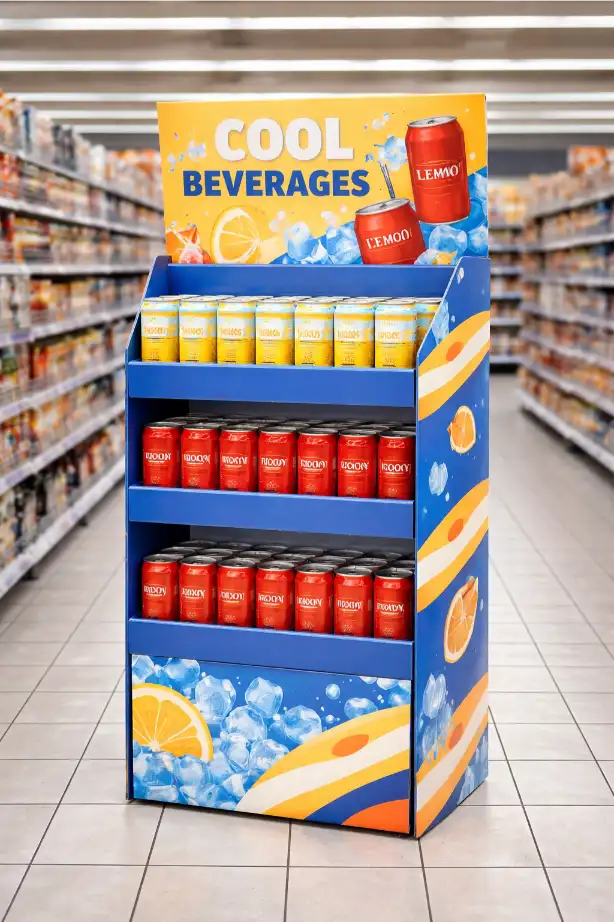
Idea 1: Classic Multi-Shelf Floor Display
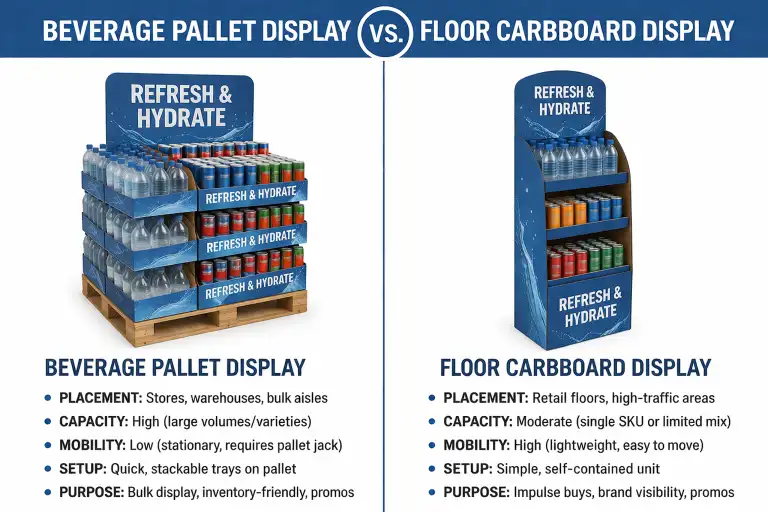
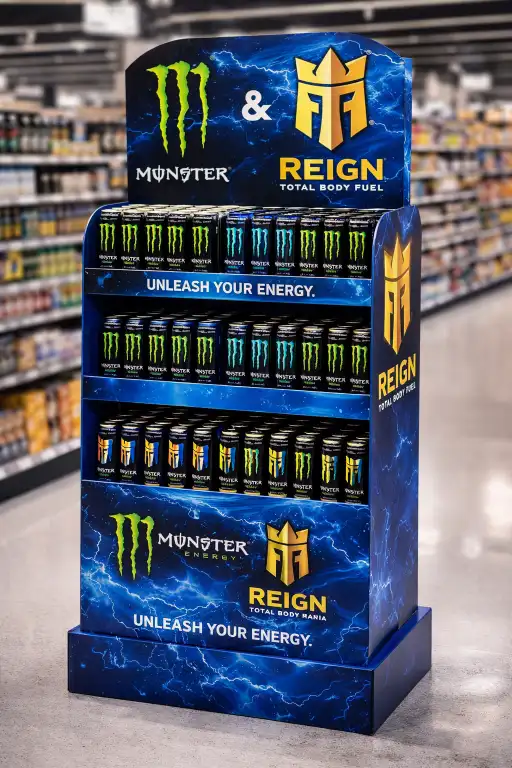
A multi-shelf floor display is one of the most effective choices for beverages because it offers both visibility and product capacity. It works especially well for bottled drinks, canned beverages, juice products, sparkling water, flavored drinks, and seasonal beverage promotions. The main strength of this format is flexibility. It can be customized with different shelf counts, shelf widths, side panels, and header cards depending on the retail program.
For beverage buyers, this is usually the safest starting point because it combines branding space with real stocking capacity. If the products are heavier, reinforced shelf support and stronger base design should be discussed early in the project.
Idea 2: Pallet Display for High-Volume Promotions
If the goal is scale, pallet displays are often the most practical beverage solution. They are especially useful in warehouse retail, club stores, supermarkets, and larger promotional zones. A pallet display can hold much more stock than a standard floor display and is often used for fast-moving beverage campaigns where the brand wants strong visibility and high product turnover.
Pallet displays are a strong option when buyers need to reduce replenishment frequency in-store. However, they also require more careful planning for export packing, retail handling, and structural strength. If you are reviewing shipping strategy at the same time, our guide to cardboard display export packaging may also help.
Idea 3: Sidekick or Clip Strip for Lightweight Beverage Add-Ons
Not every beverage display needs to be large. In some retail programs, sidekick displays or hanging clip-strip solutions work well for smaller drink-related products such as powdered drink mixes, sachets, mini cans, seasonal beverage accessories, or promotional trial packs. These formats are useful when floor space is limited or when the retailer wants to place products next to a related category.
This type of solution is not ideal for heavier drinks, but it can be effective for smaller promotional items connected to beverage campaigns. The main value is efficient cross-merchandising.
Idea 4: Seasonal Beverage Gift Display
Seasonal beverage promotions often need a more decorative display style. For example, holiday drinks, premium tea gift packs, limited-edition coffee sets, and festive beverage collections usually perform better when the display supports a stronger gift-like visual theme. In these projects, the display should combine practical product support with more emotional presentation.
Here, surface finish, header shape, and side-panel graphics become more important. Matte or gloss lamination, stronger color blocks, and custom die-cut shapes can help a display feel more premium without completely changing the structure. If your project also includes outer gift boxes or branded sets, our packaging solutions can help keep the presentation consistent.
Idea 5: Checkout Beverage Counter Display
Small-format beverage promotions can sometimes work near checkout, especially for mini cans, functional drink shots, powdered drink products, energy drink trial packs, or promotional mini bottles. In these cases, a counter display is useful because it captures last-minute attention in a compact area.
This format is not for high volume, but it can be very effective when the product is small, lightweight, and tied to impulse buying. Buyers comparing larger and smaller formats can also review our retail display solutions for a broader structure comparison.
Quick Comparison Table: Which Beverage Display Idea Fits Best?
| Display Idea | Best For | Main Advantage | Watch-Out Point |
|---|---|---|---|
| Multi-shelf floor display | Bottles, cans, juices, sparkling water | Balanced visibility and capacity | Needs reinforcement for heavier loads |
| Pallet display | Warehouse retail and high-volume promotions | Maximum stock holding | Requires stronger logistics planning |
| Sidekick / clip strip | Drink mixes, sachets, light promotional packs | Saves floor space | Not suitable for heavier products |
| Seasonal gift display | Holiday drinks, premium gift packs | Stronger premium presentation | May need upgraded finishing |
| Counter display | Mini bottles, shots, trial packs | Good for impulse sales | Limited stock capacity |
What Buyers Should Prioritize First
When choosing beverage cardboard display ideas, buyers should prioritize three things before talking about decoration. First is product weight. Beverages are often heavier than many other retail items, so structure comes first. Second is retail location. A display for aisle use should be designed differently from a display for checkout or pallet placement. Third is stock quantity. If the display looks impressive but cannot hold enough product for the promotion period, it will not perform well in real retail conditions.
These practical details influence not only structure but also cost. If you are budgeting your project now, our guide on custom cardboard display cost explains how structure, printing, and quantity influence pricing.
How Graphics Should Work for Beverage Displays
For beverage displays, graphics usually need to work faster and from farther away. That means strong color contrast, clear flavor cues, simple product hierarchy, and less clutter. Shoppers should understand the product type quickly, especially in busy supermarket environments. If the display is overloaded with too much text or too many small design elements, the impact becomes weaker.
Buyers should also think about how graphics connect with the product itself. A sparkling water display may benefit from clean, cool, refreshing visuals. A coffee or tea promotion may need warmer and richer tones. Functional beverages often work better with bold, energetic color contrast. The display should reinforce the product story, not compete with it.
How MOQ and Shipping Change the Best Idea
Some beverage display ideas look excellent in concept, but they only make business sense when MOQ and shipping are considered together. A large pallet display may create strong retail impact, but it also requires more production planning and more freight space. A counter display may be easier to launch at smaller scale. This is why buyers should compare structure ideas not only by appearance, but also by quantity, budget, and export handling.
For buyers planning order size, our related guide on custom cardboard display MOQ is useful for understanding how quantity affects the project.
Buyer Checklist Before Choosing a Beverage Display
- Confirm single product weight and total shelf load
- Decide whether the display is for aisle, pallet, or checkout placement
- Estimate how many products the display should hold
- Choose whether the campaign is short-term or seasonal
- Prepare reference graphics or branding direction
- Check shipping method and flat-pack requirements
- Ask for sample testing before mass production
Useful External References
If you are new to corrugated retail display sourcing, it helps to understand material basics and structure terminology. The Fibre Box Association overview of corrugated is a useful starting point. For recognized corrugated structure terminology, the FEFCO code reference is also helpful.
Conclusion
The best beverage cardboard display ideas are the ones that match your real retail goal. A floor display may be the best choice for flexible supermarket promotion. A pallet display may be better for large-volume campaigns. A counter display may work best for smaller beverage packs and impulse sales. What matters most is not choosing the most complex idea, but choosing the idea that fits your product weight, retail placement, stock needs, and brand message.
If you are planning a beverage display project and want help choosing the right structure, feel free to contact us with your product details and retail goals.
FAQ
What is the best cardboard display type for bottled beverages?
A reinforced multi-shelf floor display is usually one of the best choices for bottled beverages because it balances visibility and load capacity.
Are pallet displays better than floor displays for drinks?
Pallet displays are better for high-volume promotions, while floor displays are better for more flexible aisle merchandising and branding variety.
Can lightweight beverage products use counter displays?
Yes. Counter displays can work well for mini bottles, functional shots, powdered drink packs, or trial-size promotional products.
What matters most in beverage display design?
Structure, load-bearing support, visibility, and clear product graphics are usually the most important factors.
Do beverage displays need stronger materials than other retail displays?
In many cases, yes, because bottled and canned products are often heavier than cosmetics, accessories, or lightweight snack items.
How can buyers choose the right beverage display idea?
Buyers should compare product weight, retail placement, stock quantity, campaign duration, and shipping requirements before choosing a structure.