Choosing a cardboard display manufacturer is not only about price. For a retail project, the supplier must understand structure, product weight, printing, packing, store setup, and bulk production risk before the order moves forward. The right factory helps your display survive from sample approval to final retail placement.
A retail display may look simple in a photo, but the real test starts when products are loaded, cartons are stacked, stores assemble the units, and shoppers interact with them. That is why B2B buyers should evaluate a supplier through project thinking, not through a single quotation sheet.
Start With the Retail Purpose Before Comparing Suppliers
A good supplier should ask what the display needs to do in the store. Is it for a product launch, a seasonal campaign, a supermarket aisle, a chain store promotion, or a wholesale program? Each use case changes the structure.
A PDQ display for small packaged snacks is different from a floor display for bottled products. A sidekick display hanging beside a shelf needs different hooks, panels, and fixing methods. A pallet display must consider warehouse movement, retail stocking, and stronger base support.
Before asking for a price, prepare a simple project brief:
- Product size and unit weight
- Number of products per display
- Display type or reference structure
- Target retail channel
- Quantity for sample and bulk order
- Printing artwork status
- Flat packing or pre-assembled packing
- Expected launch schedule
- Special retailer requirements
This information helps the cardboard display manufacturer check structure risk early. It also prevents a low quote that later becomes expensive after redesign, stronger board selection, or packing changes.

Evaluate Cardboard Display Structure, Not Only Appearance
A display can have attractive artwork and still fail in the store. Structure decides whether the unit can hold product weight, stay upright, ship safely, and remain easy for store teams to assemble.
Product Weight Changes the Whole Design
A lightweight cosmetic counter display may use a simple tray, divider, and printed header. A floor display for drinks, pet products, or household goods may need stronger corrugated board, reinforced shelves, side panels, inner supports, or locking tabs.
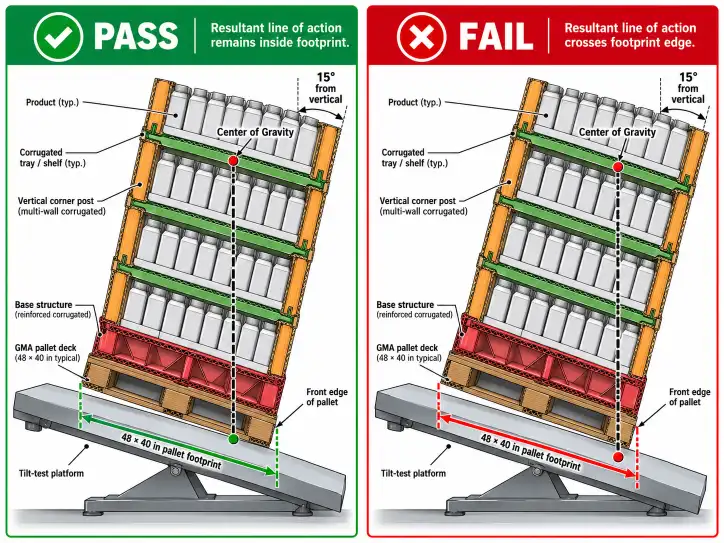
The supplier should calculate load placement, not only total weight. Products placed on the front edge of a shelf create more pressure than products near the back. Tall displays also need a stronger base to reduce leaning during use.
A practical manufacturer will review:
- Shelf width and depth
- Number of shelves
- Product load per shelf
- Board flute and material grade
- Locking method
- Back panel strength
- Base stability
- Header size and balance
Small changes matter. A wider shelf may need hidden supports. A taller header may need stronger side panels. A heavier product may turn a simple paper display stand into a reinforced retail display packaging structure.
Assembly Method Should Match Store Reality
Retail staff may not spend much time reading instructions. If the display is hard to assemble, the final store presentation may look poor. Worse, parts may be damaged during setup.
Ask the supplier to explain the assembly method. Good signs include clear folding lines, numbered parts, locking tabs, printed setup instructions, and test assembly before shipment. For chain store programs, a sample assembly video or photo guide can reduce store-level mistakes.
For more custom structure, sampling, and production support, buyers can review custom cardboard display solutions to understand how structure and factory capability work together.
Compare the Manufacturer’s Sampling Process
Sampling is where many retail display problems appear. A digital mockup can show artwork direction, but a physical sample shows whether the display works.
A reliable supplier should not treat sampling as decoration. It should be a test stage.
What a Useful Sample Should Confirm
A sample should help the buyer check the real display before bulk production. It should answer practical questions:
- Does the product fit the tray, shelf, peg hook, or insert?
- Does the display stand straight after loading?
- Is the printed artwork aligned with dielines?
- Are logos, product zones, and claims placed clearly?
- Can the unit be packed flat without damaging key panels?
- Can store staff assemble it without confusion?
- Does the final size match the retail space?
For a cardboard display, sample checking should include both structure and print. A supplier who only sends a good-looking sample without testing product fit may miss the most important part of the project.
White Sample, Digital Proof, and Printed Sample
Different sample types serve different purposes. A white sample checks structure. A digital proof checks artwork placement. A printed sample checks color, finishing, and final presentation.
For urgent projects, buyers may approve structure first and artwork later. For premium campaigns, a printed sample is often worth the extra time because color, lamination, hot stamping, embossing, or spot UV can affect the final retail impression.
Review Material Selection and Printing Capability
Material choice should match product weight, display size, shipping method, and retail environment. A supplier should be able to explain why a certain board is selected, not only quote a lower material cost.
Common material decisions include:
| Buying Factor | What to Check | Why It Matters |
|---|---|---|
| Product weight | Load per shelf, total display load, product placement | Prevents shelf bending and structure failure |
| Display type | Counter, PDQ, sidekick, peg hook, floor, pallet, dump bin | Each format needs a different support method |
| Retail channel | Supermarket, chain store, wholesale club, specialty shop | Store setup and durability needs differ |
| Printing artwork | Color area, dieline accuracy, brand zones, barcode area | Reduces production mistakes before bulk printing |
| Packing method | Flat packed, pre-filled, master carton, pallet packing | Affects freight cost, assembly, and damage risk |
| Compliance needs | FSC, ISO, retailer requirements, recycling guidance | Supports sourcing and buyer documentation |
| Timeline | Sampling, approval, production, inspection, shipment | Protects launch schedules |
A manufacturer should discuss board grade, flute type, mounting method, surface paper, and printing process. For paper sourcing and responsible material claims, buyers can refer to recognized source types such as FSC certification bodies or official packaging associations. For production management, ISO-related systems may also help buyers evaluate factory discipline.
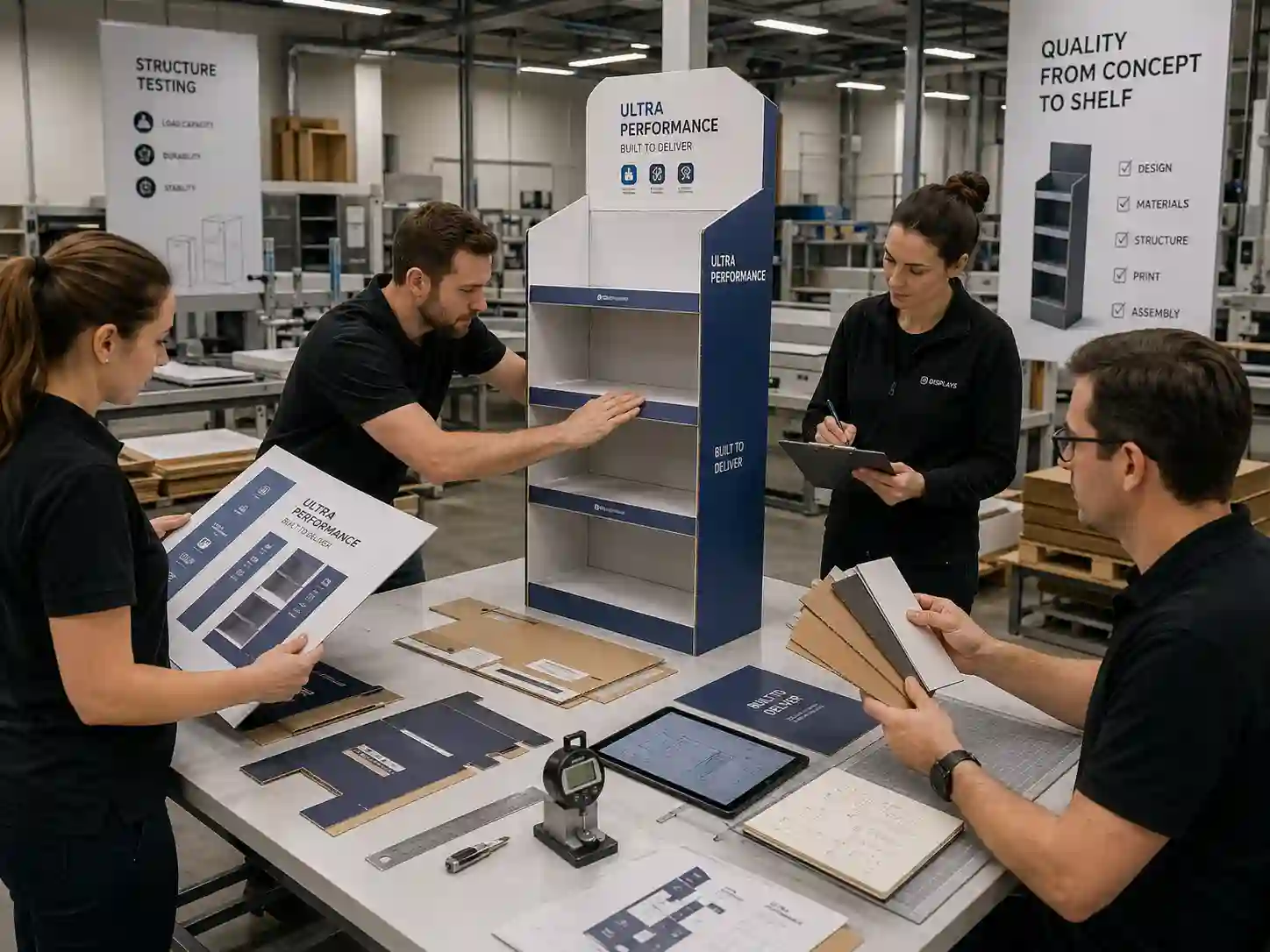
Printing Is More Than Color
Printing affects how the display sells in the store. It also affects production accuracy. Artwork must match dielines, folding areas, cut lines, glue zones, and product placement.
Ask the supplier to check:
- CMYK artwork files
- Dieline alignment
- Safe zones near creases and cuts
- Barcode and QR code position
- Header visibility
- Product benefit panels
- Retailer-required markings
- Finishing tolerance
For product launches, buyers often focus on visual impact. That is natural. Still, the artwork must respect the structure. A beautiful design can lose impact if key text folds around an edge or disappears behind loaded products.
Check Production Controls Before Bulk Orders
Bulk production is where supplier discipline becomes visible. A professional cardboard display manufacturer should have a clear process for material preparation, printing, lamination, die-cutting, mounting, gluing, packing, and final inspection.
Practical QC Points Buyers Should Ask About
Quality control should be specific. A supplier saying “we check quality” is not enough. Ask what they check and when.
Useful QC points include:
- Material thickness and surface paper check
- Print color confirmation before full run
- Lamination and finishing inspection
- Die-cut accuracy check
- Glue strength check
- Shelf and hook position check
- Product fit test
- Load-bearing test
- Assembly test
- Carton drop and packing review
- Final quantity and labeling check
For heavier displays, load testing matters. For peg hook displays, the hook area needs attention. For dump bin displays, the base and side wall strength matter. For pallet displays, packing, stacking, and forklift movement may affect the final condition.
Bulk Consistency Matters for Retail Programs
One good sample does not guarantee bulk consistency. Buyers should ask how the factory controls color variation, board supply, die-cut tolerance, and packing standards across the full order.
This is important for multi-store campaigns. If one batch assembles well but another batch has tight slots or weak glue, store teams will notice. Retail execution depends on consistent production.
For broader retail display education and in-store selling support, buyers can read about paper display stands for retail.
Match the Display Type to the Retail Project
Choosing the right display format helps control cost, structure, and store performance. A supplier should guide the buyer instead of pushing one standard design.
PDQ Display and Counter Display
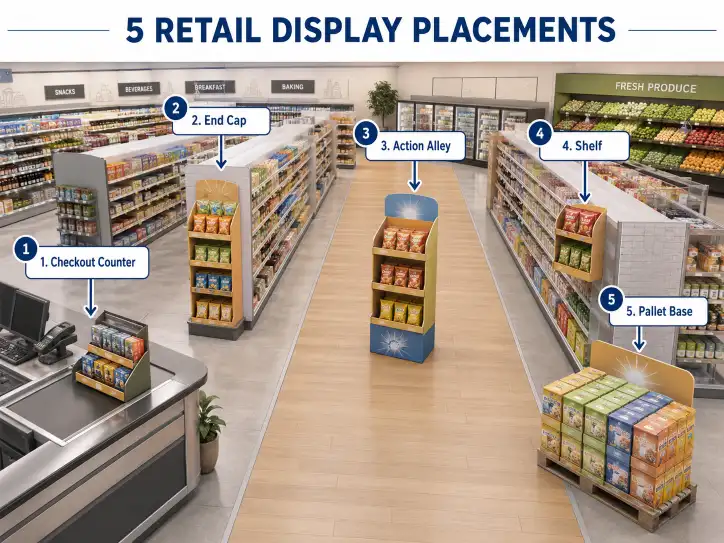
PDQ displays and counter displays work well for small products near checkout counters, service desks, or shelf tops. They are useful for cosmetics, snacks, accessories, small electronics, samples, and promotional packs.
Key points to check:
- Tray depth
- Product facing count
- Header size
- Divider or insert design
- Counter space limit
- Stability after loading
These displays need clean presentation and easy replenishment. The structure should help shoppers see the product quickly.
Sidekick Display and Peg Hook Display
Sidekick displays and peg hook displays are common for hanging products, impulse items, accessories, and lightweight packaged goods. The hook area must be strong enough to hold the product load without tearing.
Ask about hook material, hole reinforcement, side panel strength, and hanging method. The supplier should also check whether the display attaches to a shelf, fixture, or independent support.
Floor Display, Pallet Display, and Dump Bin Display
Floor displays are suitable for larger campaigns and stronger visual impact. Pallet displays support bulk retail programs and warehouse club environments. Dump bin displays work well for loose products, promotional items, and high-volume retail offers.
These formats require attention to base strength, product access, shipping protection, and store setup. For heavier products, structure testing should happen before bulk approval.
Packaging and Shipping Can Decide Project Success
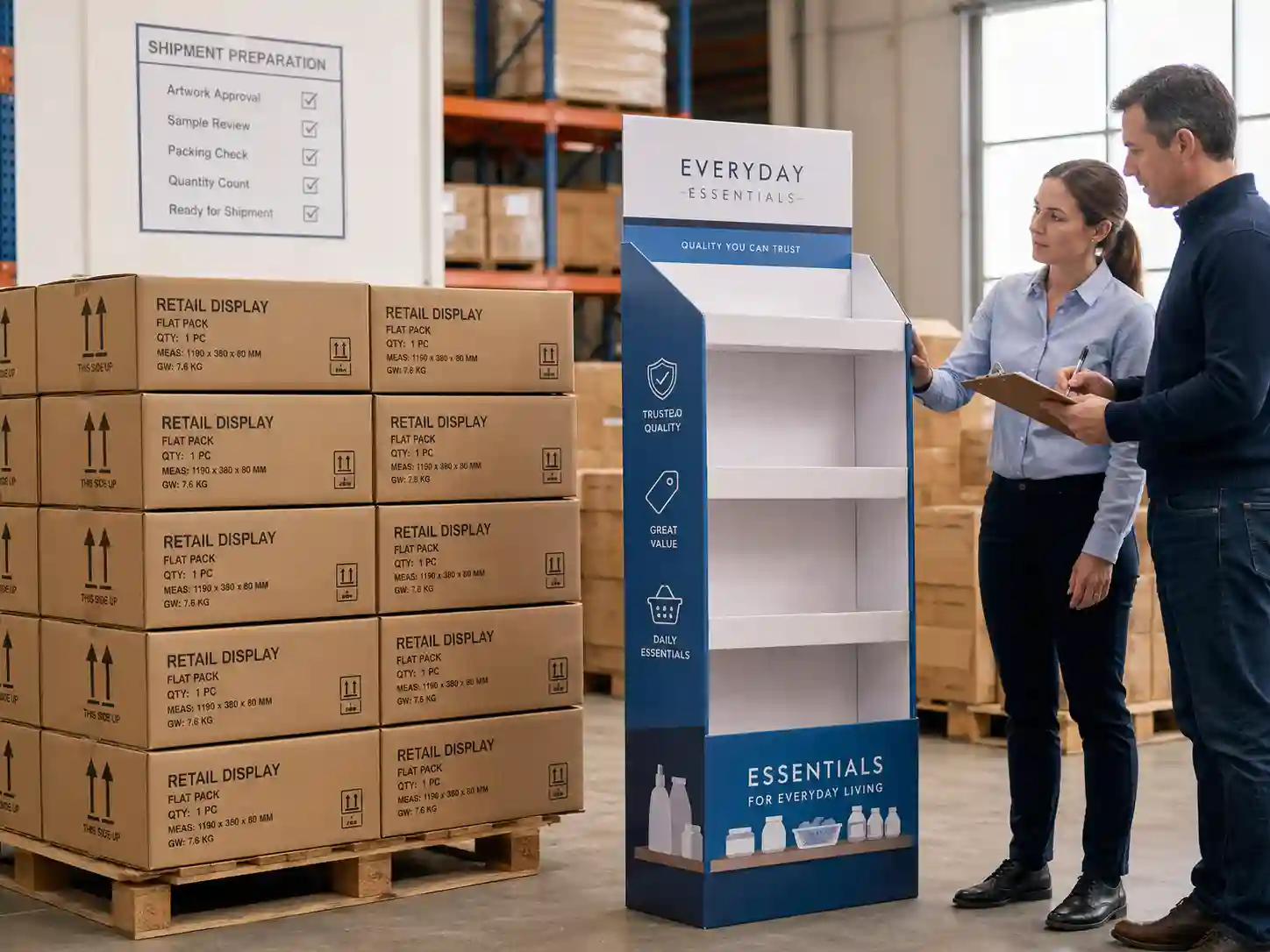
Many buyers spend time reviewing the display but less time reviewing packing. That can be risky. A display that looks good at the factory may arrive with crushed corners, bent headers, scratched surfaces, or missing parts if packing is not designed well.
A practical supplier should discuss:
- Flat packing size
- Carton strength
- Inner protection
- Part separation
- Labeling method
- Pallet packing plan
- Export carton markings
- Assembly instruction placement
- Spare parts when needed
Flat packing often reduces freight cost, but it requires clear assembly. Pre-assembled packing may reduce store labor, but it increases carton volume and shipping cost. The right choice depends on retail setup, labor expectations, product value, and launch timing.
Questions to Ask a Cardboard Display Manufacturer Before Ordering
A buyer does not need to become a structural engineer. Still, asking better questions helps reveal whether a supplier understands the project.
Use this checklist during supplier evaluation:
- Have you made a similar cardboard display for this product type?
- What board material and structure do you recommend for this product weight?
- Can you make a white sample before printed sampling?
- How do you check shelf strength or hook strength?
- How will the display be packed for export shipping?
- Can the display be flat packed and assembled by store staff?
- What artwork format and dieline information do you need?
- How do you control print color before bulk production?
- What inspection steps happen before shipment?
- What details do you need to prepare an accurate quotation?
The answer quality matters. A capable supplier will explain trade-offs. A weak supplier may only repeat price, lead time, and minimum order quantity.
Red Flags When Comparing Suppliers
Low price is not always a problem. An unclear quote is.
Watch for these signs:
- No questions about product weight
- No discussion of shelf load or structure
- No clear sampling process
- No dieline review before printing
- No packing plan
- No assembly testing
- No production inspection details
- No explanation for material choice
- No concern about retail channel requirements
A cardboard display project has many small details. When a supplier ignores those details before the order, the buyer may face problems after printing, packing, or shipment.
What to Send for a Faster and More Accurate Quotation
A clear inquiry helps the manufacturer respond with a useful proposal. It also helps avoid repeated messages and vague pricing.
Send these details when available:
- Product photos
- Product dimensions and weight
- Number of units per display
- Preferred display type
- Target retail channel
- Reference images or sketches
- Quantity range
- Printing artwork or logo files
- Packing preference
- Delivery destination or shipping method
- Expected launch date
A supplier can then suggest structure, board material, sample plan, packing method, and production schedule. For early-stage projects, a rough sketch or reference photo is still useful. The factory can help turn it into a workable display structure.
For buyers who want to discuss custom retail display packaging, structure options, or project feasibility, Leader Display project support can help clarify the next step before sampling.
Choose a Cardboard Display Partner That Thinks Beyond the Quote
The right cardboard display manufacturer should help you reduce risk before bulk production begins. That means checking product fit, structure strength, printing artwork, assembly method, packing protection, and retailer setup instead of treating the project as a simple printed paper item.
A stronger supplier asks better questions. Product size. Product weight. Retail channel. Display type. Packing method. Launch timing. These details shape the final result.
When your team is ready to move forward, prepare the project information and ask for structure advice before locking the design. A well-planned cardboard display can support cleaner retail presentation, smoother store setup, and better confidence before the bulk order leaves the factory.