A cardboard display inquiry works better when the supplier receives the right project details from the start. Clear information helps the manufacturer judge structure, material, printing, packing, and production risks before quoting. It also helps buyers avoid vague pricing that changes later.
For B2B buyers, the first message to a display supplier should not be a short request like “Please quote a display stand.” That gives the factory almost nothing to evaluate. A better inquiry explains what the display needs to hold, where it will be placed, how many units are needed, and how the buyer expects it to arrive.
This guide explains what to confirm before contacting a cardboard display supplier, from product weight and retail placement to artwork, sampling, export packing, and quality control.
Why a Clear Cardboard Display Inquiry Saves Time
A custom cardboard display is not only a printed paper structure. It must carry product weight, fit retail space, match brand artwork, survive transport, and remain practical for store staff to assemble.
That is why a professional supplier needs more than a product photo. They need buying context.
For example, a counter display for small cosmetics may need a compact footprint, clean product facing, and a light inner tray. A floor display for bottled drinks may need thicker board, stronger shelves, reinforced side panels, and more cautious shipping protection. A sidekick display may need hook position details, hanging strength, and retailer fixture requirements.
Small details affect the cost.
They also affect safety.
Before asking for a price, buyers should prepare the basic project direction:
- Display type: PDQ display, counter display, sidekick display, floor display, peg hook display, pallet display, dump bin display, or paper display stand
- Product size and weight
- Number of SKUs
- Quantity per display
- Target retail channel
- Estimated order quantity
- Printing artwork stage
- Packing method
- Delivery deadline
- Required certifications or material preferences
When these details are ready, the supplier can recommend a structure instead of guessing. For buyers comparing custom cardboard display solutions, this makes early communication more useful and reduces back-and-forth.

Confirm the Display Type Before Asking for a Quote
The display type sets the direction for structure, material, printing area, assembly method, and packing size. If the display format is unclear, the quote may be inaccurate.
Counter Display or PDQ Display
Counter displays and PDQ displays are usually used for small products near checkout counters, shelves, or promotional tables. They may hold cosmetics, snacks, small electronics, sample packs, stationery, or seasonal items.
Before inquiry, confirm:
- Product dimensions
- Quantity per display
- Number of rows or trays
- Whether products stand upright or lie flat
- Whether the display ships prefilled or empty
- Whether a header card is needed
A PDQ display often needs a clean tray layout and stable product facing. If the product is light, material can be more economical. If the product is dense, the tray may need extra support.
Floor Display
A floor cardboard display has more structure risk because it usually holds more products and stands alone in a retail area. Shelf height, side panel strength, base stability, and load-bearing performance matter.
Buyers should confirm whether the display will be used in supermarkets, chain stores, club stores, pharmacies, convenience stores, or exhibition areas. Each retail channel may have different size limits and setup expectations.
A floor display inquiry should include product weight per shelf. Without this detail, the supplier cannot judge whether the structure needs reinforced shelves, thicker corrugated board, or inner support panels.
Sidekick Display and Peg Hook Display
Sidekick displays and peg hook displays are common for lightweight retail products. They may be attached to end caps, shelf sides, or store fixtures.
The key details are different from a floor stand. Buyers should provide:
- Hook quantity
- Product weight per hook
- Hanging hole or package style
- Product spacing
- Target fixture or shelf location
- Whether the display needs a back panel support
Peg hook spacing looks simple, but poor planning can cause product crowding or uneven weight distribution. Good structure planning keeps the display neat after loading.
Prepare Product Size, Weight, and Layout Details
A cardboard display supplier cannot design a reliable structure without product information. The display must fit the product, not the other way around.
The most useful details include product length, width, height, and single-unit weight. If the product is packed in a carton, bottle, pouch, blister card, tube, or box, the supplier should know the packed size rather than the bare product size.
Give clear numbers.
For example:
- Product size: 80 × 45 × 160 mm
- Product weight: 180 g per unit
- Quantity per shelf: 10 units
- Total shelves: 4
- Total loaded weight: around 7.2 kg
- Retail placement: supermarket promotional aisle
This information helps the factory check shelf depth, front lip height, side panel strength, and product visibility. It also helps the supplier decide whether to use corrugated board, paperboard, grey board, or a combined structure.
If the project includes multiple SKUs, explain whether each SKU needs equal facing. Some retail programs need balanced product display. Others need one hero product in the most visible position.
This matters in layout design.
A retail display should match the store environment. A beautiful structure can fail if it is too large, hard to assemble, or not suited to the aisle.
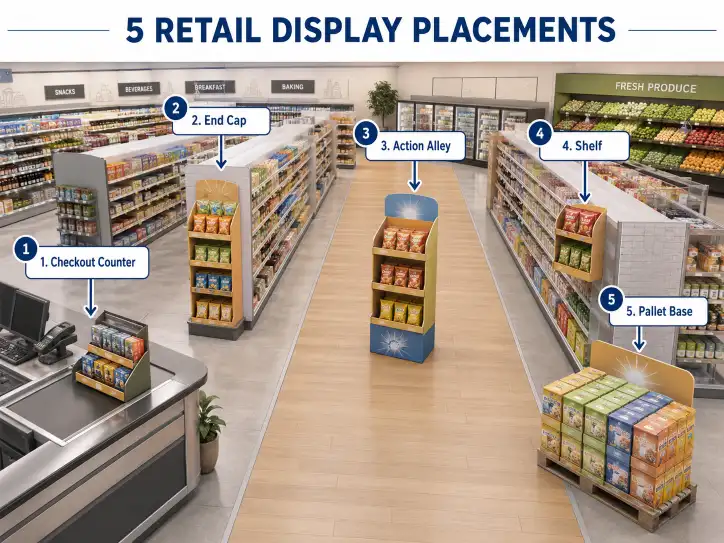
Buyers should confirm where the display will be used:
- Checkout counter
- Shelf top
- End cap
- Side of shelf
- Main aisle
- Seasonal promotion area
- Pallet zone
- Club store floor
- Trade show booth
For paper display stands for retail, placement affects both selling performance and production planning. A display used in a high-traffic aisle needs stable footing and stronger edges. A countertop display needs clean product access and a smaller footprint.
Store staff also matter.
If the display is complex to assemble, it may not be set up correctly. A practical supplier will consider folding lines, locking tabs, shelf insertion, header connection, and assembly sequence. Buyers should ask whether the supplier can provide assembly instructions or packing labels for store teams.
Simple wins.
Cardboard Display Inquiry Details Buyers Should Prepare
The table below shows the key details a B2B buyer should confirm before contacting a supplier.
| Buying Factor | What to Prepare | Why It Matters |
|---|---|---|
| Display type | PDQ, counter, sidekick, peg hook, floor, pallet, dump bin | Determines structure, material, and packing size |
| Product size | Packed product dimensions | Helps build accurate shelf, tray, and spacing layout |
| Product weight | Single unit weight and total loaded weight | Supports load-bearing checks and board selection |
| Retail channel | Supermarket, chain store, club store, pharmacy, event | Affects size limits, setup, and durability needs |
| Quantity | Sample quantity and bulk order estimate | Impacts tooling, unit cost, and production schedule |
| Artwork status | Finished file, draft design, or concept only | Affects printing preparation and sampling speed |
| Packing method | Flat pack, assembled, prefilled, or export carton | Changes freight volume, labor, and damage protection |
| Delivery time | Target delivery date or campaign launch date | Helps plan sampling, approval, production, and shipping |
| Compliance needs | FSC, ISO-related process, retailer requirements | Influences material sourcing and documentation |
A buyer does not need to have every answer before the first message. But the more complete the inquiry, the more reliable the supplier response will be.
Ask About Structure, Material, and Load-Bearing Checks
Material selection should follow the display’s real use. It should not be chosen by thickness alone.
A small counter display may use paperboard or light corrugated board. A floor display carrying heavier products may need stronger corrugated material, reinforced shelves, or a base support structure. A pallet display may need a design that works with pallet size, transportation, and store handling.
Buyers should ask how the supplier checks structure before bulk production.
Useful questions include:
- What board material do you recommend for this loaded weight?
- Can the shelf structure support the product quantity?
- Will the display need inner reinforcement?
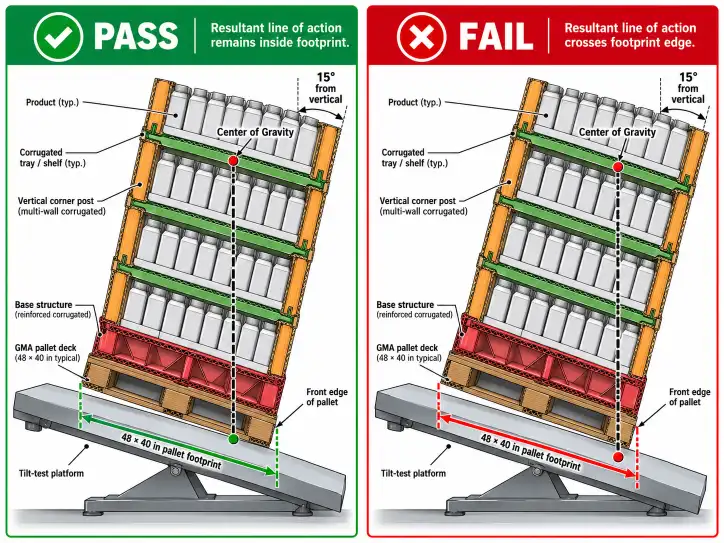
- Can you test the sample with real or simulated product weight?
- Can the structure be adjusted for flat packing?
- Is the display easy for store staff to assemble?
A practical cardboard display manufacturer should be able to explain the reason behind material and structure choices. The answer should not be limited to “we use strong material.” It should connect board type, structure, loaded weight, and retail use.
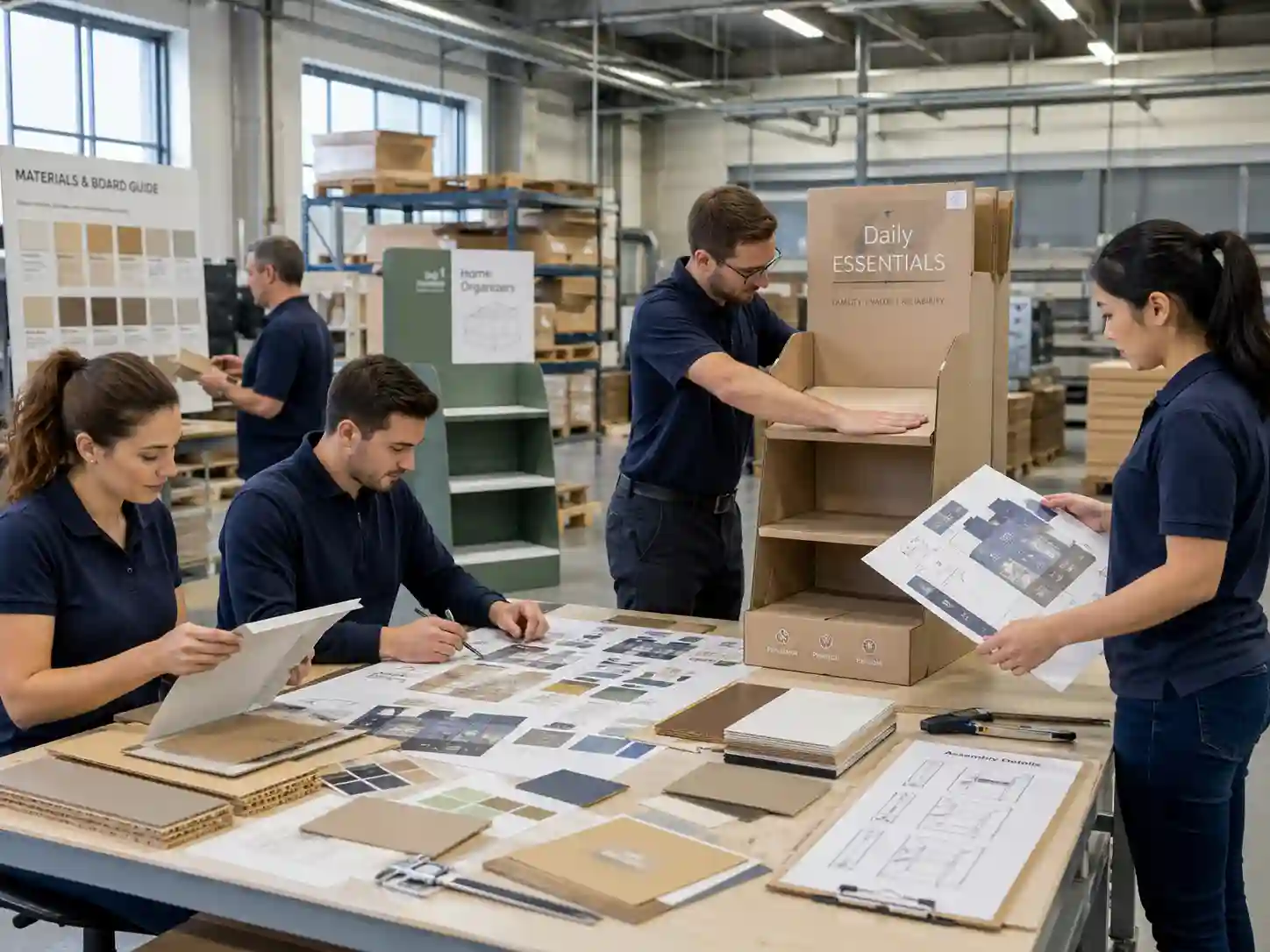
Confirm Printing Artwork and Surface Finishing Early
Printing is more than decoration. It affects brand presentation, retail shelf impact, and sample approval time.
Before sending an inquiry, buyers should confirm whether artwork is ready. If not, they should prepare a brand direction, reference display, product photos, logo files, and color expectations.
For production, the supplier may need:
- AI, PDF, or other editable artwork files
- Dieline confirmation
- Pantone or CMYK color requirements
- Logo position
- Product claim areas
- Barcode or legal text placement
- Retailer-required markings
- Surface finishing preferences
Common finishing options may include matte lamination, gloss lamination, spot UV, foil stamping, embossing, debossing, or varnish. These choices affect appearance, cost, lead time, and sometimes recyclability.
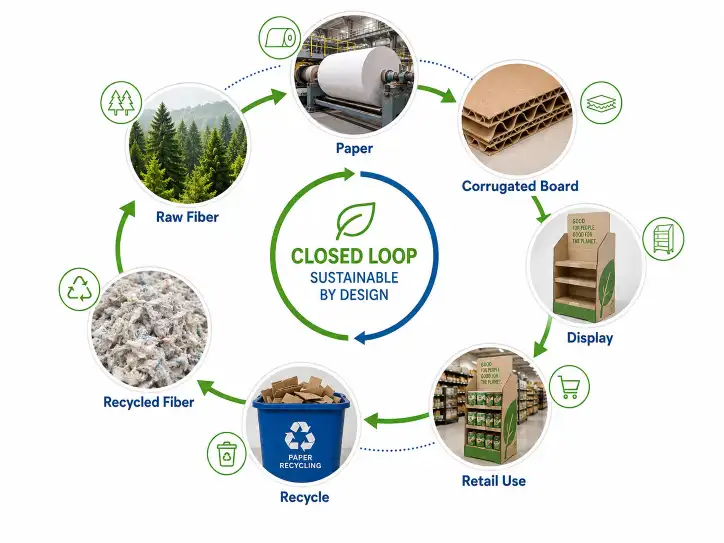
If sustainability matters, buyers can ask about FSC-related paper sourcing or other recognized certification bodies. For technical packing and box structure references, industry organizations and standards groups such as FEFCO can be useful context, depending on project type.
Keep artwork practical.
A display with too much small text may look busy in a store. A clear header, strong product zone, and simple selling message often work better for retail promotion.
Discuss Sampling Before Bulk Production
Sampling is where many display risks become visible. A sample helps confirm size, structure, printing, product fit, assembly, and loaded appearance.
For a cardboard display project, buyers should ask what type of sample is suitable:
- White sample for structure confirmation
- Digital printed sample for visual review
- Color proof for print checking
- Fully finished sample for approval
- Loaded sample using real products or dummy products
Not every project needs the same sample level. A simple PDQ display may need a white sample and digital print review. A large floor display for a retail campaign may need a more complete sample because structure and appearance both matter.
During sample review, check:
- Product fit and spacing
- Shelf or tray strength
- Header stability
- Printing position
- Color direction
- Assembly steps
- Packing size
- Retail appearance after loading
A good supplier should welcome practical feedback during sampling. It is easier to adjust a sample than to solve a problem after bulk production starts.
Clarify Packing Method and Shipping Protection
Packing can affect project success as much as the display itself. A display may look good at the factory but arrive damaged if packing is not planned well.
Buyers should explain how the display should ship:
- Flat packed
- Semi-assembled
- Fully assembled
- Prefilled with products
- Packed by set
- Packed with retail instructions
- Packed for export cartons
- Packed for pallet shipment
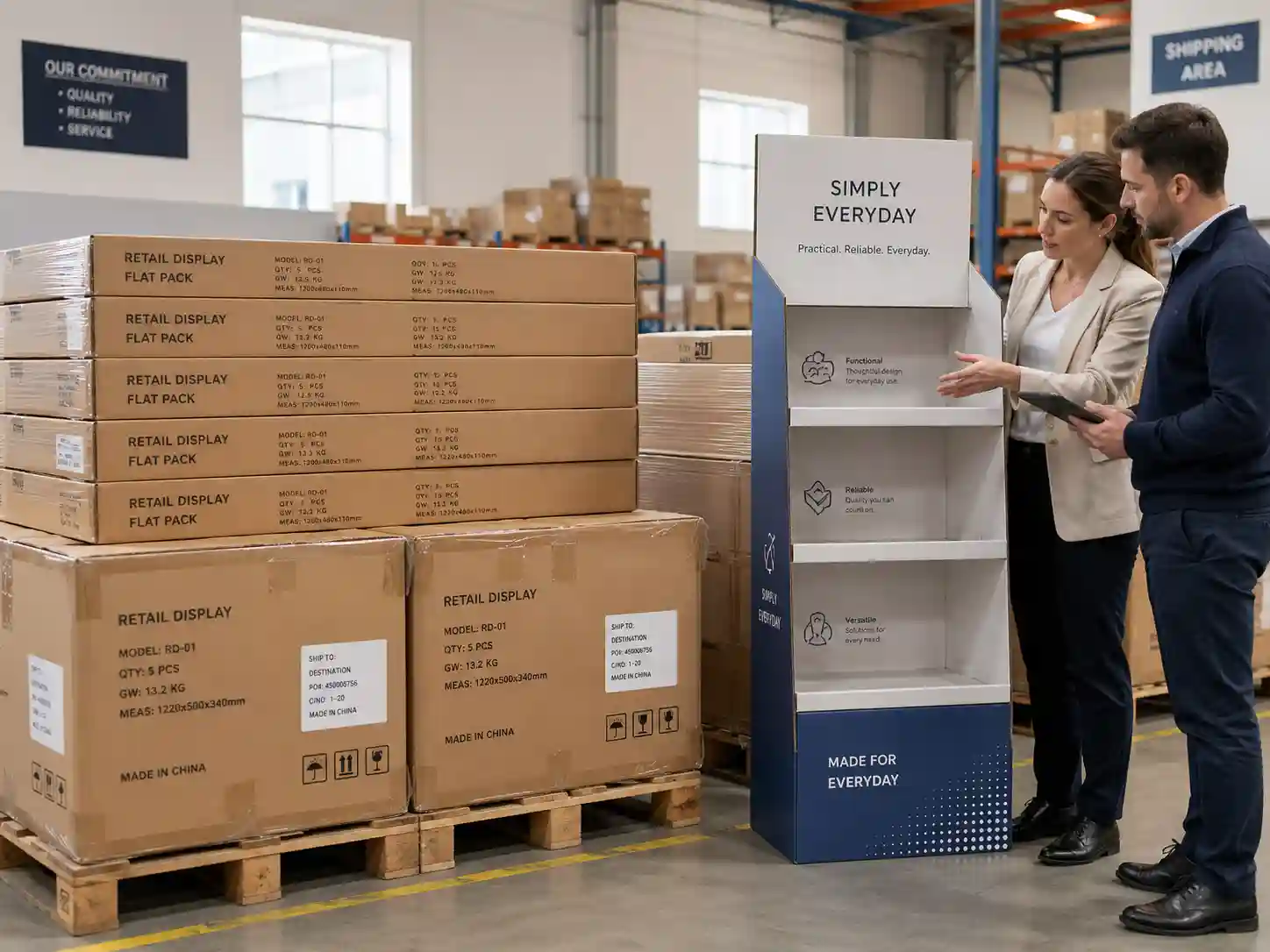
Flat packing is common for custom cardboard display projects because it saves shipping space and reduces freight cost. But flat-packed displays need clear assembly design and proper carton protection.
Export packing should consider edge protection, carton strength, moisture control, pallet stacking, and handling marks. For long-distance shipment, the supplier should also consider whether printed surfaces may rub during transport.
A small detail can prevent damage.
If the display has a printed header, side wings, hooks, trays, or loose inserts, ask how these parts will be packed inside the carton. Mixed parts without clear packing logic can create confusion during store setup.
Ask About Bulk Production Quality Control
Quality control should happen throughout production, not only at the end. A cardboard display project includes material, printing, die cutting, mounting, folding, gluing, packing, and sometimes assembly testing.
Buyers should ask what the factory checks during production.
Useful QC points include:
- Board material and thickness confirmation
- Printing color review
- Surface finishing check
- Die-cutting accuracy
- Folding line position
- Glue strength
- Shelf fit
- Header and side panel alignment
- Loaded weight test
- Carton packing check
- Final random inspection before shipment
If the display is part of a retail launch, buyers should also confirm production schedule checkpoints. Late changes to artwork or structure can affect the delivery plan.
This is where factory communication matters. Leader Display project support can help buyers discuss project details before production direction becomes fixed.
Compare Suppliers by Questions, Not Claims
Many suppliers can say they make cardboard displays. Fewer can explain how they handle structure, sampling, packing, and production risk.
Instead of comparing suppliers only by unit price, buyers should compare the quality of questions each supplier asks. A serious supplier will ask about product weight, quantity per display, retail placement, artwork, packing, and delivery needs.
That is a good sign.
A supplier that quotes too quickly without asking for details may be missing hidden costs or structure risks. The cheapest quote may later change when the real requirements appear.
Before choosing a supplier, ask:
- Did they understand the product and retail channel?
- Did they suggest a suitable display type?
- Did they explain material choice?
- Did they discuss sampling?
- Did they consider packing and shipping?
- Did they mention load-bearing checks?
- Did they provide a realistic production timeline?
- Did they answer with specific details?
For B2B buyers, this approach creates a better supplier comparison. It also helps purchasing teams explain the decision internally.
What to Include in Your First Cardboard Display Inquiry
A strong first inquiry does not need to be long. It needs to be clear.
Here is a practical inquiry structure:
-
Project background
Explain the product category, campaign type, and retail channel. -
Display type
Mention whether you need a counter display, PDQ display, floor display, sidekick display, peg hook display, pallet display, dump bin display, or if you need supplier advice. -
Product details
Provide product size, weight, packaging style, SKU count, and quantity per display. -
Target display size
Share any size limit from the retailer or your preferred display footprint. -
Artwork status
Tell the supplier whether artwork is ready, in progress, or needs dieline support. -
Order quantity
Provide sample needs and estimated bulk quantity. -
Packing and shipping
Confirm whether the display should be flat packed, assembled, prefilled, or packed by set. -
Timeline
Share sample deadline, bulk production deadline, and campaign launch date. -
Quality or compliance needs
Mention FSC preference, retailer requirements, inspection needs, or export documentation.
This gives the supplier enough information to respond with structure suggestions, rough cost direction, sample options, and production questions.
It also keeps communication efficient.
Final Cardboard Display Checklist Before You Send the Inquiry
Before you contact a cardboard display supplier, review the project from the factory’s point of view. The supplier needs to understand what the display must hold, where it will be used, how it will be printed, how it will be packed, and when it must arrive.
Prepare these details first:
- Product size and packed weight
- Display type or reference image
- Retail placement
- Quantity per display
- Estimated order quantity
- Artwork status
- Material or certification preference
- Packing method
- Delivery deadline
- Any retailer setup requirements
When these details are clear, the supplier can give better structure advice and a more realistic quotation. The conversation moves from guessing to problem-solving.
That is where a custom display project starts to become practical. Send the right details, ask the right questions, and let the supplier help turn the display idea into a production-ready retail tool.