A reliable cardboard display supplier does more than quote a low unit price. For long-term B2B orders, the supplier must understand structure, printing, product weight, retail setup, packing, shipment risk, and repeat production control. One weak link can turn a promotional display into a costly retail problem.
For brand owners, wholesalers, retail buyers, and purchasing teams, supplier reliability is not decided by one sample photo. It is proven through how the supplier handles project details before bulk production begins.
Why Long-Term Cardboard Display Orders Need More Than Price Comparison
Many buyers start by comparing unit prices. That is normal. But with a cardboard display project, the lowest price can hide risks in board strength, structure design, artwork handling, packing method, and final assembly.
A display is not a flat printed item.
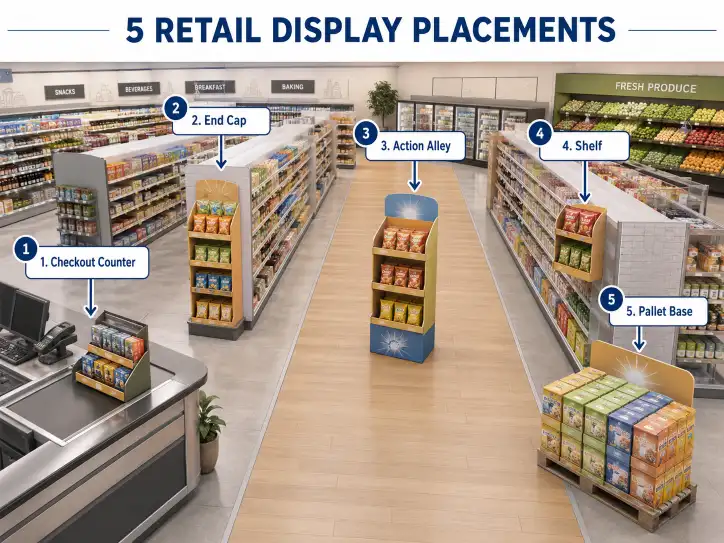
It needs to hold products, stand in a retail environment, support shopper interaction, and survive shipping from factory to warehouse or store. A PDQ display for cosmetics, a counter display for snacks, a sidekick display for chain stores, and a pallet display for club retail all require different structure thinking.
Long-term orders add another layer. The first batch may work, but the second and third batches must match the approved sample. Color should stay controlled. Board material should stay consistent. Insert fit should not change. Packing should protect the display during export.
Small changes matter.
A reliable supplier will ask practical questions early:
- What product size and weight will the display hold?
- Will the display be used on a counter, shelf, floor, pallet, or retail aisle?
- Does the retailer require flat packing or pre-assembly?
- How many units are needed per carton?
- Will the buyer provide artwork, dieline, or reference structure?
- Is the order for a seasonal campaign, product launch, or ongoing retail program?
These questions may feel detailed, but they prevent bigger problems later.
[IMAGE_1]
A Reliable Cardboard Display Supplier Understands Structure First
A cardboard display is a selling tool, but it is also a paper-based structure. If the structure is weak, even good printing cannot save the project.
The supplier should check the product load, shelf span, base design, back panel support, hook placement, and insert method before confirming the final structure. This is especially important for floor displays, peg hook displays, dump bin displays, and pallet displays.
Product Weight Should Guide the Display Design
One of the most common mistakes is choosing a display style from a photo without checking the real product weight. A counter display for lightweight sachets is different from a counter display for glass bottles. A floor display for boxed snacks needs different support than a floor display for personal care items.
A practical supplier will review:
- Single product weight
- Total display load
- Number of product facings
- Shelf depth and width
- Product refill method
- Retailer handling conditions
- Required display life in store
For heavier products, the supplier may suggest thicker board, reinforced side panels, stronger shelves, inner support pieces, or a smaller product quantity per display. These decisions affect cost, but they also affect safety and retail performance.
No buyer wants a display to bend in store.
The Display Type Should Match the Retail Channel
A long-term supplier should not push one structure for every project. Different retail channels need different display formats.
A PDQ display may work well for small packaged items near checkout. A sidekick display may be better for aisle attachment. A peg hook display is useful for hanging products. A pallet display can support bulk retail programs. A dump bin display fits loose or promotional products that shoppers can pick up quickly.
For buyers still comparing formats, paper display stands for retail can help explain how paper displays support in-store selling across different retail situations.
The right structure should make product loading, shopper access, and store setup easier.
Supplier Reliability Shows During Sampling
Sampling is where many supplier problems become visible. A reliable cardboard display supplier does not treat the sample as a decoration. The sample should confirm structure, size, product fit, printing effect, assembly method, and packing direction.
This stage protects both sides.
A useful sample review should include:
- Structure size and proportion
- Product placement and quantity
- Shelf or hook strength
- Artwork position and print area
- Color and finishing effect
- Insert, tray, or divider fit
- Assembly time and difficulty
- Flat packing or pre-assembly method
A sample that looks good from the front may still fail during assembly. Tabs may be too tight. Slots may tear. Shelves may need extra support. Product boxes may block the header. These issues are easier to fix before bulk production.
Dielines and Artwork Handling Matter
For printed retail display packaging, artwork control is a major part of reliability. A supplier should provide a clear dieline and explain bleed area, fold lines, glue areas, cut lines, and visible print zones.
The buyer’s design team may create attractive artwork, but the factory needs to confirm whether the artwork matches the actual structure. Logos should not fall across folds. Key product claims should not disappear behind products. Important visuals should stay visible after assembly.
For custom projects, custom cardboard display solutions can support structure development, sampling, printing, and production planning based on product and retail needs.
Good suppliers catch artwork risks before printing plates or digital proofs are approved.
Compare Suppliers by Production Checks, Not Claims
Every supplier can say they offer stable quality. Buyers need to look for production checks that prove the claim.
A reliable cardboard display supplier should have a process for material confirmation, pre-production sample approval, print checking, die-cutting control, assembly testing, packing review, and final inspection. These are not fancy extras. They are part of reducing risk.
| Buying Factor | Weak Supplier Behavior | Reliable Supplier Behavior |
|---|---|---|
| Structure review | Quotes from photo only | Checks product size, weight, load, and retail placement |
| Sampling | Sends a nice-looking sample only | Tests assembly, fit, strength, and print position |
| Material selection | Uses unclear board grade | Confirms board type, thickness, flute, and surface paper |
| Printing control | Approves color by screen image | Reviews proof, artwork position, and finishing effect |
| Bulk production | Starts without full confirmation | Uses approved sample as production reference |
| Packing method | Packs for factory convenience | Packs for export shipping, storage, and store setup |
| Communication | Responds only after problems appear | Clarifies details before cost and schedule are affected |
This table is useful because it shifts the decision away from price alone.
Price still matters. But a low price without structure control can become expensive when displays arrive damaged, lean forward, fail load testing, or take too long for store staff to assemble.
Material Selection Affects Long-Term Cardboard Display Stability
Material choice should match the display purpose. A small counter display may use different board than a large floor display. A pallet display for bulk retail needs more strength than a lightweight promotional stand.
Common material decisions may include:
- Corrugated board type
- Grey board or paperboard use
- Surface paper selection
- Flute direction
- Laminated printing sheet
- Reinforcement pieces
- Plastic-free or paper-based insert options
- Export carton strength
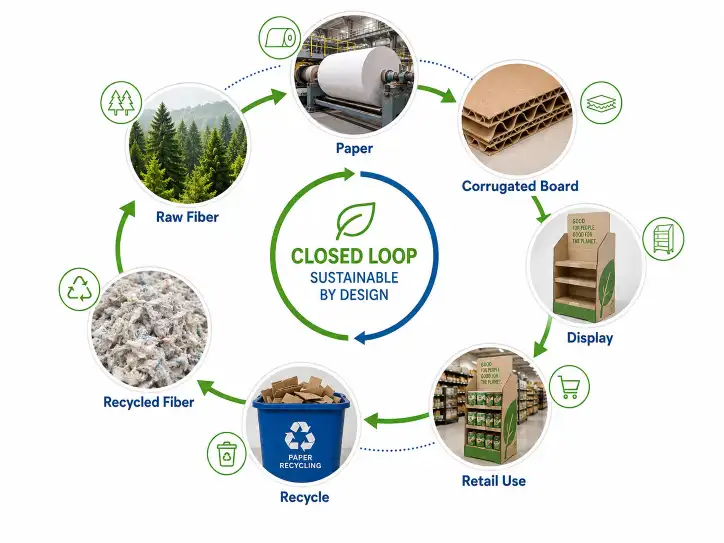
For sustainability or sourcing requirements, buyers may refer to recognized source types such as FSC, ISO-related management systems, packaging associations, or official certification bodies. A practical supplier should explain what can be supported and what documentation is available.
The point is simple.
Material should be chosen for the retail job, not only for the quotation sheet.
[IMAGE_2]
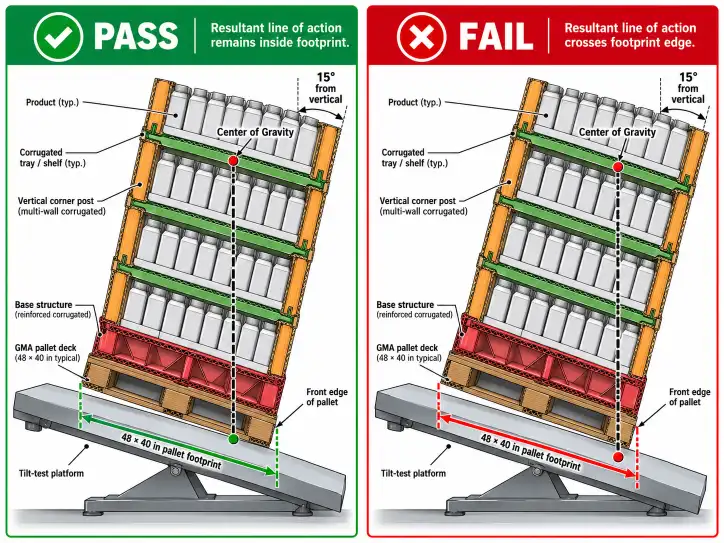
Reliable Suppliers Check Load-Bearing Before Bulk Production
Load-bearing is one of the clearest signs of production experience. A cardboard display may look stable when empty, but the true test starts when products are loaded.
For long-term orders, suppliers should test the display with the expected product weight or an equivalent load. They should observe shelf bending, side panel pressure, base stability, hook strength, and product balance.
Shelf Displays and Floor Displays Need Different Checks
A PDQ display or counter display needs clean presentation and easy product access. It may not carry a heavy load, but it must hold shape on a shelf or checkout counter.
A floor display has more risk. It must stand upright, support multiple shelves, and survive movement during retail setup. A peg hook display adds hanging pressure. A dump bin display needs sidewall strength because shoppers interact with the product area often.
A pallet display has another requirement. It must work with logistics and bulk retail handling.
A reliable supplier will consider:
- Whether the display ships flat or pre-packed
- Whether products are loaded at the factory or by the retailer
- How many times the display may be moved
- Whether the display needs a header, tray, riser, or base skirt
- Whether export cartons need corner protection or inner support
These details help reduce collapse, bending, and setup delays.
Printing and Finishing Should Support the Retail Goal
Printing quality is not only about bright colors. It is about consistent brand presentation across batches.
For long-term cardboard display orders, printing reliability includes color control, coating choice, finishing alignment, cutting accuracy, and surface protection. If a display is used in supermarkets, chain stores, or promotional campaigns, inconsistent printing can affect brand trust.
Common finishing options include matte lamination, gloss lamination, spot UV, foil stamping, embossing, debossing, and varnish. Not every display needs special finishing. Sometimes a clean print with accurate structure works better than a costly surface effect.
The supplier should guide the buyer based on:
- Campaign budget
- Retail lighting
- Expected display life
- Product category
- Brand color requirements
- Handling and shipping conditions
A reliable supplier will not add finishing for decoration alone. The finishing should support the product and retail setting.
Packing Method Is Part of Supplier Reliability
Packing is often discussed too late. That is risky.
A cardboard display may pass sampling and production checks, then get damaged because the packing method was weak. Long-distance shipping, warehouse handling, and retailer setup can create pressure on panels, corners, shelves, and headers.
Reliable packing planning may include:
- Flat-packed display parts in export cartons
- Clear assembly sequence
- Protective sheets between printed panels
- Inner cartons for accessories or hooks
- Reinforced outer cartons
- Palletized shipment when needed
- Carton marks for store or warehouse handling
- Assembly instruction sheet
For some projects, pre-assembly saves store labor but increases shipping volume. For other projects, flat packing reduces freight cost but requires clear assembly. A good supplier explains this trade-off before production.
The better choice depends on the retail program.
Communication Reliability Is a Production Skill
Many long-term order problems come from poor communication, not poor machinery.
A reliable supplier should confirm project details in writing, share sample photos or videos when useful, and make sure changes are tracked. If a buyer changes product quantity, artwork, display size, or delivery schedule, the supplier should explain the impact on cost, structure, lead time, and packing.
Good communication should cover:
- Quotation assumptions
- Material and structure decisions
- Sampling timeline
- Artwork proof status
- Bulk production schedule
- Inspection points
- Packing method
- Shipping plan
For project discussions and general factory support, buyers can contact Leader Display project support with product size, product weight, quantity, display type, target retail channel, artwork status, packing preference, and expected delivery time.
Clear input creates better output.
How to Evaluate a Cardboard Display Supplier Before a Long-Term Order
Before choosing a supplier, buyers should look beyond the product gallery. A photo may show what the supplier once produced. It does not prove how the supplier will manage your next order.
Use this practical checklist:
- Ask whether the supplier can review product size, weight, and retail placement before quoting.
- Confirm whether they provide structure suggestions for PDQ displays, counter displays, sidekick displays, peg hook displays, floor displays, pallet displays, or dump bin displays.
- Check whether they can make a sample for structure and print confirmation.
- Ask how they control material, printing, die-cutting, gluing, and packing.
- Confirm whether the approved sample is used as the bulk production reference.
- Ask how the display will be packed for export shipping.
- Review whether assembly instructions or setup support can be provided.
- Confirm how changes are tracked during repeat orders.
This checklist helps buyers identify whether the supplier is only selling a product or managing a project.
[IMAGE_3]
Warning Signs When Comparing Suppliers
Some warning signs appear early if buyers know what to look for.
Be careful when a supplier quotes without asking product weight. Be careful when they avoid structure questions. Be careful when they cannot explain the packing method. Be careful when they show many display photos but cannot discuss shelf strength, board selection, or assembly.
Another warning sign is vague production language. A supplier who says “no problem” to every request may not be checking the details. In cardboard display production, some requests need adjustment. A heavier product may need reinforcement. A complex display may need more assembly time. A large printed area may need color proofing.
Reliable suppliers do not agree blindly.
They explain options.
The Better Long-Term Supplier Helps Buyers Reduce Retail Risk
The more reliable cardboard display supplier is not always the cheapest, largest, or fastest. The stronger choice is the supplier who understands how paper structure, product loading, printing, packing, and retail setup work together.
For long-term orders, buyers should choose a partner who can support repeat production with stable structure, consistent printing, clear QC, and practical shipment protection. That is what keeps retail programs moving without repeated corrections.
When preparing a new cardboard display inquiry, share the product size, product weight, target display type, quantity, retail channel, reference structure, artwork status, packing method, and expected delivery time. With those details, the supplier can give more useful recommendations and a quotation that reflects the real project.
A reliable supplier starts solving problems before production starts.