Designing for Costco is a huge opportunity, but their rules are strict. One small mistake in your pallet display design can lead to major costs. Here is how you get it right.
To design a Costco-compliant pallet display, you must use a standard 48" x 40" pallet and ensure your product packaging never hangs over the edge. Costco's efficient "no-touch" supply chain demands a perfectly sized, stable, and durable display that can move from truck to store floor without extra handling. [2]
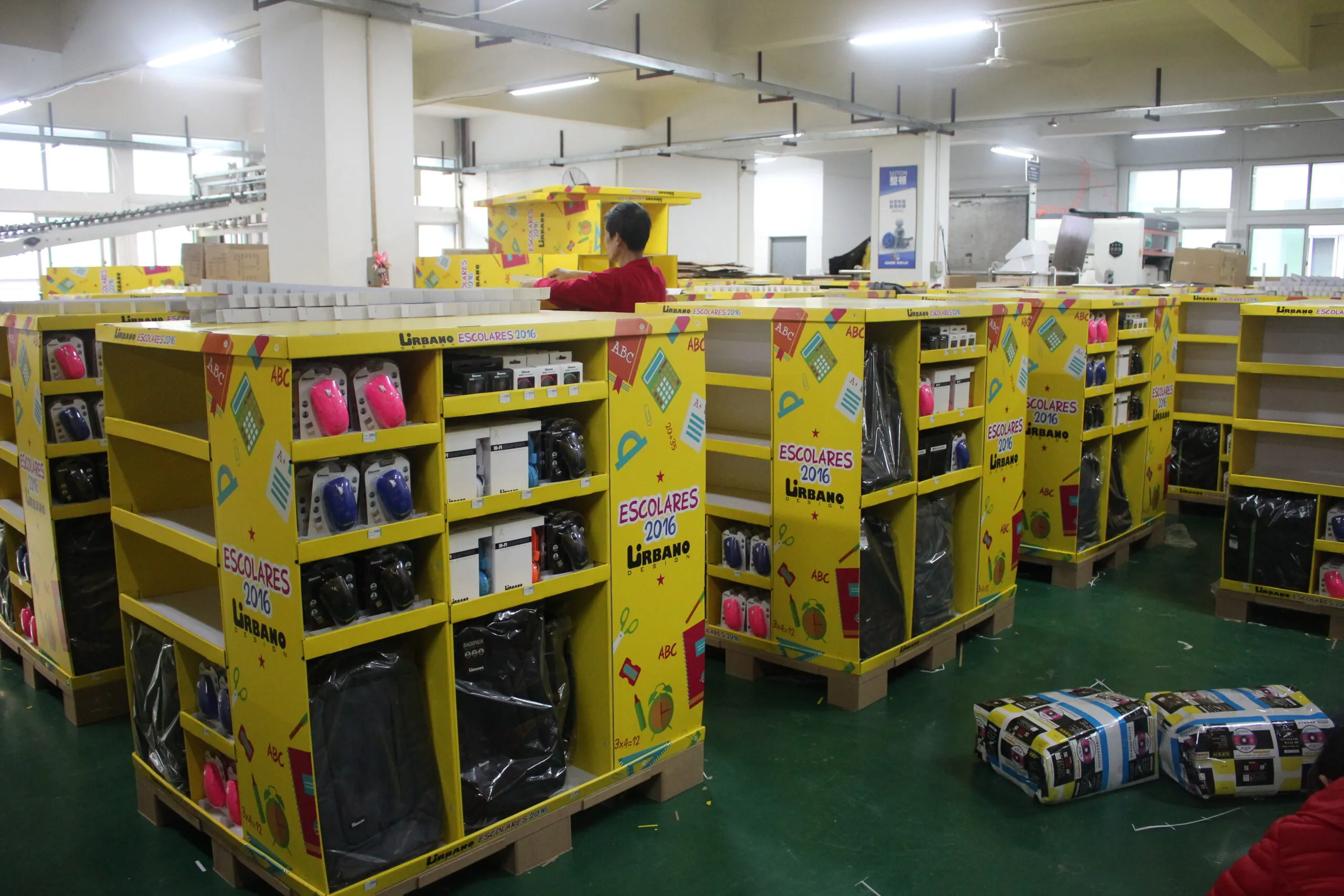
Getting your product into Costco is a massive win, but it’s only half the battle. Your product has to survive their logistics system and look great on the sales floor. The pallet display isn't just for shipping; it's your silent salesperson. I've seen brands fail because they overlooked the small details. Let’s dive into what those details are so you can avoid the common pitfalls and make your Costco program a success.
Why is Pallet Overhang So Critical to Avoid?
You might think a few inches of overhang on a pallet is no big deal. But that tiny mistake can crush your products and your profits. Let's look at why precision is everything here.
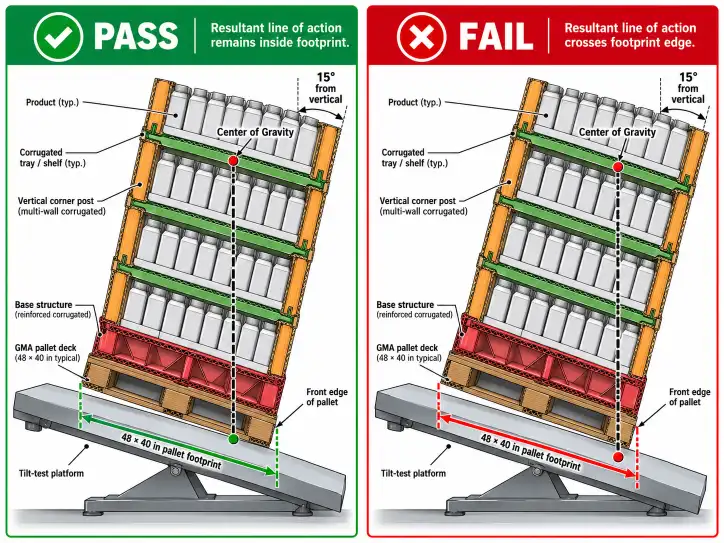
Pallet overhang is critical to avoid because it can reduce a box's compression strength by up to 40%. [2] This makes the entire pallet load unstable and highly likely to be damaged during shipping. It directly violates Costco's strict packaging standards, leading to costly chargeback penalties. [2]

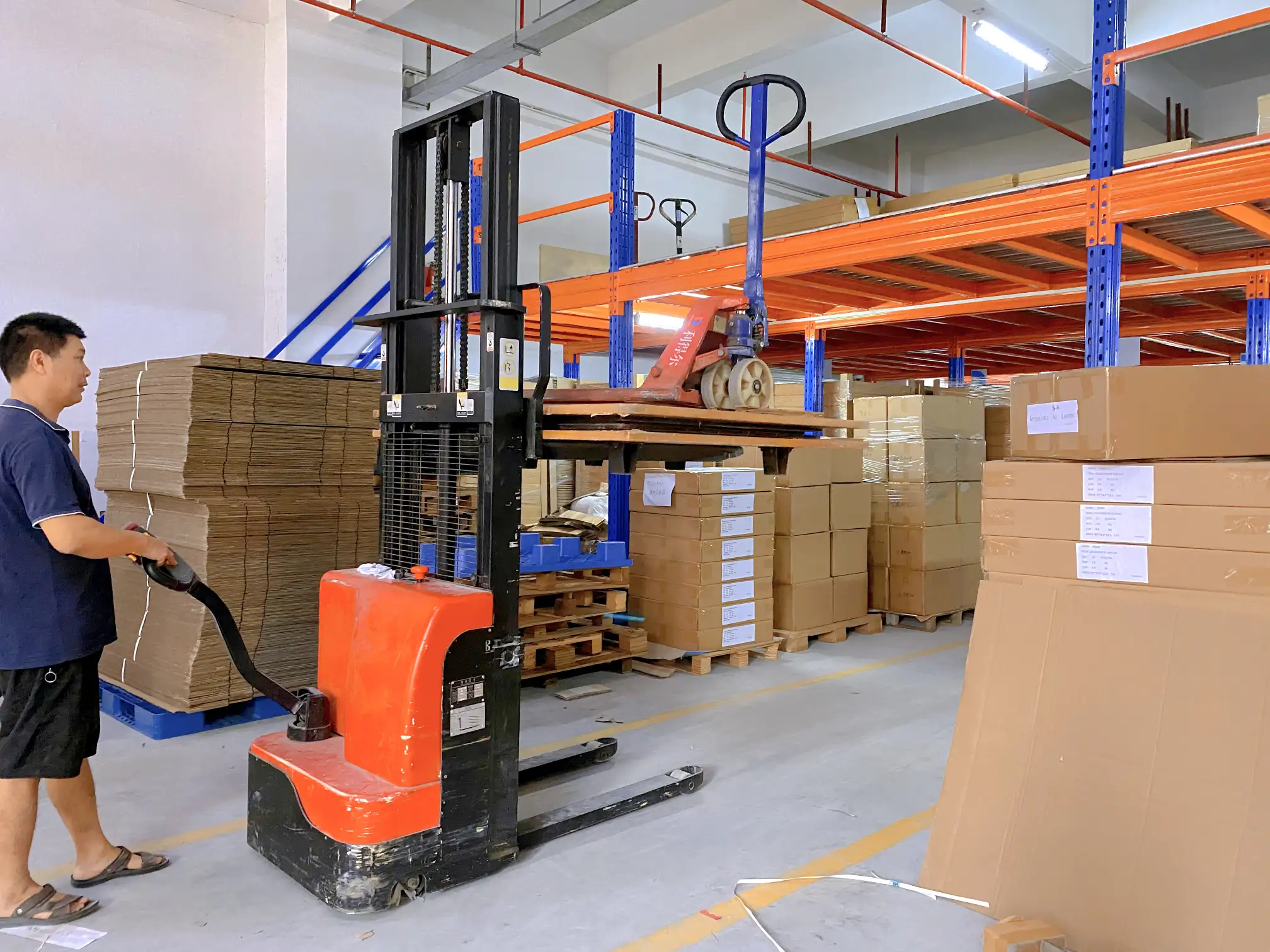
In my 16 years of designing displays, the most painful lessons for clients often come from pallet overhang. Think about the journey your product takes. It gets loaded onto a truck, moved around a depot, and then placed on the store floor, all by a forklift. Costco’s whole system is built on efficiency, which they call a “no-touch” approach. [2] Your pallet has to withstand all that movement without any help.
The Domino Effect of a Few Inches
When your boxes hang over the pallet's edge, they lose the support of the wood structure beneath them. The vertical strength of the corrugated material gets compromised. Now, imagine another full pallet being stacked on top of yours. That unsupported edge is the first point of failure. It’s a bit like trying to stand on a plank that's hanging off a cliff. I once had a client who learned this the hard way. They lost an entire shipment of snacks because the bottom layer of boxes on each pallet collapsed from overhang.
Structural Integrity is Everything
The pallet is the foundation of your display. Every bit of your product's packaging needs to be within its footprint. This ensures that the pallet itself takes the impact during transit, not your product. When you get this right, you protect your inventory and avoid those 2% chargeback fees that Costco issues for non-compliant packaging. [2]
| Feature | Compliant Pallet | Pallet with Overhang |
|---|---|---|
| Stability | High | Very Low |
| Compression Strength | 100% | Reduced by up to 40% |
| Risk of Damage | Low | High |
| Costco Compliance | Pass | Fail (2% Chargeback) |
What Are the Exact Dimensions for a Successful Pallet Display?
You know you need to avoid overhang, but you need exact numbers to work with. Guessing the dimensions or getting them slightly wrong can lead to your entire display being rejected at the depot.
For a successful Costco pallet display, use a standard 48" x 40" pallet. Your packaging footprint should ideally be 47.5" x 39.5". This size creates a small, intentional buffer that prevents overhang while minimizing any potential for the load to shift during transit. [2]
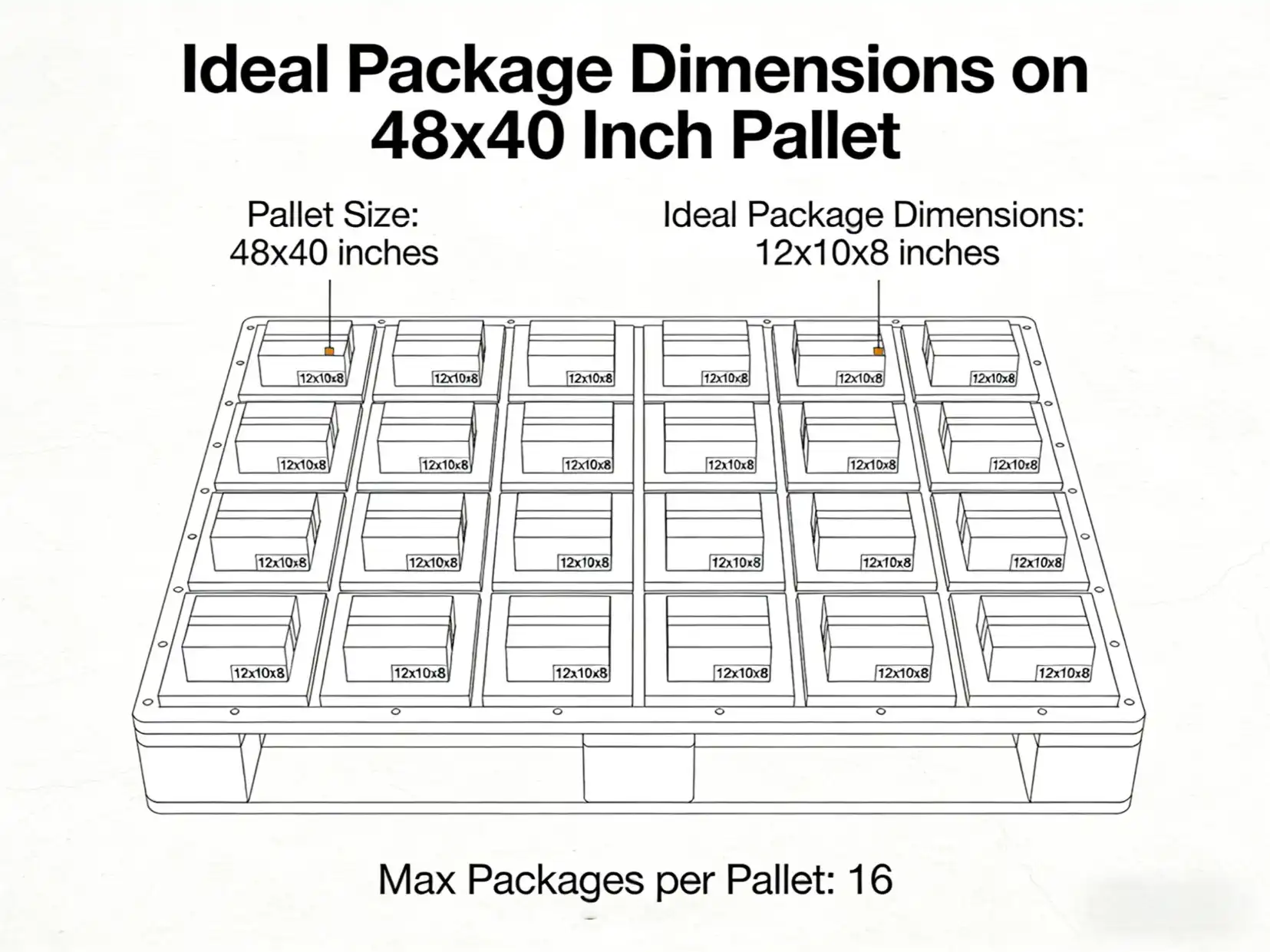
I always tell my design team that designing for Costco is a game of inches, and it's a game you have to win. Those precise measurements aren't just a suggestion; they are a core requirement for a system built for speed and volume. This is where a skilled designer like Peter, who has to balance creative ideas with firm production rules, can really make a difference. The numbers are your first checkpoint for success.
The 'Goldilocks' Zone of Sizing
Why not just make the package exactly 48" x 40"? Because pallets themselves have a small tolerance; they aren't always perfectly sized. The 47.5" x 39.5" dimension gives you a quarter-inch of buffer on all sides. This ensures that even if the pallet is slightly off, your product remains safely within the footprint. It's the "just right" size that guarantees compliance and stability. It's a small detail that shows you understand how their system works.
Why Underhang is Also a Problem
While overhang is the bigger sin, having too much empty space on the pallet, or underhang, is also an issue. Costco gives a minimum allowable package size of 44" x 37". [2] Anything smaller than that leaves too much room for the product to slide around during transit. This shifting can cause instability and damage. It also doesn't look great on the sales floor. A well-fitted pallet looks professional and clean, which helps attract customers.
| Dimension Type | Length (inches) | Width (inches) | Compliance Status |
|---|---|---|---|
| Standard Pallet | 48" | 40" | Standard |
| Ideal Package | 47.5" | 39.5" | Excellent |
| Minimum Package | 44" | 37" | Acceptable |
| Overhang Example | 49" | 41" | Fail |
How Does Costco's 'No-Touch' Policy Impact Your Design?
You hear about Costco's incredible efficiency, but what does that really mean for your display design? It means your design has to work perfectly on its own, from start to finish.
Costco’s "no-touch" policy means your pallet display must be a self-contained unit that is structurally sound and ready for sale the moment it arrives. It will be moved by forklift directly from the truck to the sales floor, so the design must both protect and present the product effectively. [2]

This "no-touch" philosophy is the key to understanding the Costco challenge. There is no one in the back room who will unbox your products and arrange them neatly on a shelf. Your shipping pallet is the shelf. It’s also the shipping container and the salesperson. This puts a huge amount of pressure on the structural design and the materials you choose. It has to be designed for the entire journey.
From Truck to Aisle
Imagine your display. It needs to be strong enough to be lifted, moved, and possibly bumped by a forklift. It needs to hold the weight of all the products without sagging or bending over the several weeks or months it might be in the store. We often use high-grade, structurally engineered corrugated cardboard to achieve this. The design must include internal supports that distribute the weight evenly, ensuring the display at the bottom of the stack is just as strong as the one on top. We once designed a display for a juice company that had to hold hundreds of pounds for two months, and the structural engineering was the most critical part of the project.
Your Display is Your Salesperson
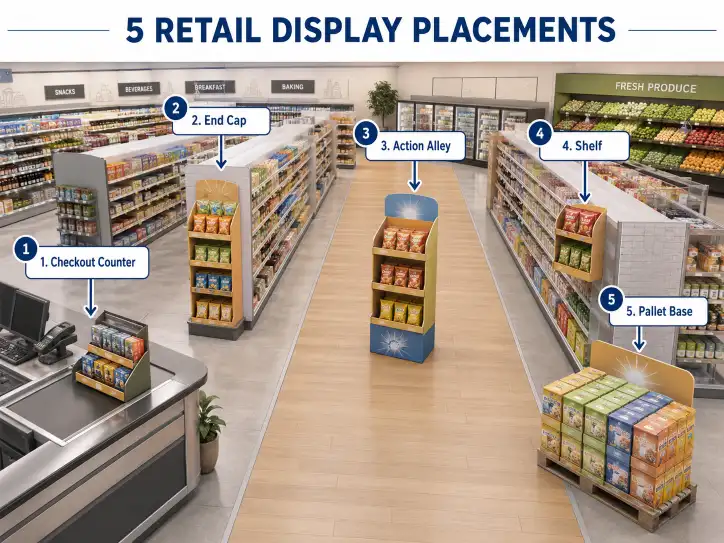
Because no one is there to tidy it up, your display must also be easy for customers to shop from. Products should be easy to grab without causing the rest of the display to become messy or unstable. The graphics must be clear and attractive from a distance, drawing people in. Your pallet display has to do all the work of a traditional shelf and a traditional salesperson, all while being tough enough to survive the warehouse environment. This is the ultimate test of a good commercial display design.
Conclusion
To succeed at Costco, you must follow their rules. Design for their 48"x40" pallet, avoid overhang to maintain strength, and build a display that can stand alone from truck to floor.