Struggling to make your products pop in crowded retail spaces? You're not alone. Getting that crucial customer attention is harder than ever, and traditional displays often fall short, costing you sales.
The answer is surprisingly simple: custom cardboard Point-of-Purchase (POP) displays. These displays are not just eco-friendly and affordable; they are a powerful tool to capture shopper interest and significantly boost your product's visibility right where it matters most—at the point of sale.

I've been in the commercial display industry for 16 years, and I've seen trends come and go. But the shift towards cardboard is more than a trend; it's a fundamental change in how brands are connecting with customers. It’s a solution that meets the modern demands for sustainability, cost-efficiency, and powerful branding. In my experience, the brands that embrace this shift are the ones that see real growth. Let's dive into why cardboard is truly leading the way.
Why Is Cardboard Becoming the Top Choice for Retail Displays?
Are your current display solutions too expensive or damaging to the environment? Many businesses face the challenge of finding displays that are both effective and sustainable, a dilemma that can hurt both their budget and brand image.
Cardboard POP displays offer the perfect solution. They are lightweight, which cuts down on shipping costs, and are made from recyclable materials, appealing to eco-conscious consumers. Their versatility allows for stunning, custom designs that make products stand out and drive sales.

Over the years, I've worked with countless designers like Peter, who has 13 years of experience in this field. Initially, he was skeptical. He worried that cardboard couldn't match the durability of plastic or metal. However, after we collaborated on a project for a major beverage launch, he saw the light. We designed a floor display that was not only strong enough to hold 50 pounds of product on each shelf but was also printed with vibrant, eye-catching graphics that told the brand's story. The campaign was a massive success, and the client reported a 30% increase in sales. This experience showed Peter, and me, that modern cardboard engineering has overcome old limitations. It's not just paper; it's a sophisticated, structural material.
Strength and Durability
One of the biggest myths is that cardboard is weak. Modern corrugated cardboard can be engineered for impressive structural integrity.
| Feature | Description | Benefit for Retail |
|---|---|---|
| Fluting | The wavy layer between linerboards. | Provides cushioning and strength. Different flute sizes (A, B, C, E, F) offer varying levels of durability. |
| Double Wall | Using two layers of fluting. | Significantly increases stacking strength, making it suitable for heavier products like drinks or canned goods. |
| Coatings | Aqueous or UV coatings. | Adds moisture resistance and a premium finish, protecting the display from spills and wear and tear. |
Cost-Effectiveness
Compared to materials like plastic, wood, or metal, cardboard is significantly cheaper. This isn't just about the raw material cost. I once helped a client transition from plastic to cardboard displays for a nationwide campaign. Their initial goal was simply to be more eco-friendly. However, the cost savings were staggering. Their shipping expenses were cut in half because cardboard is so much lighter. Furthermore, the production lead time was reduced by 40%, allowing them to get their products to market much faster. This agility is a huge competitive advantage in the fast-paced retail world.
How Can Custom Cardboard Displays Boost Your Sales?
Feeling like your products are invisible on the shelf? A generic display does little to grab attention, causing you to lose potential customers to competitors with more engaging presentations. This can lead to missed sales and a weak brand presence.
A well-designed custom cardboard display acts as a silent salesperson for your brand. By using unique shapes, stunning graphics, and strategic messaging, you can stop shoppers in their tracks, draw them to your product, and create a memorable brand experience that directly translates into increased sales.
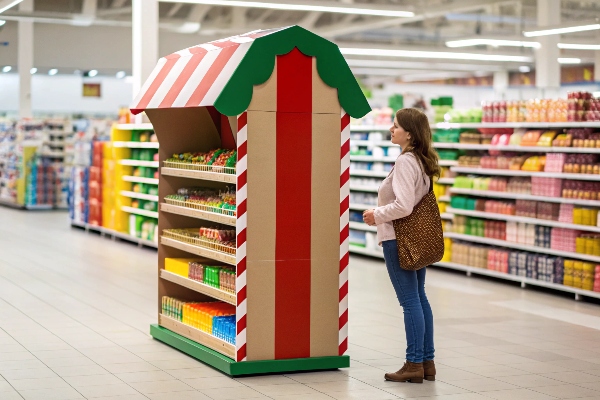
I remember a project for a new organic snack brand. They had a fantastic product but were struggling to compete with established names. We decided to create a display shaped like a barn, reflecting their farm-to-table story. We also included a QR code that linked to a video of the founder explaining their mission. This did more than just hold the product; it told a story and built a connection with the customer. The interactive element was a game-changer. The client saw their sales triple in the stores that used this display. It proved that when you combine a great product with creative and strategic packaging, the results speak for themselves. This is the power of turning a simple display into a brand ambassador.
The Psychology of Shopper Engagement
A custom display isn't just a box; it's a psychological tool. It taps into the shopper's mindset at the most critical moment.
- Color and Emotion: Bright, bold colors can create excitement and urgency, while earthy tones can signal a natural or organic product. We work with brands to select a palette that aligns with their core message.
- Shape and Intrigue: Humans are naturally drawn to unique shapes. Breaking away from the standard rectangular format with a custom die-cut design immediately sets your product apart and makes people curious.
- Information Hierarchy: A good display guides the customer's eye. We strategically place the brand name, key benefits, and call to action to make the purchasing decision as easy as possible.
Case Study: From Shelf to Shopping Cart
Let's break down the impact with a clear example.
| Metric | Standard Shelf Placement | Custom Cardboard Display | Improvement |
|---|---|---|---|
| Shopper Attention | 2 seconds | 7 seconds | +250% |
| Product Interaction | 1 in 20 shoppers | 1 in 5 shoppers | +300% |
| Purchase Conversion | 2% | 8% | +300% |
These numbers are based on real-world observations from my clients. A custom display gives you a temporary "store-within-a-store," creating a branded space that you control completely. It’s one of the highest ROI marketing efforts you can make in a physical retail environment.
What Makes Cardboard Displays So Eco-Friendly?
Is your brand's commitment to sustainability reflected in your marketing? Using non-recyclable materials like plastic for your displays can create waste and send the wrong message to your environmentally conscious customers, potentially harming your brand's reputation.
Cardboard is the champion of sustainable display solutions. It is typically made from a high percentage of recycled materials and is fully recyclable itself. Choosing eco-friendly packaging and displays demonstrates a genuine commitment to the planet, which resonates strongly with modern consumers.
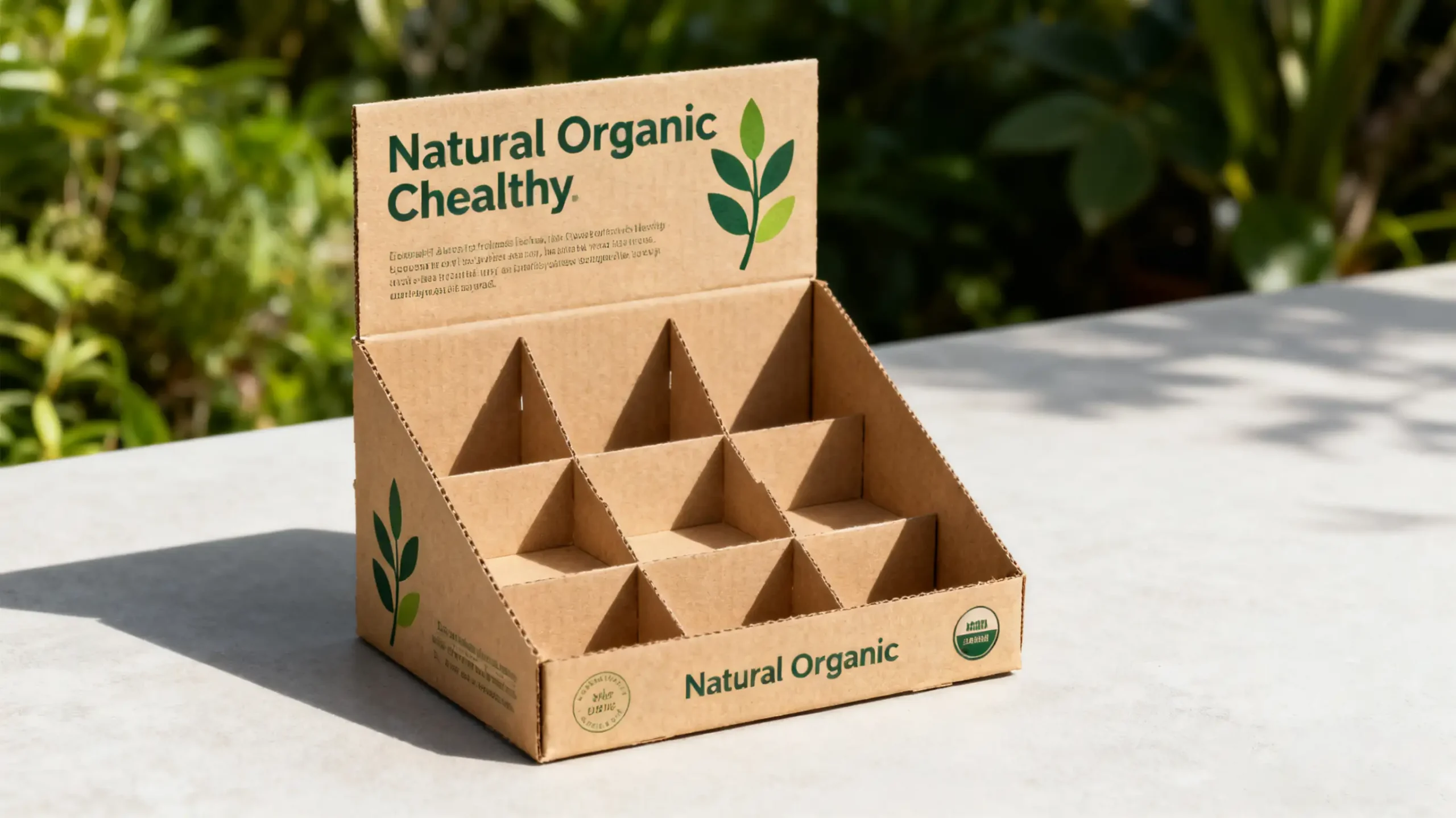
I’ve dedicated a large part of my career to championing sustainable solutions, not just because it’s good for the planet, but because it’s good for business. I worked with a cosmetics company that was building its entire brand around being natural and cruelty-free. However, they were using plastic displays. We redesigned their entire retail presentation using 100% recycled and recyclable cardboard printed with soy-based inks. They promoted this change in their marketing, and the customer response was incredible. Their customers loved that the brand’s values carried through all the way to their in-store presence. It reinforces the idea that true sustainability isn't just about the product itself; it’s about the entire brand experience, including the packaging and displays that bring it to life.
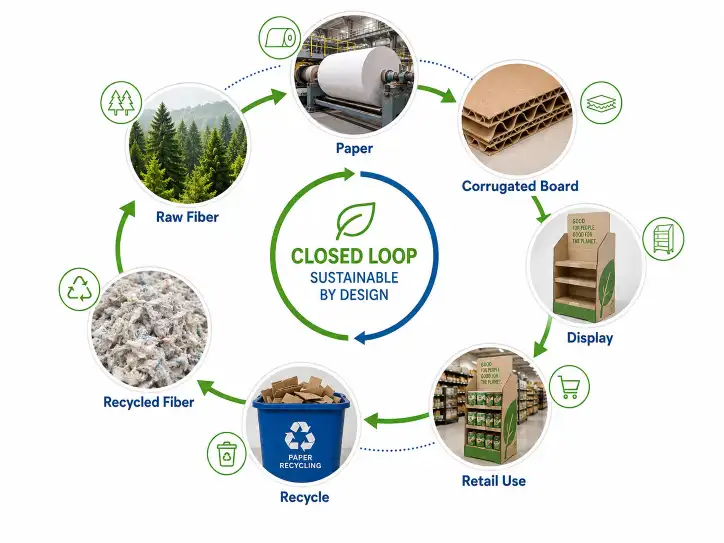
The Lifecycle of a Cardboard Display
Understanding the journey of cardboard helps illustrate its environmental benefits.
- Sourcing: A significant portion of cardboard comes from post-consumer recycled paper. The rest often comes from sustainably managed forests where trees are replanted.
- Production: Manufacturing cardboard requires less energy and produces fewer greenhouse gases compared to creating plastic from fossil fuels. Water usage in the papermaking process is also often part of a closed-loop system where water is recycled.
- Use in Retail: The displays are lightweight, reducing the carbon footprint associated with transportation and logistics.
- End of Life: After a campaign, the displays can be easily broken down and placed in standard recycling bins. This recycled material is then used to create new paper products, completing the circular economy loop.
This sustainable lifecycle is a powerful story to tell. Brands that adopt and communicate this are not just selling a product; they are inviting customers to be part of a positive environmental impact, which builds loyalty on a much deeper level.
Conclusion
In short, cardboard displays offer a powerful combination of creativity, affordability, and sustainability. They are the smart choice for any brand looking to make a real impact in retail today.